How to Choose the Right Size Entryway Furniture for a Singapore HDB Living Room
I visited my colleague Priya's 4-room HDB flat in Tampines last month, and the thing that caught my eye before the furniture, before the wall colour, even before the view out the corridor window, was how calm the entrance felt. She had spent two weekends measuring her entryway in centimetres, and it showed. The console table sat with exactly 12 cm of breathing room on either side, the bench underneath could be pulled out for shoe-changing without blocking the corridor light, and a narrow mirror at 40 cm wide turned a 1.6 m wide passage into something that felt twice as deep. None of it was accidental. That is the level of planning I want to walk you through, room by room, door by door, centimetre by centimetre, so your entryway furniture earns its place in a Singapore HDB or condo without fighting the space.
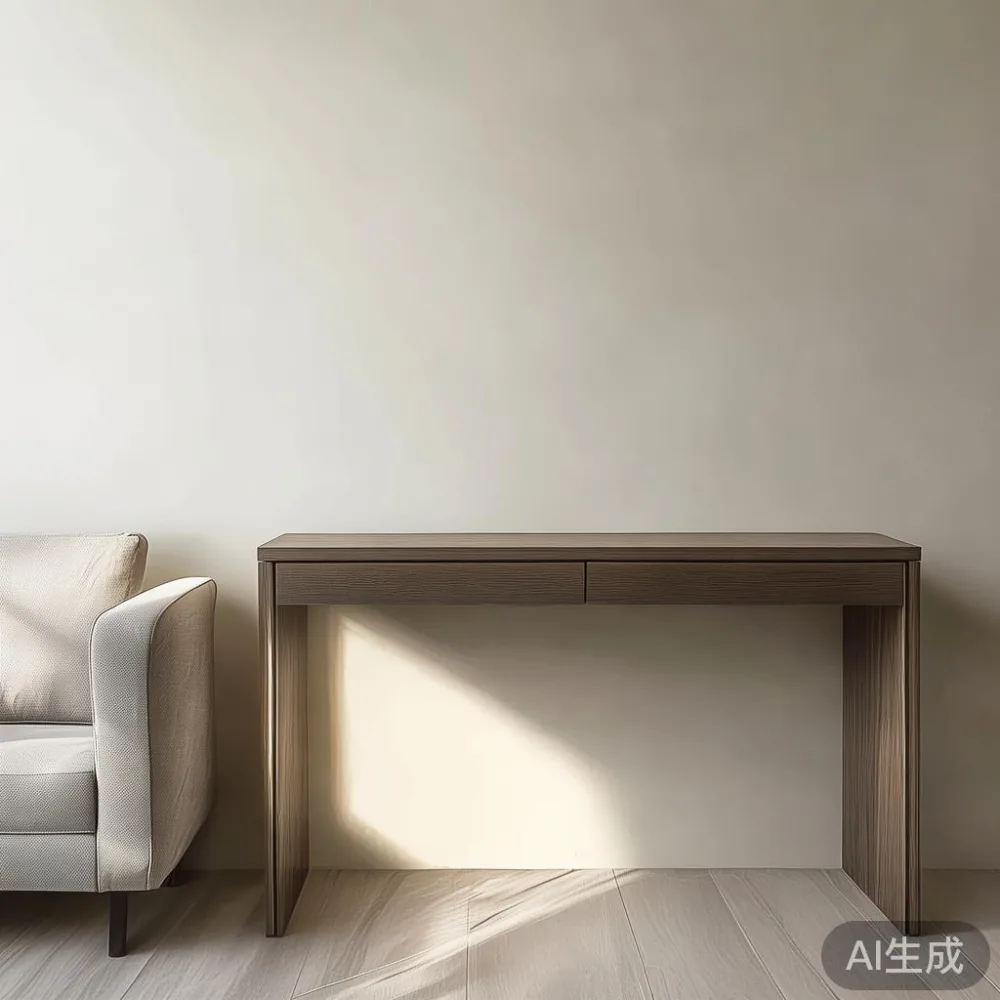
Why Entryway Furniture in Singapore Needs a Different Set of Rules
Singapore homes are unusually generous in some ways and unusually strict in others. A typical 4-room HDB flat gives you a combined living and dining area of roughly 18 to 22 sqm, a bedroom corridor of about 1.05 m to 1.2 m wide, and an entry passage of just 1.2 m to 1.6 m before the door swings in. Lift interiors in most HDB blocks measure around 1.1 m wide by 1.4 m deep, while private condos in Punggol or Bedok often have wider lifts up to 1.5 m by 1.8 m. These numbers decide everything: how wide a console you can carry up, whether your dining table legs can fit through a 90-degree turn on the landing, and whether your sofa can be delivered in one piece or has to be split at the workshop.
The other Singapore-specific factor is corridor sharing. Moving a solid wood dining table up six floors through a 1.4 m wide corridor is not the same as moving it up a private lift. I learned this the hard way when Priya's first choice, a 1.8 m solid wood dining table from a Tampines showroom, would not clear the corner of the fourth-floor corridor. We had to return it. That is why I now start every entryway plan with the question: can this piece physically reach the front door, and can it turn the corner once it gets there?
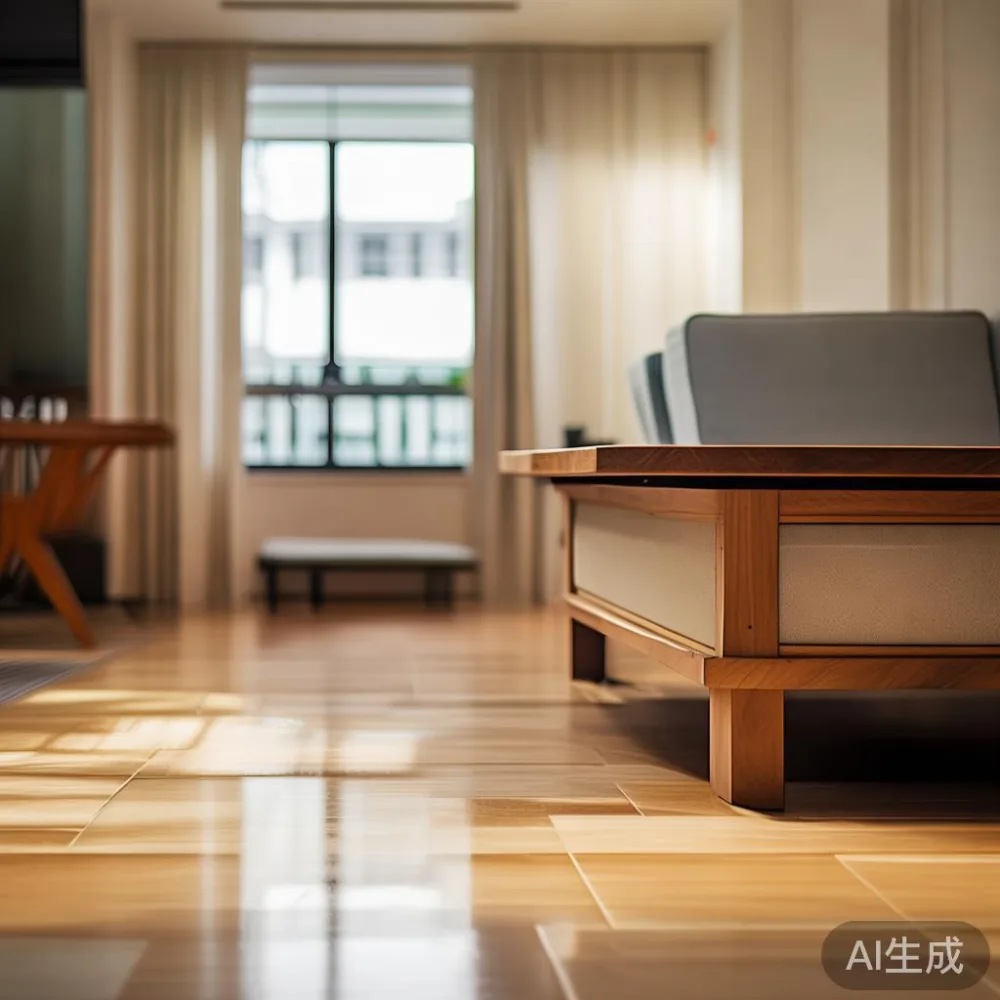
What Does "Right Size" Actually Mean for a 4-Room HDB Entryway?
Right size, in an HDB context, is a balance of three numbers: width, depth, and the clear walking path behind the piece. For a standard 4-room flat, I treat the entry as a 1.2 m to 1.6 m wide zone with a minimum 80 cm clear walking path. That is non-negotiable. The Building and Construction Authority's guidelines for household circulation expect at least 75 to 90 cm of unobstructed passage, and anything narrower makes the home feel cramped when two people pass each other, or when you are carrying laundry baskets, strollers, or grocery bags from the lift.
Here is the formula I use, and it is the same one Priya followed: subtract 80 cm of clear walking path from your entryway width, then subtract another 10 cm of buffer on each side for skirting and hinge swing. So in a 1.4 m corridor, the usable depth for a console or bench is 1.4 m minus 0.8 m minus 0.2 m, which gives you about 40 cm of true furniture depth. That is why I rarely recommend anything deeper than 40 cm for a flat entry console. For a slightly wider condo passage of 1.6 m, you have 60 cm of depth, which opens up slim drawer units and even a narrow shoe cabinet.
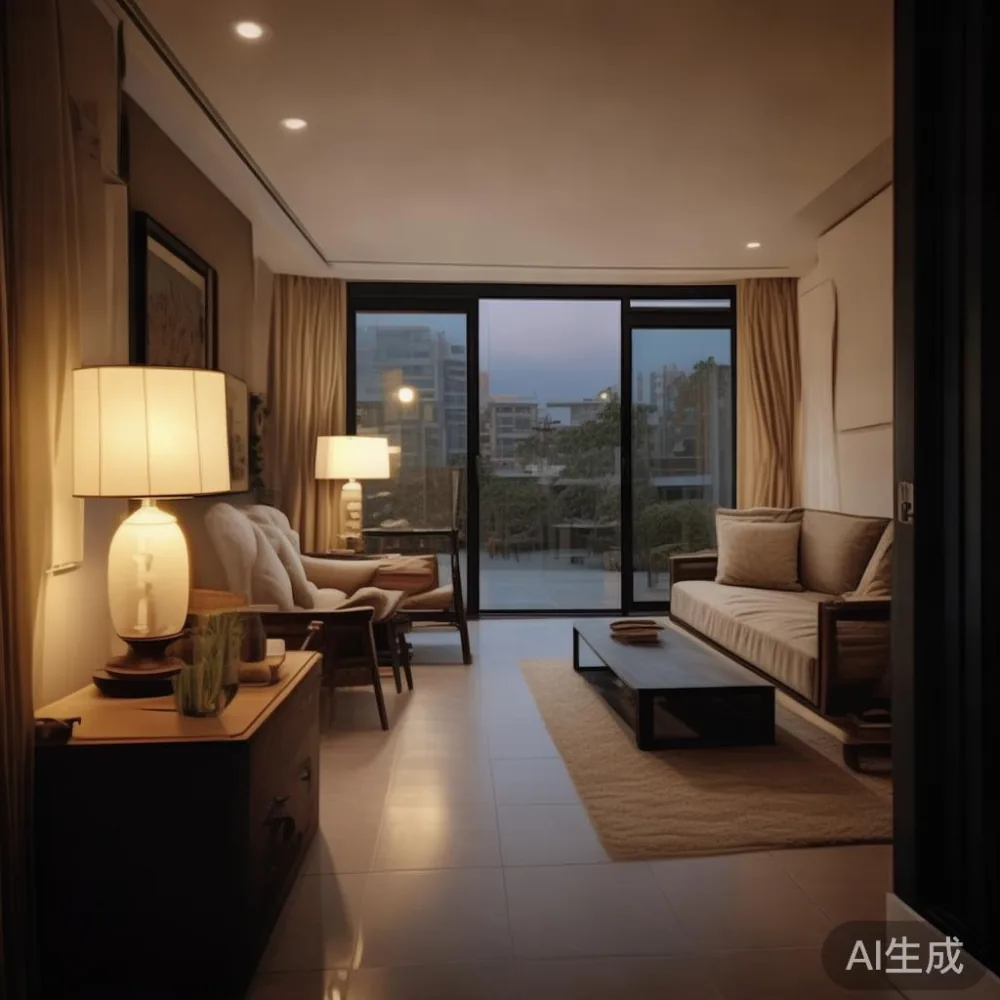
Height matters too. Most Singapore entry ceilings sit at 2.6 m to 2.8 m for newer BTOs, with some older flats in Bedok at 2.4 m. A console at 80 cm to 85 cm tall is comfortable for setting a handbag down, signing for parcels, or placing a tray for keys. Anything taller than 90 cm starts to feel like a reception desk, and anything shorter than 75 cm turns into a glorified shoe rack. For length, the rule is simple: stay within 70 percent of the wall you are placing it against. In a 1.8 m wide wall, that means a console no longer than about 1.25 m, leaving 25 cm of empty wall on each end to keep the entry from looking like a furniture showroom.
How do I choose a budget under1000 for a condo?
Set a hard cap of S$1,000 for the entryway zone, spend roughly 55 percent on one anchor piece such as a solid wood console or storage bench, 25 percent on a mirror or wall hook system, and keep the remaining 20 percent as a buffer for delivery, GST, and small styling items.
Let me break that down so the numbers are real, not aspirational. For a condo entry in Punggol or Bedok, a well-built solid wood console from a maker like MIDHILL, with its 10-year structural warranty and lifetime refinishing service, lands in the S$480 to S$750 range for a 1.1 m piece in French light luxury styling, which means pale oak or ash with brushed brass pulls. A solid wood entry bench with under-storage typically runs S$320 to S$550. A framed mirror in post-modern light luxury proportions, 60 cm by 90 cm, adds another S$120 to S$220. Add S$60 to S$90 for wall hooks, a small tray, and a doormat, then another S$80 to S$120 for delivery up to six floors and GST at 9 percent, and you are sitting around S$860 to S$1,000. That is a complete entryway, with one anchor piece, one functional piece, and one decorative piece, and it is well under the S$1,000 ceiling.
The trick, if there is one, is to resist the urge to buy three smaller items. Two pieces of entryway furniture, picked with intention, will always make a 1.5 m corridor feel more composed than five small ones. I have walked into S$4,000 entryways that felt cluttered, and S$900 entryways that felt editorial. The difference is restraint and proportion, not price.
Matching the Entryway to the Rest of the Living Room Without Mismatch
The entry is the handshake to your living room. If your living room has a heavy solid wood sofa in walnut and a marble table in a warm cream tone, a pale Scandinavian console at the door will feel like it wandered in from another flat. The fix is not to match perfectly, but to share one or two elements: wood tone, metal finish, or silhouette.
For a French light luxury scheme, that usually means a console in white oak or natural ash, with a brushed brass or matte black handle, paired with a living room solid wood sofa in a similar pale tone, and a marble table with warm veining. For an American light luxury scheme, think deeper, with walnut or smoked oak, paired with a leather-accented solid wood bed frame visible from the entry, and a marble table in cooler grey. For a post-modern light luxury scheme, you can play with contrast: a slim black console with brass tips, a curved solid wood dining table just visible past the entry, and a marble table with bold veining as a statement piece further inside.
The point is that entryway furniture should preview what is coming, not contradict it. Priya's entry console was pale ash with a brass knob, and her living room solid wood sofa was the same pale ash with brass-tipped legs. The eye registered it as one decision, not two purchases. That is the effect you want.
What Are the Real Lift and Doorway Measurements You Need Before Ordering?
Measure five things before you click add to cart, and write them on a piece of paper you keep next to your phone. Lift interior width and depth, lift door width, corridor width at the tightest corner, your front door width (usually 90 cm for HDB, sometimes 100 cm for condos), and the diagonal of any console or table you want delivered assembled.
The diagonal is the number most people forget. A console that is 1.2 m long and 40 cm deep has a diagonal of about 1.27 m. If your lift interior is only 1.2 m deep, the piece will not fit upright, and most Singapore delivery teams will refuse to tilt a solid wood console on its side because of joint stress. This is exactly the kind of detail that makes the difference between a smooth Saturday delivery and a two-week delay. MIDHILL, for example, splits larger dining tables and bed frames at the workshop so they fit through HDB lifts in standard sections, then reassembles them in your home. That is a service worth asking any furniture brand about, especially for pieces over 1.4 m long.
Another measurement people skip is the swing of their own front door. An inward-opening HDB door needs about 60 to 75 cm of clear floor space to open fully. If your console sits inside that arc, you will either scratch the door, scratch the console, or worse, trap yourself inside on a humid afternoon. I have seen both. The workaround is either to place the console against the side wall instead of the back wall, or to choose a backless bench that the door can pass over.
How Do You Style a Small Singapore Entry Without Making It Look Crowded?
Use the rule of three, but make two of them low and one of them vertical. In Priya's entry, that translated to a low console (height 82 cm), a low bench tucked underneath (height 45 cm), and a single vertical mirror above the console at 40 cm wide by 100 cm tall. Nothing else. No hooks on the wall competing with the mirror, no planters on the floor, no umbrella stand. The vertical mirror was the trick that made the 1.5 m wide passage read as a 2.4 m wide space, because it borrowed light from the corridor window opposite.
For lighting, one warm 2700K picture light above the mirror, or a small wall sconce at 1.6 m height, does more for an entry than three ceiling downlights. Singapore corridors often share lighting with the lift lobby, so a single warm source at the entry feels intentional rather than institutional. Add a doormat in a natural fibre such as coir or sisal, sized to 60 cm by 90 cm so it sits inside the door swing without catching toes, and you have a complete entry under five items.
Storage is where most Singapore entries fail. A bench with a lift-up top, or a console with two drawers, will carry far more than open shelving, and it keeps the visual line clean. If you need more shoe storage than the bench can hold, consider a tall narrow cabinet at the far end of the corridor, no deeper than 35 cm, so it does not interrupt the walking path. I have measured Priya's entry twice now, once before the renovation and once after, and the difference is not the pieces themselves but the negative space around them.
Where Does the Japandi Industrial Style USA Crossover Fit in a Singapore HDB?
The Japandi industrial style USA crossover, a hybrid of Japanese restraint, Scandinavian warmth, and American industrial proportions, works surprisingly well in a Singapore entry because it solves the exact problem HDB corridors create. Industrial gives you the slim metal frames that keep furniture visually light, Japandi gives you the low proportions and natural wood that keep the entry grounded, and the American influence pushes the scale up just enough to feel generous in a room that is only 4 m wide.
Concretely, this means a console with a blackened steel base at 75 cm tall, a solid wood top in white oak at 1.1 m long and 38 cm deep, paired with a black metal-framed mirror at 50 cm by 90 cm, and a low bench with a woven leather seat. The wood warms the metal, the metal sharpens the wood, and the proportions stay low so the ceiling height reads correctly. It is a look I have seen work in Tampines, Punggol, and Bedok condos, and it pairs naturally with a solid wood bed frame in the master, a marble table in the dining zone, and a solid wood dining table in pale oak for everyday meals.
What I like about this style for entryway furniture specifically is that it forgives a little visual weight. Because the lines are slim and the materials are honest, a 1.1 m console does not feel bulky even in a 1.4 m corridor. That is the opposite of what happens when you put a chunky French provincial piece in the same space. The lesson is to choose a style that flatters your corridor width, not one that fights it.
What Should You Ask the Furniture Maker Before You Pay a Single Dollar?
Ask seven questions, in this order: What is the assembled weight in kg? Can the piece be split for delivery? What is the warranty in years, and what does it cover? Is refinishing available, and for how many years? What is the delivery timeline to Tampines, Bedok, or Punggol in working days? What is the return window in days, and who pays return shipping? Is GST included in the listed price, or added at checkout?
A solid wood console in oak or ash typically weighs between 18 kg and 28 kg for a 1.1 m piece, which two delivery crew can handle without a trolley. A solid wood dining table for four weighs closer to 45 kg to 60 kg, which is why split delivery is non-negotiable above six floors. Warranty terms matter because a 10-year structural warranty from a maker like MIDHILL tells you the joints, frame, and load-bearing components are built to last, while a 1-year warranty from a generic online seller tells you almost nothing. Lifetime refinishing is rarer still, and it means your console can be sanded and re-oiled a decade from now without buying a new one.
On delivery, most Singapore furniture makers quote 14 to 21 working days for made-to-order solid wood pieces, and 3 to 7 working days for in-stock items. Free shipping thresholds vary, but anything over S$350 to S$500 is a reasonable benchmark. Returns within 14 days are standard for in-stock pieces, but custom orders are usually final sale, so measure twice and order once. And always confirm whether the 9 percent GST is included in the price you see, because a S$900 console with GST added becomes S$981, which can quietly push you over your S$1,000 budget if you did not plan for it.
Putting It All Together: A Sample Entry Plan for a Tampines 4-Room HDB
Imagine a 4-room flat in Tampines with a 1.4 m wide entry passage, 2.6 m ceiling height, and a 90 cm inward-opening front door. The plan I would build, working backwards from the budget, looks like this. Anchor piece: a 1.1 m solid wood console in pale ash with two drawers, around 82 cm high, weighing about 22 kg, at S$620. Functional piece: a 1 m solid wood entry bench with lift-up storage, in the same ash tone, at S$420. Vertical piece: a 60 cm by 90 cm mirror in a slim metal frame, at S$150. Accessories: a coir doormat at S$40, a set of three wall hooks in black metal at S$25, a small ceramic tray for keys at S$18. Delivery within Tampines, six floors, no lift, at S$60. GST at 9 percent on the furniture subtotal of S$1,215, which comes to S$109.35. Total: S$1,444.35.
That is over the S$1,000 ceiling for the entry zone alone, which tells you something honest: a complete, well-built solid wood entry in Singapore, with delivery and GST, sits closer to S$1,200 to S$1,500 once you do the math properly. The S$1,000 figure works if you choose in-stock pieces, skip the bench, or opt for a smaller mirror. Both paths are valid. What matters is that the numbers are real, the measurements are taken with a tape, and the entryway furniture you choose earns its 1.4 m of corridor every single day.
Walk into your entry tonight with a tape measure, write down five numbers, and treat the entry as a small project rather than an afterthought. Priya did, and hers now reads as the calmest 1.5 m of corridor I have walked through in Singapore this year.