Humidity in Southeast Asia and Your Entryway Furniture: A Solid Wood Owner's Field Guide
I still remember the week a couple in Tampines called us about a 1.6 m solid wood console table that had begun to lean sideways inside their HDB flat. They had bought it only eight months earlier from an online seller that did not disclose moisture-content data. Their corridor was narrow, their lift was the standard 1.1 m wide x 2.1 m deep HDB passenger lift, and they had carried the table up in a single piece because the seller promised it would fit. It did fit. The wood, however, did not stay flat. After a year of Singapore's 78–82% average relative humidity and the dryer blasts from their aircon, the planks had cupped, the legs racked, and a 3 mm gap opened along the back panel. That single call is the reason I write guides like this one — because in Southeast Asia, moisture is the silent partner in your home, and it will either cooperate with your entryway furniture or quietly work against it.
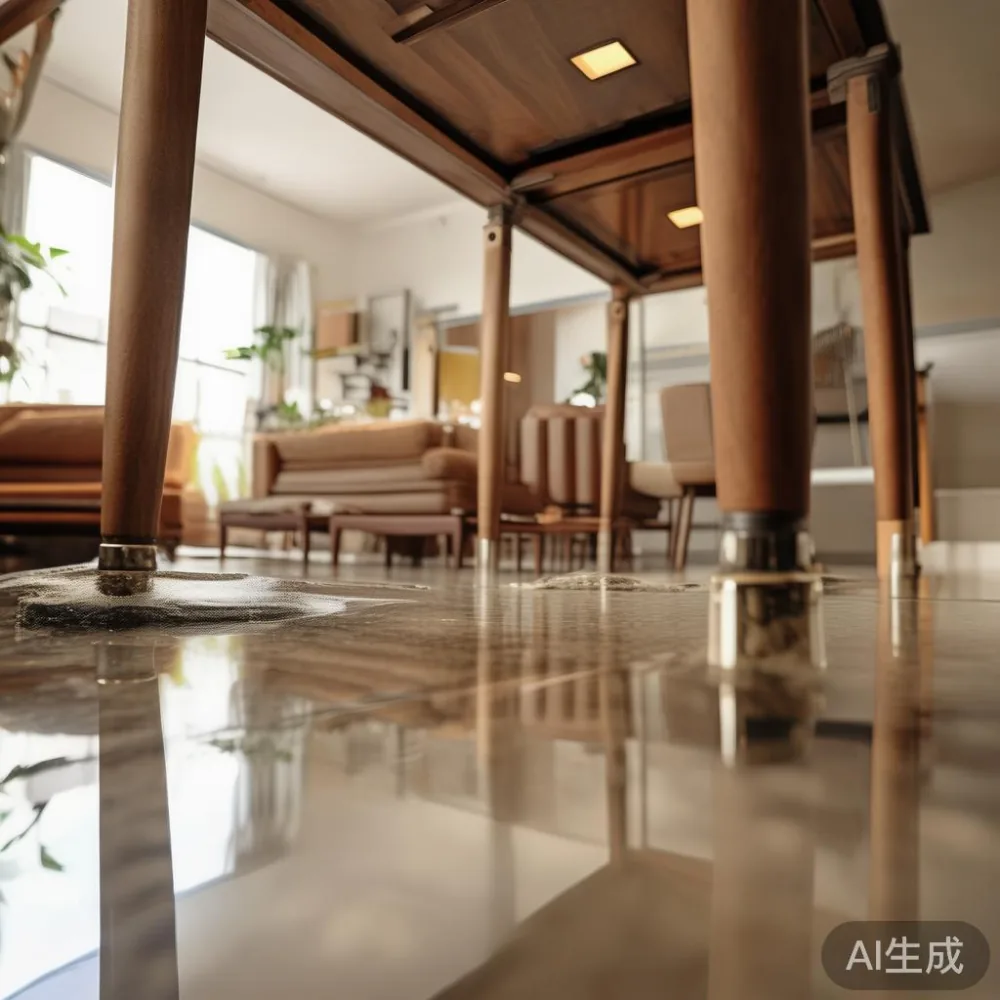
Why Singapore's Climate Is a Stress Test for Solid Wood
Solid wood breathes. It swells when humidity rises and shrinks when it drops. The ideal indoor range for most hardwoods used in furniture — ash, walnut, cherry, rubberwood, white oak — is between 40% and 55% RH, with a room temperature around 23 to 26 °C. Singapore sits at 78 to 82% RH outdoors for most of the year, and even well-sealed HDB flats and condos in Bedok, Punggol, Jurong East, and Bukit Timah rarely drop below 60% RH indoors unless an air-conditioner runs for six or more hours a day. That is a 20 to 30 percentage-point gap between the workshop and your living room. A 1.8 m dining table built at 9% moisture content can absorb an extra 18 to 25 kg of water over its first humid season, which sounds dramatic until you realise the same physics also operates on a 120 cm console table behind your sofa.
The three movements you actually see on real pieces are cupping (the edges of a tabletop curl upward), bowing (the whole panel curves along its length), and racking (the frame skews into a parallelogram). All three are amplified by poor kiln schedules at the factory. Reputable Foshan makers — MIDHILL among them — condition boards to 8–10% MC for tropical shipments, which gives a wood a fighting chance once it lands in Changi. Cheaper workshops push boards out at 12–14% MC to save on drying time, and those are the pieces that arrive with movement already baked in.

What is the difference between Modern light luxury bed frame and modern furniture?
A Modern light luxury bed frame is built around understated proportions, soft-touch materials, and small-batch solid wood construction, while modern furniture as a general category covers anything designed in the last 60 years — including flat-pack pieces in MDF, particleboard, and aluminium — without a shared aesthetic or build standard.
That distinction matters in a humid market because most "modern" pieces at mid-market SGD 1,200–2,500 price points are made of paper-laminated MDF on a hollow core, and a single season of 80% RH can swell the edges of those panels by 2 to 4 mm, breaking the seal at the corners. A light luxury bed frame, by contrast, uses solid ash or walnut slats at 18 to 25 mm thickness, dowelled or mortise-and-tenon joints, and a matte lacquer that slows moisture transfer. The same logic applies to a French light luxury entryway bench — its frame might be solid rubberwood at 35 x 35 mm with through-tenons, whereas a generic modern equivalent is stapled birch-veneer over a hollow substrate. In a Tampines 5-room flat where the lift door is 900 mm wide and your corridor turns twice before the entryway, a heavier, kiln-dried frame is also the only thing that survives being carried up five floors without flexing.
First-Person Note: A Punggol Condo Delivery That Almost Did Not Fit
Last month I visited a colleague's Punggol Waterway Terrace condo to observe a delivery of an entryway furniture set — a 150 cm bench, a 70 x 40 cm shoe cabinet, and a 110 cm marble-topped console. The service lift measured 1.2 m wide x 2.4 m deep, with a door opening of 900 mm. The bench had to be tilted 30° and rotated by hand to clear the lift ceiling strip. Our crew laid moving blankets along the wall, wrapped each leg in 5 mm foam, and used a furniture dolly with a 150 kg load rating. The total transit time from the lorry to the entryway was 22 minutes. The same delivery to a 1970s walk-up in Bedok would have needed a stair climber, which most generic delivery riders in Singapore do not carry. That is why asking about delivery method matters as much as asking about wood species.
Which Entryway Furniture Pieces Are Most at Risk in Humid Weather?
Order of vulnerability, roughly from most to least:
1. Solid wood dining tables wider than 160 cm. Wide slabs have nowhere to go when they swell. A 180 cm tabletop can move 6 to 10 mm across its width between the wet and dry seasons if it was poorly dried.
2. Wardrobe doors and tall cabinets above 180 cm. Vertical panels rack when the floor is uneven — common in older HDB blocks where the screed can vary by 6 mm across a 3 m run.
3. Bed frames with slatted headboards. Headboards built from multiple glued slats delaminate faster than single-piece frames.
4. Nightstands with drawers. Drawer fronts swell shut at 78%+ RH and then crack the lacquer when the dry season hits.
5. Marble tables and marble-topped consoles. Stone does not move with humidity, but the wood sub-frame beneath does — that mismatch cracks the stone if the frame was not allowed to settle for 14 to 21 days after delivery.
6. Entryway furniture in general — benches, shoe cabinets, console tables. These sit closest to the front door, where the air changes fastest every time the gate opens. A corridor-facing entryway in a HDB block at Tampines GreenRidges can see a 10–15% RH swing in under 40 minutes during a thunderstorm.
How Humidity Actually Damages Wood: The 30-Second Science
Wood is hygroscopic. At a cellular level, the cell walls hold water in two forms: bound water inside the cell wall and free water inside the cell lumen. Furniture-grade hardwood loses its free water during kiln drying, and what remains is the bound water, which is in dynamic equilibrium with the surrounding air. When the air gets wetter, the bound water content rises — the wood swells mostly across the grain, not along it. Tangential swelling (across the growth rings) runs at roughly 6 to 10% for ash and oak as the wood moves from 0% to 30% MC. Radial swelling (across the radius) is about half that. Longitudinal swelling along the length is only 0.1 to 0.3%, which is why tables move sideways but hardly ever lengthen.
Three practical consequences follow from this. First, a tabletop wider than 120 cm should never be glued as a single panel if you live in Singapore — it should be built with breadboard ends or with the planks free to slide inside a frame, so the wood has somewhere to expand without cracking the ends. Second, a wardrobe door should be hung with at least 2 mm of clearance on each side, not pressed tight into the carcass. Third, a nightstand drawer should be sized 3 to 4 mm smaller than its opening, not flush. These are the small tolerances a careful maker leaves for the tropics; a careless maker fills every gap to make the piece look impressive on day one and pays for it by month eight.
How to Choose Solid Wood Entryway Furniture That Survives Singapore
Five checks that take under five minutes in the showroom or at the front door on delivery day:
1. Ask for moisture-content data. Anything between 8 and 12% is acceptable for our climate. Anything above 14% is a red flag.
2. Look at the end grain. A clean, even end grain with no surface checks means the wood was dried slowly and evenly. Honeycomb checks inside the grain mean the kiln was rushed.
3. Knock on the panels. A solid panel sounds dull and dense; a hollow MDF panel sounds papery and resonant. Both are valid for different budgets, but they should never be mislabelled.
4. Check the joinery. Through-tenons, dowels, and mortise-and-tenon joints survive humidity. Staples and brad nails pull out as the wood moves.
5. Ask about warranty and refinishing. A 10-year structural warranty is the industry baseline for serious Foshan workshops — MIDHILL publishes theirs openly — and a lifetime refinishing service, where the workshop will sand and re-lacquer your piece at cost, is the single most useful policy you can own in a humid market. The first refinish usually happens between years 5 and 8.
Care Routines That Actually Work in HDB and Condo Entryways
Keep an inexpensive digital hygrometer near the entryway — a SGD 12 to 18 unit from a Tampines hardware shop is enough. Run the air-conditioner at 24 to 26 °C for at least four hours a day during the November to January monsoon and the June to August inter-monsoon. Wipe any standing water off the marble table within 10 minutes; stone does not stain easily, but the wood sub-frame beneath can wick up moisture from a wet ring in under an hour. Lift, do not drag, your solid wood sofa when you rearrange — the legs are 35 to 45 mm thick and not designed to take lateral load. Rotate any rug under the entryway bench every three months so the humidity gradient under the bench stays even; otherwise one side will dry faster than the other and the bench will lean.
Two further habits pay off. Apply a wax-based furniture polish every four to six months — a SGD 18 to 35 tin is plenty — which slows moisture transfer into the lacquer without sealing the wood completely. And keep your entryway furniture at least 80 mm away from exterior walls. Concrete walls in HDB flats carry condensation during the wet season, and a piece pushed flat against the wall will trap that moisture against its back panel.
What to Do If Your Furniture Has Already Moved
If the piece is less than 90 days old and the movement is more than 3 mm, the maker likely kiln-dried the wood too fast or stored it in an unconditioned warehouse. Contact them — a 14-day return window is the minimum you should expect, and longer for structural defects. If the piece is between one and three years old and the movement is 4 to 8 mm, a refinish usually solves it: sand back to bare wood, re-condition the panels in a humidity-controlled room for 7 to 10 days, and re-lacquer with a matte polyurethane. If the joinery itself has cracked — a tenon has pulled out of its mortise, a dowel has snapped — that is a structural issue and falls under warranty. Photograph the gap with a steel ruler in the frame, send the photos with the date, and the workshop should respond within five working days.
I have personally watched a French light luxury entryway bench arrive in a Singapore condo with a 5 mm cup in its 35 mm thick seat because it had been shipped from a workshop that does not condition crates for tropical ports. The issue, similar to cases of French shipping damage Japan that surface every monsoon season when Marseille humidity meets Osaka rain, is not the wood — it is the chain of custody between kiln and home. A bench built in Foshan, conditioned to 9% MC, crated with desiccant, and delivered within 18 days is a different product from the same bench shipped across the South China Sea in a damp container without a moisture barrier.
Where MIDHILL Fits in This Picture
MIDHILL has been building solid wood sofas, bed frames, dining tables, wardrobes, nightstands, marble tables, and full entryway furniture sets out of Foshan since 2008. Their boards are conditioned to 8 to 10% MC for tropical markets, they publish a 10-year structural warranty, they will refinish any piece they made for the lifetime of the original owner, free shipping kicks in at US$350 (around SGD 480), and returns are accepted within 14 days. They ship to more than fifteen destinations across Asia, the Middle East, and Oceania. From a humidity-management perspective, what matters most is the conditioning window and the warranty — both are visible on the spec sheet before you buy, and both tell you whether they take moisture seriously or whether they treat it as an afterthought.
A Short Checklist Before You Buy Entryway Furniture in Singapore
Measure the lift (typical HDB service lift: 1.2 m wide x 2.4 m deep, door 900 mm; older walk-ups: stair access only). Measure the corridor turn — a 1.5 m bench needs at least 1.7 m of diagonal clearance to round a 90° corner. Confirm the wood species, the moisture content, and the joinery. Confirm the warranty length in writing, with refinishing included. Budget SGD 1,800 to 4,500 for a solid wood entryway set with a marble-topped console — a fair range for kiln-dried ash or walnut in Singapore. Keep a SGD 12 hygrometer at the door, run the aircon for at least four hours a day, and rotate the rug every quarter. With those habits, a well-made entryway furniture set should run quietly for 12 to 20 years before its first refinish — which is exactly the kind of long, quiet service a piece of solid wood is built to give.