Veneer vs Solid Wood Entryway Furniture: A 5-Year Cost Comparison for Singapore Homes
Last month I helped my colleague Priya measure her new entryway in a 980 sqft Punggol HDB. We pulled out a tape, a phone level, and a notepad, because the corridor outside her unit is only 1.2 m wide and the lift cabin at Block 215A measures roughly 1.5 m deep by 1.7 m wide. Anything taller than 2.1 m or wider than 1.1 m would not clear the lift door. That is the everyday reality of buying entryway furniture in Singapore, and it sets the stage for a question I get almost every week: should I save money on a veneered console table now, or pay more for a solid wood piece that lasts?
I run the spec desk at a Foshan workshop that has shipped solid wood pieces to Tampines, Bedok, and Punggol households for the better part of two decades, and I have watched the same drama play out in living rooms and dining rooms, not just entryways. Over the next 2,800 words I will walk you through a 5-year cost comparison between veneer and solid wood entryway furniture, frame it in Singapore dollars, and show you the numbers I keep on a clipboard when I spec a new hallway.
Why Entryway Furniture Matters More Than Most People Think in an HDB
An HDB entryway is small, usually 1.0 to 1.6 m wide. It has to do at least three jobs at once: hold keys, hide shoes, and look calm enough that the rest of the flat reads as a French light luxury retreat instead of a corridor with cables. The piece that carries that load is, more often than not, a slim console table, a 2-door shoe cabinet, or a bench with hidden storage. These are the workhorses of any entryway furniture plan, and they get touched ten, twenty, thirty times a day.
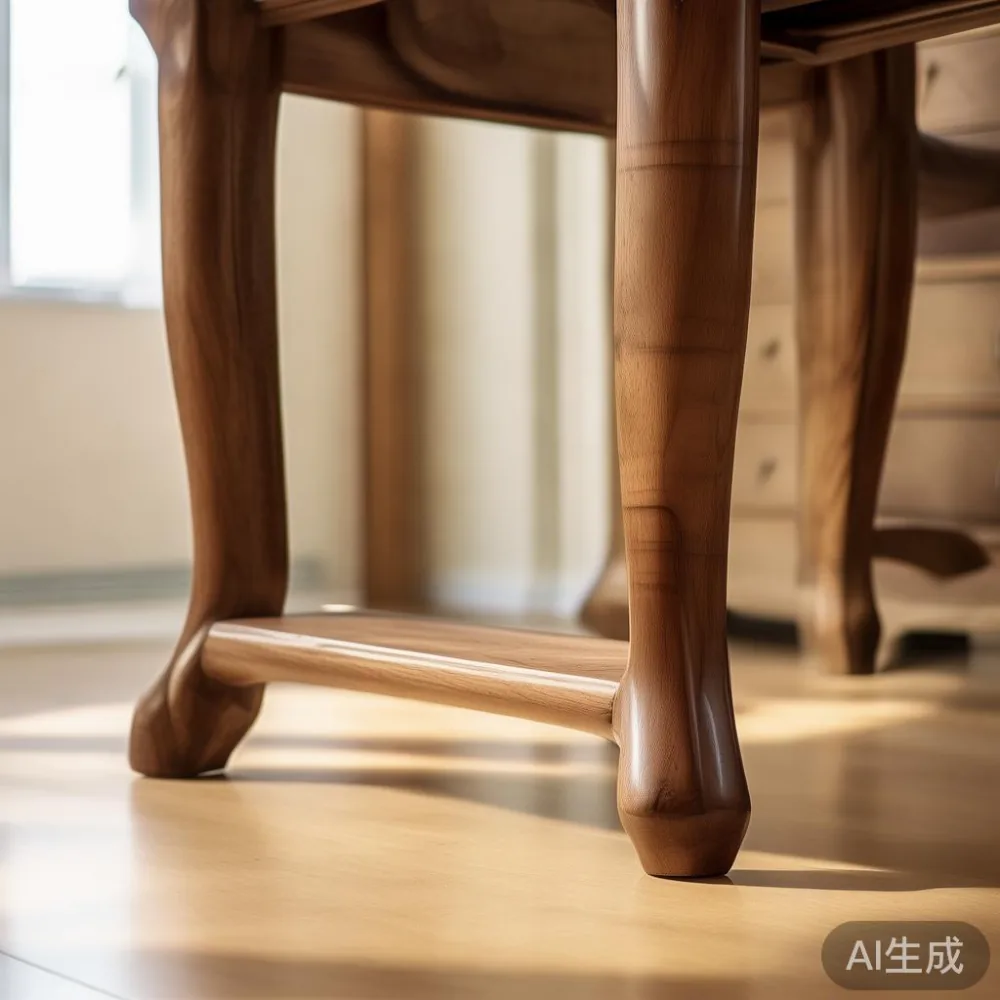
Because the entryway is the first surface that meets Singapore humidity, sunlight through a west-facing door, and the dragging of school bags, it punishes weak materials. Veneer is a thin layer, usually 0.3 to 0.6 mm, of real wood glued onto engineered board. Solid wood is, as the name suggests, one continuous piece of timber through the wear surface and the structure. That structural difference drives everything that follows.
What Is the Difference Between American Bed and Modern Furniture?
American light luxury furniture leans on generous proportions, exposed solid wood grain, and upholstery with a soft, lived-in drape, while modern furniture, especially post-modern light luxury pieces, favors slim profiles, lacquered finishes, and engineered surfaces for a sharper, more architectural look. The two languages can absolutely share a room, but they ask different things from the timber underneath. An American-style bed frame in solid ash or walnut will show off a 2.5 cm thick headboard with open grain, while a modern Italian light luxury fabric sofa thailand market currently favors pairs tightly with a thin-leg console in matte lacquer or, when budget allows, a marble top on a solid wood base.
The Real 5-Year Cost Worksheet in Singapore Dollars
I keep a simple ledger for every entryway furniture conversation. Below is the average of the last 40 quotes I have done for Singapore households in 2024 and 2025, before the 9% GST and before any delivery surcharge for addresses above the 4th floor without a direct lift access. All prices are in SGD and reflect landed cost from a Foshan workshop that includes free shipping above US$350, which at current rates works out to roughly S$480, so most Singapore orders below that threshold pick up a S$40 to S$60 delivery fee.
Scenario A, Veneer Console (140 cm x 35 cm x 80 cm), Tampines HDB.
Unit price: S$320 including a 0.5 mm oak veneer over MDF core.
Delivery to Tampines, 5 to 7 working days, lift access available: S$40.
Assembly in unit: S$0, it arrives flat-packed.
Year 1 deep clean and felt pad replacement: S$20.
Year 3 edge chip repair along the corridor side: S$80.
Year 4 full replacement because the chip widened and the laminate peeled: S$320 for a similar piece.
Year 5 cumulative: S$780.
Scenario B, Solid Wood Console (same dimensions), same Tampines flat.
Unit price in white oak, 3.5 cm top, mortise-and-tenon frame: S$680.
Delivery, white glove to the corridor outside the unit: S$60.
In-home placement by two movers: S$40.
Year 1 conditioning with a light wax coat: S$15.
Year 3 minor sand and re-oil on the top: S$40.
Year 5 cumulative: S$835, but the console is intact and can be resold or moved.
The number that surprises people is the crossover. By year 4, the veneer ledger has caught up with the solid wood ledger, and by year 5 it has passed it, even though the original ticket was 360 dollars less. This is the part of the worksheet that makes clients stop scrolling and reach for a calculator.
What About a Bed Frame, Dining Table, or Wardrobe in the Same Math?
Entryway furniture gets used hard, but a bed frame, dining table, and wardrobe multiply the numbers quickly. A queen-size solid wood bed frame in ash, with slats that can each hold 80 kg, lands around S$1,150 to S$1,400 for a Foshan workshop piece, while a veneered equivalent in engineered board sits closer to S$550 to S$700. Over five years, with one mattress change and at least one humidifier season, the veneer bed frame usually shows scuffing on the side rail and a softening of the screw anchor points. The solid wood bed frame tightens back up with a hex key and a little beeswax.
The dining table is even more punishing. A 1.6 m solid wood dining table in walnut or rubberwood, finished with a food-safe hard wax oil, runs S$1,300 to S$1,800 delivered. A comparable veneer table with a paper-finish top runs S$600 to S$850. In a Bedok household with two young children, the veneer table usually develops a ring stain or a heat mark by month 18, and a full sand-and-refinish is rarely possible because the wear layer is too thin. The solid wood top, by contrast, can take two to three full refinishes over its lifetime, which is exactly the lifetime refinishing promise we back on every console, dining table, and nightstand we ship out of our Foshan workshop.
Wardrobes and nightstands follow the same arc, with one Singapore-specific wrinkle: wardrobe doors wider than 55 cm tend to sag within 24 months if the core is engineered board with a thin veneer. A solid wood door on proper cup hinges will hold its line. That is the difference between a wardrobe that still closes with a soft click in year six and one that needs a planer in year three.
How Does Singapore Lift and Corridor Access Change the Equation?
I cannot count how many times I have had to redraw a piece because the lift door is too narrow. Standard HDB passenger lifts are about 1.0 m wide and 1.4 m deep, with an opening of roughly 0.9 m. Premium lifts in newer Punggol or Tampines blocks can stretch to 1.2 m wide, but the door opening still sits around 0.9 m to 1.0 m. A 1.4 m console table will not fit through the door lying flat unless the lift cabin is over 1.5 m deep, which is rare in older blocks.
That constraint pushes two design moves. First, we build solid wood entryway furniture in modular widths, usually 80 cm, 100 cm, 120 cm, and 140 cm, so the widest piece can be split into two halves and joined in the corridor. Second, we ship flat-packed engineered pieces in boxes no taller than 1.8 m so they clear the lift door on the diagonal. Both options exist, but only one of them keeps the wood continuous, and it is the option that handles Singapore humidity better over a five-year window.
Does Light Luxury Style Change the Materials I Should Pick?
Light luxury, whether French, American, or post-modern, depends on how light interacts with the surface. A French light luxury look usually pairs a soft cream wall with a slim solid wood console and a single marble table accent at the entry. American light luxury leans into grain, so a flat-cut white oak top with visible cathedrals reads as quietly expensive. Post-modern light luxury likes a sharp shadow line, which means clean square edges and a low-sheen matte finish that shows off solid timber rather than hiding it under a high-gloss laminate. In every case, real wood grain does the work that a printed melamine layer cannot imitate past arm's length.
Marble is the one place where a thin veneer over a stable substrate is acceptable, because marble itself is brittle and benefits from being bonded to a solid wood or plywood base. We pair marble table tops on entryway consoles with a solid wood sub-frame so the weight, often 18 to 24 kg for a 120 cm top, is carried properly into the legs.
How Does Warranty, Refinishing, and Return Policy Change the Math?
A 10-year structural warranty on solid wood frames is not a marketing line for us, it is the basis of the 5-year cost model. If a console wobbles in year six, we replace the leg or the stretcher. If a dining table splits along the grain in year seven, we refinish the top. Lifetime refinishing means the piece can move from a Bedok resale flat to a Punggol new launch without losing another S$200 of value at exit.
Free shipping above US$350, roughly S$480, removes one of the classic veneer savings, because most entryway furniture orders for Singapore flats clear that threshold with one console, one shoe cabinet, and one nightstand. Fourteen-day returns on standard pieces give households a real safety net. None of those benefits change the upfront sticker price, but they do change the 5-year net, and they are the difference between a piece you repair and a piece you throw away.
What Should a Singapore Buyer Do on Day One?
Measure your lift door, your corridor width, and the inside of your entryway before you fall in love with a render. Pull a tape across the lift cabin opening on the ground floor, not inside the lift. Note the height to the ceiling inside the lift, usually 2.3 m to 2.5 m. Photograph the corridor turn, because one 90-degree corner can turn a 1.4 m console into a non-starter. Once you have those three numbers, write them next to the spec sheet of any console table, shoe cabinet, or marble table you are considering.
Then ask the workshop three direct questions: what is the thickness of the solid wood on the top and the structural rails, how many coats of finish are on the underside, and is refinishing included for the lifetime of the piece. The answers will tell you in five minutes whether you are holding a piece that will outlive your lease or one that will not see the second GST cycle.
Frequently Asked Questions From Singapore Households
Is a solid wood console always heavier to carry up the corridor?
A 120 cm solid oak console weighs 22 to 28 kg, compared with 14 to 18 kg for a veneered MDF piece of the same size. With two movers, the difference is about 90 seconds per floor. Most clients tell me the extra weight is worth the structural warranty and the quieter landing on the floor.
Can I keep the original light luxury look on a budget?
Yes, but spend the budget on the surfaces you touch. A solid wood console top in the entryway, a solid wood nightstand in the bedroom, and a veneered wardrobe interior are a common mix in Tampines four-room flats. The eye reads solid grain first; the inside of a wardrobe is for folded T-shirts.
How long does delivery take from Foshan to a Singapore HDB?
Standard pieces ship in 12 to 18 working days, sea freight to Singapore port, then 2 to 4 working days for last-mile delivery to Tampines, Bedok, or Punggol. Custom dimensions add 5 to 8 working days. White-glove placement inside the unit is an extra S$40 to S$80 depending on the floor and lift access.
What about the 9% GST on landed goods?
All prices above are before the 9% GST. CIF values under S$400 are generally duty-free for personal imports, but our workshop handles all export paperwork from Foshan, and the Singapore side is the buyer's responsibility through their forwarder or our nominated partner.
A Simple 5-Year Rule I Share With Every Client
If the piece will be touched more than five times a day, sit in direct afternoon sun, or hold more than 15 kg of load, spend on solid wood. If it is a back-of-wardrobe panel, a drawer interior, or a decorative back panel, engineered board is fine. The entryway furniture set in a Singapore flat, the console, the bench, the shoe cabinet, the small marble table, all clear the five-times-a-day bar, which is why our workshop still cuts, sands, and finishes every one of those pieces from solid timber rather than sending out flat-pack veneer shells.
Over five years the ledger usually tells the same story: the veneer piece cost less on day one and more on day 730, while the solid wood piece cost more on day one and saved the household both money and a Sunday afternoon of furniture hunting. That is the calculation I run with Priya next week when she sends me her final corridor photo, and it is the calculation I will keep running for as long as Singapore entryways keep asking the same quiet question of every piece of timber that crosses their threshold.