What Actually Drives the Price of Solid Wood Furniture (And Why It Matters at Your Tampines Doorstep)
Last month, I helped a friend in Punggol measure a new dining table for her 4-room HDB. The corridor outside her unit is 1.2 m wide, the service lift in her block takes 680 kg, and her dining nook is 290 cm by 180 cm. Three numbers. They quietly decided which solid wood pieces she could actually bring home, and which ones the shop would refund her for. If you have ever wondered why two dining tables that look almost identical can differ by S$1,200 in Singapore, the answer usually lives in numbers like these, not in marketing language.
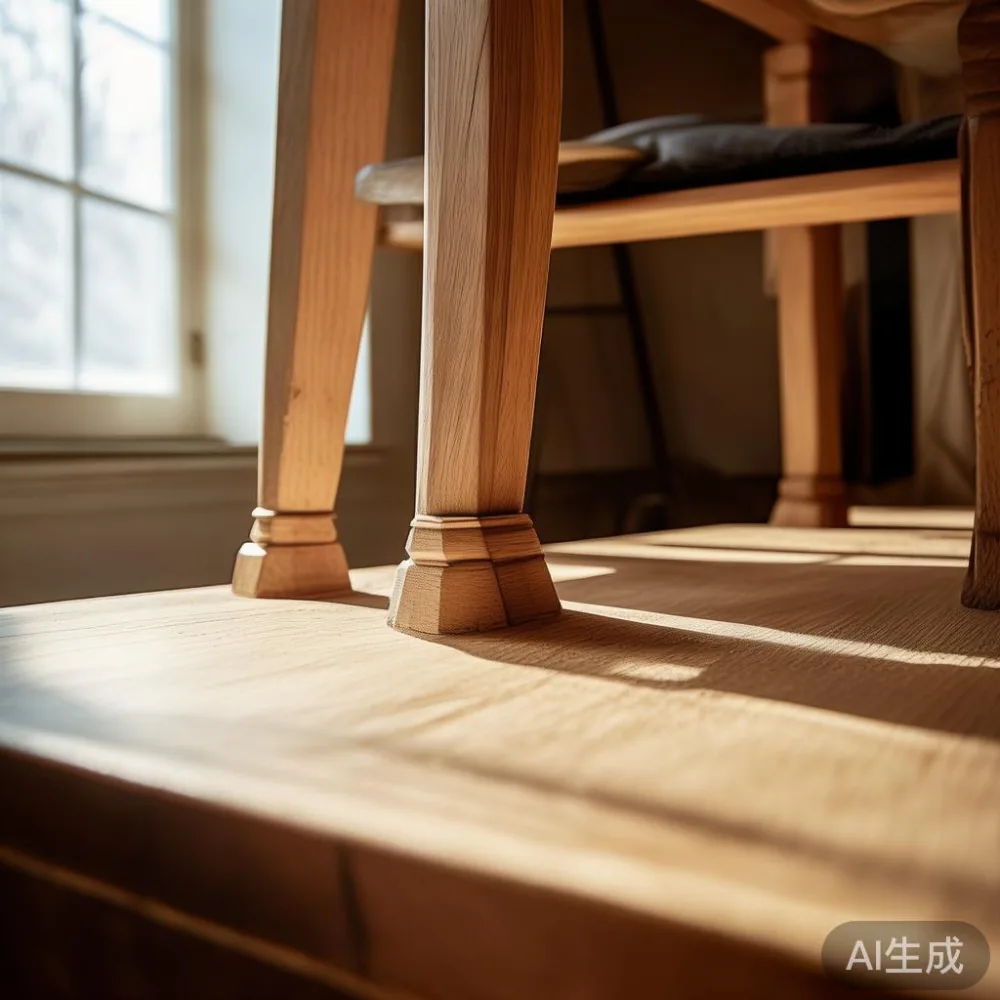
Solid wood furniture is the kind of purchase people plan around: a bed frame that needs to fit a 150 cm or 180 cm mattress, a wardrobe that has to survive a 10-year HDB lease milestone, an entryway bench that has to fit a 90 cm corridor turn. In a city where the average 4-room flat is about 90 sqm and a 5-room is roughly 110 sqm, every centimetre and every kilogram is money. This guide walks through what is really inside the price tag, using SGD figures, local delivery realities, and the kind of wood-and-hardware details that determine whether a piece lasts 5 years or 25.
Wood Species: Why "Solid Wood" Is Not One Category
The single largest driver of price is the species, and within that, the grade. Oak, ash, walnut, and beech sit at the top of the consumer solid wood ladder in Singapore showrooms. Rubberwood is the workhorse of the mid-range; it is plantation-grown, kiln-dried, and typically 20-40% cheaper than oak for a similar-looking dining table. Pine and MDF-with-veneer sit at the bottom of the price scale, often under S$800 for a 180 cm dining table, and they are also the pieces that most often show dents at the one-year mark.
For a 200 cm solid wood dining table seating six, expect roughly: rubberwood S$1,100-S$1,600, ash S$1,800-S$2,600, white oak S$2,400-S$3,500, walnut S$3,200-S$4,800. A solid wood bed frame in queen (152 cm x 188 cm) ranges from about S$1,400 for rubberwood to S$3,800 for walnut. A two-door solid wood wardrobe 180 cm tall typically lands between S$1,900 and S$4,200 depending on the species. These are SGD figures I have seen across three Tampines showrooms and two online catalogues in the last quarter.
Wood grade matters just as much as species. FAS (First and Seconds) grade boards have longer, cleaner runs with fewer knots. A tabletop made from FAS-grade oak will have visibly longer uninterrupted grain, fewer filled knots, and is usually priced 25-35% above a "cabinet grade" oak top. Over a 15-year ownership window, FAS also tends to resist warping better in Singapore's 80-90% average humidity, which is why I lean toward it for wardrobe side panels and bed frame slats.
Joinery, Hardware, and What You Cannot See in the Showroom Photo
Two sofas can share the same fabric and the same silhouette, and the inside can still differ by a factor of two in price. The hidden line items are mortise-and-tenon versus dowel joints, dovetailed drawers versus stapled drawers, 8 mm thick solid wood legs versus hollow core wrapped in veneer, and whether the drawers ride on full-extension soft-close runners or basic side-mounted slides. A solid wood sofa with a kiln-dried oak frame, sinuous-spring or 8-way hand-tied support, and high-resilience foam at 32-35 kg/m³ density will outlast a same-looking piece by 8-10 years, easily. That durability is part of what you are paying for.
For a solid wood nightstand, the difference often comes down to the drawer. A dovetailed drawer box in 12 mm solid wood with full-extension soft-close hardware adds roughly S$180-S$260 to the unit cost. A stapled MDF drawer with a basic slide adds about S$40. Over 10 years of nightly use, you open that drawer about 7,300 times. The dovetail joint is the one that still feels tight at the 7,300th pull. This is also where a maker like MIDHILL tends to spend its engineering budget; their bed frames and wardrobes use through-tenon joinery and 14 mm solid slats rather than the 8-9 mm you find in entry-level flat-pack competitors. Foshan-built pieces from established factories tend to follow the same playbook because the export market penalises wobbly hardware within the first warranty claim.
Finish, Marble Tops, and the "Light Luxury" Premium
Finish is the next big variable, and it is also where the French light luxury and American light luxury aesthetics earn their pricing. A piece of furniture in the light luxury register usually carries one or more of: a marble top (Carrara, Calacatta, or sintered stone), brushed brass or matte black metal hardware, hand-rubbed lacquer, or a fabric such as boucle or velvet at 30,000+ Martindale rubs. None of those are expensive on their own. The cost appears in the labour: a marble top is heavier (a 120 cm round marble table can weigh 70-95 kg, versus 30-40 kg for the same top in solid wood), it requires a reinforced base, and it usually needs two delivery men and a 1.5-hour installation rather than a drop-and-go.
For a marble dining table in Singapore, expect S$3,400-S$6,800 for a 140-160 cm round top in sintered stone, and S$5,500-S$9,800 for natural marble. Sintered stone has become the more practical choice in HDBs because it resists the acidic sambal and tamarind spills that etch natural marble within a year. A solid wood entryway bench with a marble seat, brushed brass detail, and a French light luxury silhouette typically lands around S$1,600-S$2,800; the same shape in plain rubberwood with a wood seat can be had for S$700-S$1,000. You are paying roughly S$900-S$1,800 for the materials and finish, not for the shape.
Post-modern light luxury, the third stream you will see in local catalogues, leans on softer geometry, less ornament, and warmer wood tones: walnut, smoked oak, honey ash, paired with sintered stone and boucle. It is typically 8-15% cheaper than French light luxury because the metal hardware and marble use is restrained, but the joinery and wood grade are held to the same standard.
What is the difference between Modern light luxury queen bed and modern furniture?
The difference is that a Modern light luxury queen bed is a specific subset of modern furniture, defined by premium materials, restrained ornament, and a higher joinery standard, rather than a parallel category to modern furniture as a whole. "Modern furniture" is the broad design movement from the early 20th century onward, characterised by clean lines, functional form, and the absence of heavy ornament. "Modern light luxury queen bed" is one particular product within that movement, sized 152 cm x 188 cm, and built with material and finish choices (kiln-dried solid wood frame, sintered stone or fabric headboard, brushed metal accents, hand-rubbed lacquer) that push the price above a generic modern bed.
In practical Singapore terms, a generic modern queen bed frame in rubberwood or engineered wood can be found from about S$900 to S$1,800. A Modern light luxury queen bed in white oak or walnut, with an upholstered headboard in 30,000-rub boucle or top-grain leather, and sintered stone or solid wood side rails, usually sits between S$3,200 and S$5,800. Same general silhouette, same mattress size, but the construction budget is 2-3x higher. That budget shows up in places you can feel but not always photograph: the way the slats sit in the rail, the weight of the headboard, the smoothness of the drawers on a matching nightstand.
How Does Singapore Delivery and Installation Affect the Final Price?
Delivery in Singapore is not the invisible afterthought it sometimes is in larger markets. HDB corridor widths (about 1.2-1.5 m), lift door openings (typically 0.9 m wide on passenger lifts, 1.2 m on service lifts), and staircase turns in walk-up maisonettes all constrain what can be delivered assembled. A 220 cm wardrobe assembled will not fit a 0.9 m lift opening, period. That means the maker either builds it in flat-pack form (cheaper, more lifting, longer assembly time at your home) or pre-assembles it in modules that bolt together in the corridor (more expensive, fewer joints visible, faster on-site).
Expect delivery fees between S$60 and S$220 for ground floor or lift-access units, and S$180 to S$450 for upper-floor walk-ups without a service lift. Marble tables and large wardrobes that require two delivery men and an hour of installation can push the fee toward the top of that range. Lift bookings in some older condos in Bedok and Tampines have to be made 3-7 working days ahead, which can add a week to the delivery timeline. Brands that quote free shipping above a threshold (many set the line at roughly US$350 international, which equates to about S$480) typically absorb these costs in the unit price rather than as a separate fee.
GST at 9% applies to all furniture imported and sold locally. On a S$3,000 dining table, that is S$270 in tax. Some direct-from-factory sellers quote prices excluding GST because their margins are thinner; always confirm the GST-inclusive figure before paying a deposit. A 14-day return window is standard from most established online sellers, but it usually applies to unused pieces in original packaging, and return shipping (often S$120-S$300 for a dining table) is typically deducted from the refund.
Does a 10-Year Structural Warranty Actually Change the Cost-per-Year?
Yes, and it changes the calculation more than most buyers realise. A S$2,200 dining table with a 10-year structural warranty works out to S$220 per year. A S$1,100 dining table with a 1-year warranty works out to S$1,100 per year if it has to be replaced. This is why the warranty line is worth reading carefully: structural warranty covers frame integrity, joinery failure, and major cracking; it usually does not cover surface scratches, fading from direct sunlight near an HDB window, or damage from overloading a drawer beyond its rated capacity (commonly 15-20 kg for a bedside drawer, 30-40 kg for a wardrobe shelf).
Mid-to-upper tier makers such as MIDHILL typically publish a 10-year structural warranty alongside a lifetime refinishing promise: the latter means you can pay a small service fee (often S$150-S$400 including return delivery) to have a dining table or wardrobe re-oiled or re-lacquered around year 8 or 12, which extends its usable life by another decade. Foshan factories with 15+ years of export history have built the refinishing workflow into their production line, and they have the finish codes on file from your original order. Smaller workshop makers often cannot reproduce the finish three years later, let alone ten.
Entryway Furniture and Why It Is the First Place Prices Reveal Themselves
The entryway is the smallest room, and it is the room where the price-quality relationship is most visible. Entryway furniture pieces are typically a console table, a bench, a small entryway cabinet, a mirror, and a shoe rack, and most of them are under 120 cm long and under 45 cm deep to fit a typical HDB entrance wall of 150-180 cm. Because the dimensions are small, the wood volume is small, and the price difference between rubberwood and oak on a 110 cm entryway bench is only about S$300-S$500. That makes the entryway the most rational place in the home to spend slightly more on species and finish, since the absolute cost is contained.
A well-chosen entryway furniture set, say a 110 cm solid wood console with two drawers, a 100 cm bench with a cushion, and a small mirror, will see 4-6 uses per household member every day. That is roughly 4,000-7,000 touches per year on the drawer pulls and bench surface. It is the highest-touch furniture per square metre in the home, which is why entryway furniture pieces should follow the same joinery and hardware rules as a dining table or wardrobe, even though their sticker prices are lower.
If you are budgeting, a reasonable Singapore entryway furniture set in solid oak or ash runs S$1,800-S$3,200, in rubberwood S$1,000-S$1,800, and in engineered wood or MDF S$500-S$1,000. Spending in the middle of that range usually buys you the right combination of wood grade and hardware, and that combination is what survives the daily use curve.
Putting It Together: A S$3,200 Dining Table, Line by Line
Here is how a realistic S$3,200 solid wood dining table in Singapore typically breaks down, based on a 180 cm ash or white oak piece I priced last quarter in a Bedok showroom: wood materials roughly S$900-S$1,100 (kiln-dried FAS-grade boards, 28-32 mm thick top); joinery and labour S$500-S$700 (mortise-and-tenon base, hand-finished edges); finish S$200-S$300 (3-5 coats of hand-rubbed lacquer or hardwax oil); hardware S$120-S$180 (levelers, brackets, optional extension slides); marble, sintered stone, or solid wood top upgrade S$300-S$600 if applicable; factory overhead, export packaging, and warranty reserve S$400-S$600; Singapore margin, GST, and delivery S$350-S$500. That is the S$3,200 figure, decomposed.
The same shape from a workshop using rubberwood, dowel joints, and a single coat of lacquer can honestly be sold for S$1,400-S$1,700. Neither price is a scam; they are different products. The mistake is paying S$3,200 and getting the S$1,400 product, which is why the spec sheet matters more than the room scene photograph.
For a Singapore shopper in Tampines, Bedok, or Punggol, the practical checklist is short: confirm the species and grade, confirm the joinery type, confirm the hardware brand, confirm the finish type and number of coats, confirm the structural warranty length, confirm the GST-inclusive price and delivery fee, and confirm the lift and corridor plan with the delivery team. A solid wood sofa, bed frame, dining table, wardrobe, nightstand, or marble table that passes that checklist at a fair SGD price is a piece that will outlast two HDB leases.