What Actually Drives the Price of Solid Wood Entryway Furniture (And Why It Matters in Your HDB)
I still remember standing in a Tampines HDB corridor last month, watching two movers wrestle a flat-pack entryway cabinet through a 1.1-metre door. The chipboard side panel cracked against the lift frame. The other client, my client actually, had paid S$689 for it three years earlier. Across the corridor, a neighbour was supervising a much slower delivery: a 78 kg solid oak entryway bench that took two men 25 minutes to carry up, but arrived in one piece and still looks new today. That visual gap, around S$2,400 versus S$689, is the entire question this article tries to answer.
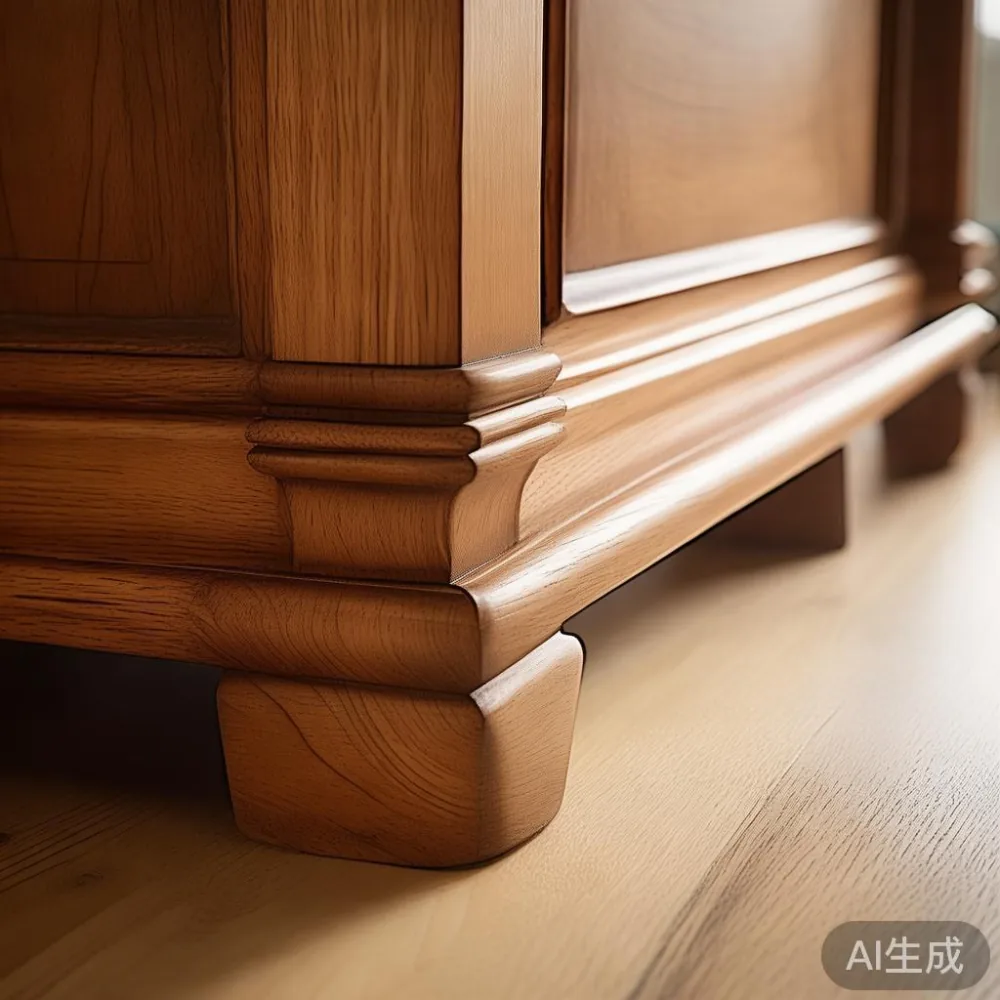
Entryway furniture in Singapore lives a harder life than most owners expect. It faces afternoon sun coming through the corridor window, monsoon-season humidity that lingers above 80%, and the daily scuff of school shoes, grocery bags, and umbrella tips. When you ask what determines the price tag on a solid wood entryway cabinet, bench, or console, you are really asking five smaller questions, and I want to walk through each one honestly. MIDHILL has been crafting solid wood pieces in Foshan since 2008, and the conversations I have had with their workshop foremen have shaped how I now explain these numbers to my own clients in Bedok, Punggol, and Bukit Batok.
Where does the wood itself come from, and why does that change the bill by hundreds of dollars?
Solid wood is not one material. It is a family of materials, and the species is the first price driver. A solid wood entryway bench made of Chinese ash (Fraxinus mandshurica) in a 120 cm length with a 35 cm seat height will typically retail in Singapore between S$1,150 and S$1,450. The same bench in Burmese teak runs S$2,200 to S$2,800. North American white oak, the kind you see on a Modern light luxury dressing table and on many American light luxury bed frames, lands somewhere in the middle at S$1,800 to S$2,300 because of freight and FSC certification paperwork.

The reason matters, too. Ash and oak are ring-porous hardwoods with tight grain, which means they resist the denting that takes place when someone drops a 4 kg backpack on the entryway bench at 7 a.m. Teak is loaded with natural silica and oils, so it shrugs off the wet umbrellas and dripping raincoats that puddle on Singapore entryway floors from October to January. Pine and rubberwood are also "solid wood," technically, but they are softwoods in performance: a pine entryway stool will show heel marks within a season, which is why serious makers tend not to use them for pieces that sit in your corridor 365 days a year.
Then there is the grade. Furniture-grade FAS (First and Seconds) timber has long, clear sections with few knots. A 38 mm thick FAS ash plank runs about 4.20 to 4.80 USD per board foot in 2025. Common-grade #2 timber, with knots every 30 to 40 cm, is closer to 2.10 USD per board foot, but you need wider boards and more joins to get the same finished panel. The labour to do those extra joins often cancels the material saving. That is why two entryway cabinets, both labelled "solid oak," can sit at S$1,600 and S$3,100 in different Singapore showrooms without anyone lying.
How much of the price is craftsmanship, and what should you be able to see with a torchlight?
Look at the underside of an entryway cabinet. Open the drawer, run your phone torch along the back panel, and read the joinery. Mortise and tenon, dovetail, finger-jittered, biscuit, cam lock, or just screws into particleboard, the joinery tells you about 30% of what you are paying for.
Hand-finished dovetails on a drawer take a skilled joiner roughly 18 to 25 minutes per drawer. A cam-lock assembly from a flat-pack takes 90 seconds. Multiply that across an entryway cabinet with four drawers and two doors, and you are looking at 1.5 to 2 hours of bench work versus 12 minutes. At a Foshan bench wage of around 35 to 55 RMB per hour (S$6.40 to S$10), that gap sounds small, but it cascades into tighter tolerances, better glue-ups, and longer sanding cycles. MIDHILL's workshop, for example, runs a 7-stage sanding protocol on every entryway surface, ending at 400-grit before oil finishing. Cheaper pieces stop at 120-grit under lacquer.
Finishes are another silent cost driver. A true hand-rubbed hardwax oil on a solid wood bed frame or entryway bench uses 80 to 120 ml of oil per square metre and three coats, with 12 to 16 hours of cure between coats. That is three to four days of floor space tied up per piece. A NC (nitrocellulose) lacquer spray finish can be done in 45 minutes. Hardwax oil gives you a surface you can spot-refinish in 2029 with a 20-minute scotch-brite rub; lacquer peels in sheets once water gets under it, and Singapore's humidity always gets under it. That is why MIDHILL offers lifetime refinishing on structural solid wood pieces, because the finish is designed to be renewed, not replaced.
Is Italian light luxury sofa worth it, and how does that idea apply to entryway pieces?
The phrase Italian light luxury, or French light luxury, or American light luxury gets used so freely that buyers in Singapore often cannot tell what they are paying for. When I explain it to my clients, I translate it into three checks: silhouette, material honesty, and proportion discipline. A post-modern light luxury entryway bench typically has a 2 to 4 mm eased edge on the seat (not a sharp 90-degree corner), tapered legs that narrow from 55 mm at the top to 22 mm at the floor, and a seat depth of 32 to 36 cm, which is the ergonomic sweet spot for tying shoes without squatting.
People ask me, "Is Italian light luxury sofa worth it?" My honest answer is that on the upholstery side, about 40% of what you pay is fabric, 25% is frame construction, 20% is cushion density, and 15% is brand and design overhead. On an entryway bench, the formula flips. The frame is the whole story: 75% of the price is wood and joinery, 15% is the finish, and 10% is hardware and design overhead. If you cannot see exposed end grain, you are not looking at light luxury; you are looking at a veneer-wrapped box with a price tag borrowed from a Milan showroom.
Last week I visited a Punggol condo where the previous owner had paid S$4,800 for an "Italian-style" entryway cabinet that turned out to be MDF core with a 0.6 mm ash veneer. The client sold it for S$350 on Carousell within an hour of listing. That is what happens when the material story does not match the price story.
How does Singapore's logistics reality add to the number on the price tag?
Solid wood is heavy. A 150 cm solid oak entryway sideboard weighs between 65 and 90 kg before packaging. Add a wooden crate (8 to 12 kg) and you are looking at a shipment that crosses the South China Sea, clears Singapore Customs, and gets delivered to a Tampines HDB on the 12th floor. Every kilogram costs money at three checkpoints: ocean freight from Shenzhen or Guangzhou to PSA (around 0.85 to 1.20 USD per kg for furniture in 2025), Singapore Customs duty (0% for wood furniture, but GST applies at 9% on the CIF value), and last-mile delivery to the corridor outside your unit.
Last-mile delivery in HDB estates is its own puzzle. The standard lift in a 4-room HDB in Bedok is about 1.1 m wide and 1.4 m deep, with a door opening of roughly 0.9 m. A 150 cm sideboard will not fit through that door flat, no matter how you turn it. Most quality makers deliver in two halves that bolt together on site, or with a removable leg system that saves 8 to 12 cm. That adds 20 to 35 minutes of on-site assembly time, which is built into the delivery fee. MIDHILL, for instance, builds its larger entryway pieces as two-bolt modules precisely so a 90 kg cabinet can clear a 0.9 m door in two trips of 45 kg each.
Free shipping is a real saving, but only above a threshold. MIDHILL waives shipping above US$350 (roughly S$470 at current rates), and most Singapore buyers clear that comfortably when they order an entryway bench plus a marble table or nightstand. Below the threshold, expect a S$60 to S$120 white-glove delivery fee within mainland Singapore, with a 14 to 21 day delivery window from order to doorstep.
What is the difference between solid wood, veneer, and engineered wood at the entryway?
I run a quick test with every client. I ask them to lift one corner of the entryway cabinet I am showing them. A solid wood piece of meaningful thickness (25 mm or greater for the top, 18 mm or greater for sides) feels like lifting a small refrigerator, dense and balanced. A veneer-on-MDF piece feels lighter at the corner because the core is hollow and the weight sits only where the solid wood edge banding runs.
Veneer has its place. A 0.6 mm oak veneer over a stable engineered core can give you a smooth entryway top that does not cup or warp in Singapore's monsoon transitions. But the moment water gets in, which happens in every Singapore entryway at some point, an MDF core swells and never recovers. Solid oak, by comparison, can be sanded back, re-oiled, and put back into service. That recoverability is the structural warranty argument: MIDHILL offers 10 years on structural joints because the joints are designed to outlast the finish, and the finish can be redone indefinitely.
American bed vs Italian light luxury bed, and why the same math applies to entryway furniture?
The American bed vs Italian light luxury bed comparison comes up every week in my client chats, and the answer translates directly. American light luxury tends to emphasise grain, mass, and visible structure: thicker posts, exposed joinery, often a 5 cm x 15 cm headboard rail. Italian light luxury tends towards slimmer profiles, integrated lighting channels, and softer edges, sometimes at the cost of structural mass. For an entryway bench meant to take 90 kg of daily load, I lean toward American-style mass. For an entryway console meant to hold keys, a 1.5 kg ceramic vase, and a lamp, Italian-style slenderness is fine.
There is also a sizing logic. A standard Singapore entryway in a 4-room HDB is about 110 to 140 cm wide and 35 to 45 cm deep. A wardrobe entered into the entryway is rare in HDB, though a 90 cm tall shoe cabinet fits comfortably; a bed frame obviously does not fit in the entryway, which is why this comparison lives in the bedroom, while the entryway gets the bench, console, and shoe cabinet. Keep the categories in their proper rooms.
How do you read a warranty, and what should you actually expect?
A 10-year structural warranty on a solid wood entryway bench means the maker is guaranteeing that the legs will not crack at the joint, the top will not split through the grain, and the stretchers will not loosen under normal residential load. It does not cover finish wear (which is normal and renewable), water damage from flooding, or modifications. A 14-day return window is standard in Singapore for online furniture purchases, but you typically pay return shipping, which can be S$80 to S$200 depending on the piece. Some makers, MIDHILL included, offer a 14-day return with pickup arranged, which removes that friction.
The product pairing is also worth thinking about. Many Singapore buyers order an entryway bench alongside a solid wood sofa, a dining table, a bed frame, and a nightstand so the wood tone matches across rooms. White oak at 180 cm wide for a dining table runs S$2,400 to S$3,200; the same species in an entryway bench at 120 cm runs S$1,400 to S$1,800. Buying them together in a single shipment cuts your per-piece freight cost by 8 to 15%, and lets the maker batch the finish so the tones truly match under your living room lights.
What is a fair price for a solid wood entryway piece in Singapore today?
Here is the working range I share with my own clients in 2025 and 2026, in Singapore dollars, before GST, for a 120 to 150 cm solid wood entryway bench, cabinet, or console from a credible Foshan-trained maker shipping into Singapore:
Solid ash or rubberwood, machine-finished, NC lacquer: S$650 to S$950. Honest pieces, short service life.
Solid ash or oak, hand-sanded, hardwax oil, dovetailed drawers: S$1,300 to S$1,900. The mid-band, where most lifetime refinishing programmes begin.
Solid white oak or teak, hand-finished, mortise-and-tenon, designer silhouette: S$2,200 to S$3,400. Light-luxury tier.
Solid Burmese teak or walnut, full custom, integrated marble or stone inlay: S$3,800 to S$6,500. Bespoke tier.
If you are paying less than S$600 for something labelled solid wood, please lift it. If you are paying more than S$7,000 for a stock entryway piece, you are paying for a brand, not a bench. There is nothing wrong with either, but you should know which one you are buying.
Frequently asked questions from Singapore buyers
Will a solid wood entryway bench warp in monsoon season?
Properly kiln-dried hardwood at 8 to 12% moisture content will move less than 2 mm across a 120 cm span across an entire year, even in monsoon humidity. Pieces that warp noticeably are pieces that were not dried properly, or were assembled from stock with very different moisture contents. Ask the maker what their kiln schedule is; a 30-day kiln at 58 degrees Celsius is a reasonable answer.
If you are shopping the best French bed for 2026 alongside an entryway bench, the same moisture discipline applies. A French-style sleigh bed in solid beech, around S$2,400 to S$3,100 for a queen, lives or dies on the kiln schedule. The best Industrial bed for 2026, which leans on thick blackened steel and rough-sawn pine or oak, can tolerate slightly more movement because the visible grain celebrates it. Pick your aesthetic, then match the moisture story.
Is a marble table worth pairing with solid wood entryway pieces?
A small marble table, around 50 cm diameter, in the entryway makes sense only if your household treats the entryway as a drop zone for keys and not as a heavy-traffic surface. Marble stains from prolonged contact with wet umbrellas and scratched by grit on shoe soles. Solid wood forgives; marble remembers. If you love the look, seal it with a penetrating sealer every 18 months.
What about the American sofa vs Nordic sofa debate, does it touch entryway furniture?
Only at the material-honesty level. The American sofa vs Nordic sofa comparison is mostly about cushion density (American: firmer, 32 to 35 kg per cubic metre foam; Nordic: softer, 25 to 28 kg) and frame construction. For an entryway piece, what matters is that the same maker applies the same frame discipline to your bench as to their sofa. A MIDHILL TV console, for example, uses the same mortise-and-tenon corner as their entryway bench, which is why it survives a 40 kg television plus cable boxes plus the occasional leaning teenager.
How long should a fair-priced entryway piece last?
A solid wood, hardwax-oiled entryway bench from a credible maker should give you 18 to 25 years of daily service in Singapore, with a 20-minute refinish every 6 to 8 years. That works out to roughly S$70 to S$95 per year of use, before inflation. A S$650 veneered piece that lasts 4 to 6 years works out to S$110 to S$160 per year, and cannot be refinished. The "expensive" piece is often the cheaper one over a 20-year horizon.
What is the simplest test I can do in the showroom?
Three checks, in 90 seconds. First, lift one corner, feel the weight. Second, open every drawer and run your finger along the inside corner: felt smooth, the drawer side is solid. Felt rough or hollow, it is veneer over a thin board. Third, ask what the moisture content was at assembly. A confident maker will answer 8 to 12%. A deflecting maker will tell you it does not matter, and that is the answer to walk away from.
Where does this leave the buyer standing in the corridor?
Solid wood entryway furniture is one of the few categories in Singapore where paying more genuinely buys you more years, not just more label. The price reflects the timber species, the grade, the kiln discipline, the joinery, the finish, the shipping weight, and the after-sale warranty, all stacked into a single number. When you understand those seven layers, the S$1,400 to S$2,800 range for a serious 120 cm solid wood entryway bench stops feeling expensive and starts feeling arithmetic.
If you are furnishing a new Punggol condo or refreshing a long-held Bedok flat, order the entryway bench first, then match the dining table, the bed frame, the wardrobe, the solid wood sofa, and the nightstand to its species and silhouette. That is how you build a home that looks designed rather than collected, and how you spend once, well, instead of twice, badly. A solid wood entryway bench built to last 20 years is a quiet kind of luxury, the kind you stop noticing because it simply does its job every single morning.