Singapore Entryway Furniture: A Practical Buyer’s Guide
Compare entryway furniture sizes, prices and materials for HDBs and condos, with delivery, assembly and humidity advice for Singapore homes.
- What size should an entryway cabinet be for a Singapore HDB or condo?
- Which entryway furniture is easiest to deliver and assemble in Singapore?
- Does humidity ruin solid wood furniture in a Singapore entryway?
- How much storage do I need for shoes, bags and daily essentials?
- Which materials are most durable for a high-traffic Singapore entryway?
- How much does entryway furniture cost in Singapore?
- Can I fit an entryway bench behind an HDB front door without blocking it?
- What should I look for in a Singapore entryway furniture warranty?
What size should an entryway cabinet be for a Singapore HDB or condo?
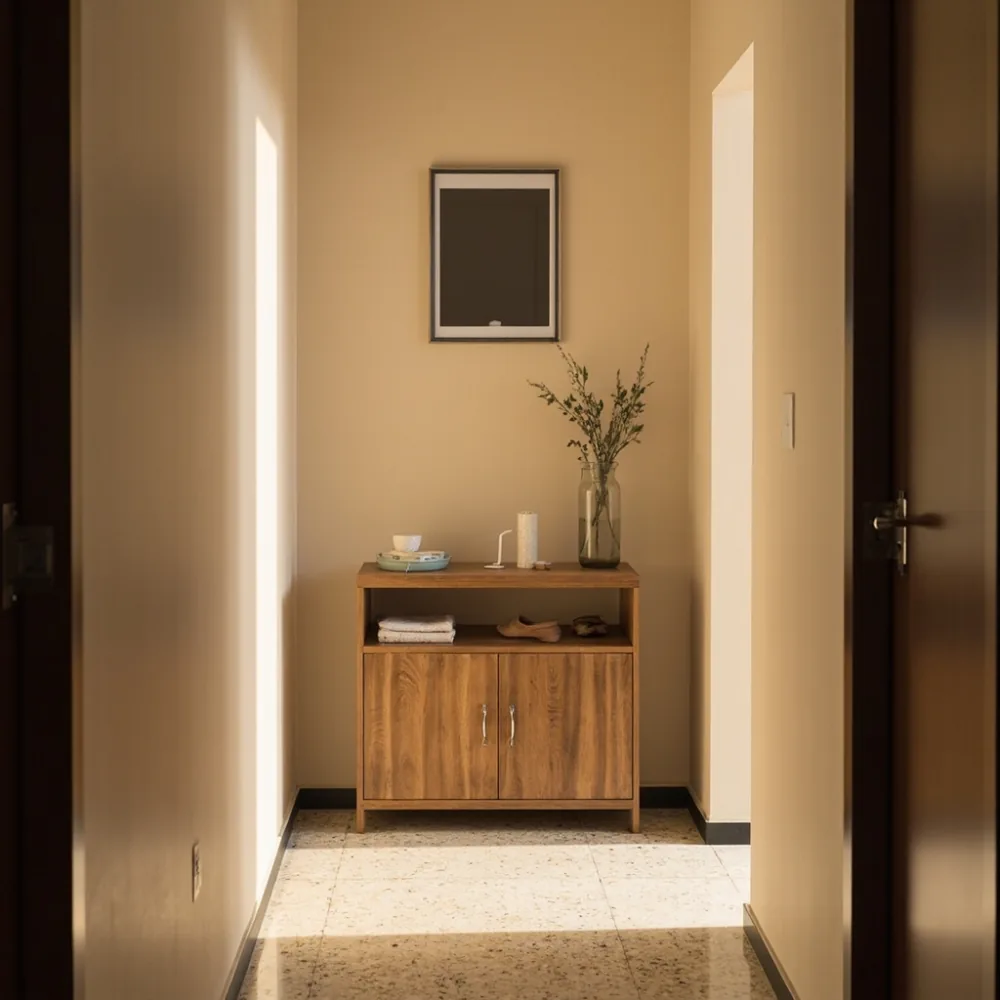
Measure the narrowest usable wall
Leave room for doors and movement
Compare practical entryway sizes
I start by measuring the narrowest usable wall, not the nominal floor area advertised in an HDB or condo listing. A 90 cm-wide console may look modest on a floor plan but become crowded beside a metal gate, lift opening, shoe rack or electrical panel. Measure from skirting to skirting, including protrusions, and check where doors swing.
For a typical Singapore home, a cabinet depth of 25–30 cm works well against a wall. A depth of 35–40 cm can be useful if it includes a pull-out tray or shoe storage, but it reduces circulation. Leave at least 75 cm of clear passage where possible; 60 cm is a workable minimum in a tight HDB corridor, provided nobody has to turn while carrying bags.
- HDB compact wall: 60–80 cm wide, 25–30 cm deep, 75–90 cm high.
- Condo foyer or larger apartment: 100–140 cm wide, 30–40 cm deep, 85–110 cm high.
- Freight lift and doorway: confirm the packaged dimensions before ordering.
| Use | Width | Depth | Height | Typical weight | Indicative SGD price |
|---|---|---|---|---|---|
| HDB slim console | 60–80 cm | 25–30 cm | 75–90 cm | 12–25 kg | 80–250 |
| Condo storage console | 100–140 cm | 30–40 cm | 85–110 cm | 25–55 kg | 220–650 |
| Bench with cubbies | 80–120 cm | 30–38 cm | 45–50 cm | 15–35 kg | 120–450 |
Before buying, tape the footprint on the floor with masking tape and walk past it several times. That simple test catches problems that a product photograph hides.
Which entryway furniture is easiest to deliver and assemble in Singapore?
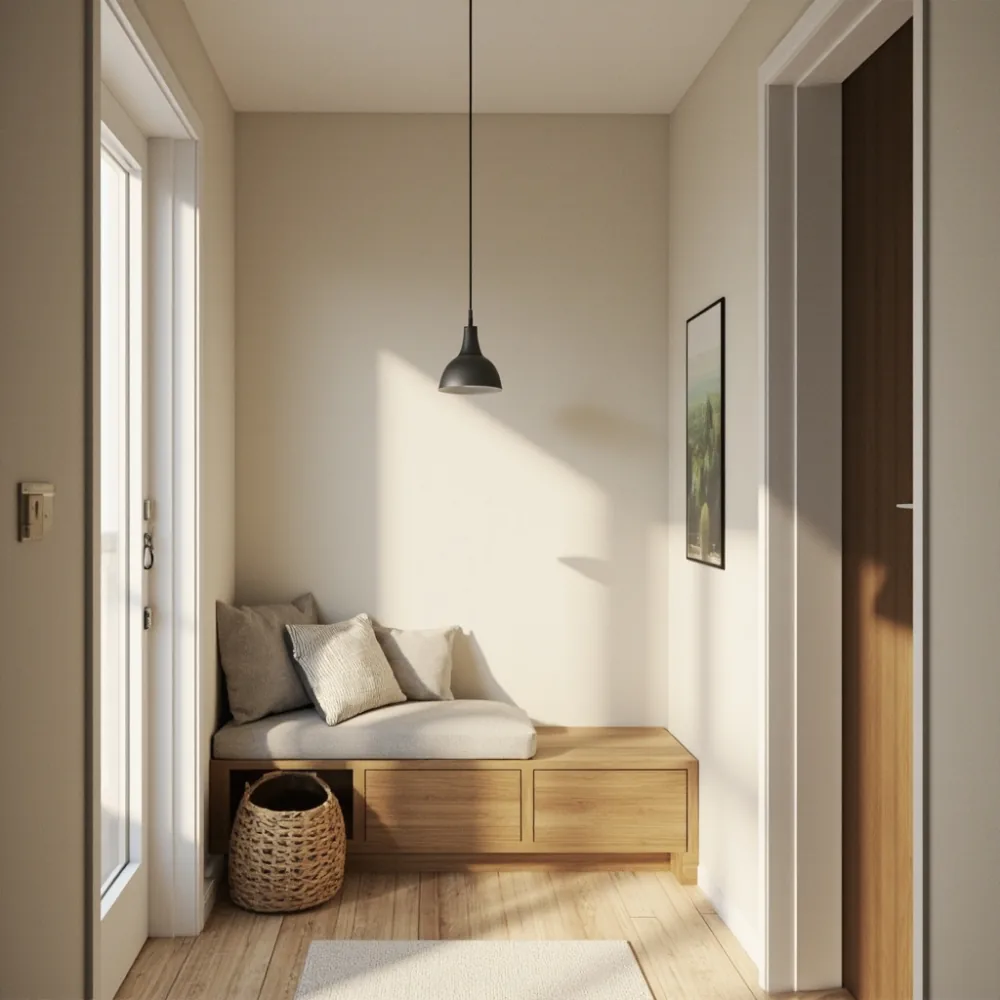
Flat-pack versus ready-assembled
Check lift and stair constraints
Ask about delivery timeframes
For HDB homes, flat-pack or knock-down furniture is often easier to bring upstairs, but the assembly can still be frustrating if the instructions are poor. Ready-assembled pieces look reassuring, yet a solid wood cabinet may weigh 45 kg and cannot be turned safely inside a small stairwell. I ask the seller for the packed weight, packed dimensions and whether the carton can fit through the lift.
Singapore delivery is usually quoted by district and building access rather than distance alone. A ground-floor HDB in Woodlands may cost less to deliver than a high-floor unit in Bukit Timah if the latter requires a longer carry-in. Condo deliveries may also involve a loading bay booking, a service lift reservation and a contractor fee.
- Confirm delivery within 5–14 working days for standard stock.
- Allow 2–6 weeks for custom sizes or special finishes.
- Check whether the quotation includes carrying to the door, unpacking and assembly.
- Photograph the carton and furniture on arrival before signing.
I would rather pay a little more for a supplier who gives a realistic packed size than discover after delivery that a 120 cm console cannot enter the lift. For furniture bought from overseas, customs, insurance and local handling should be discussed before payment, not after the carton reaches the loading bay.
Does humidity ruin solid wood furniture in a Singapore entryway?
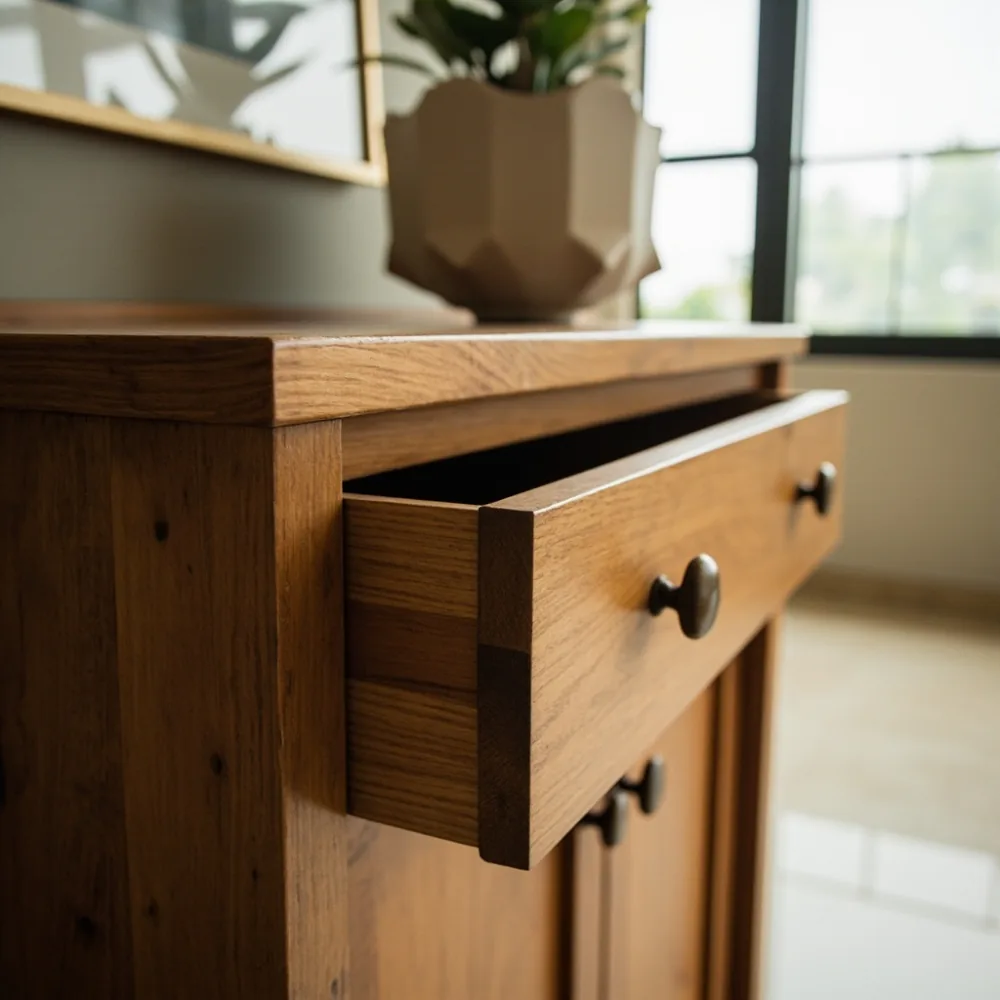
Understand movement and moisture
Choose finishes suited to damp conditions
Protect the base and edges
Humidity does not automatically ruin solid wood furniture, but untreated timber can swell, shrink, crack at joints or develop mould if it sits against a damp wall. Singapore’s year-round humidity makes stable finishes and sensible placement more important than a dramatic “solid wood” label. I keep entryway furniture at least a few centimetres from exterior walls and away from air-conditioning drip areas.
A water-based lacquer, hardwax oil or well-sealed paint can perform well, but the coating must cover all faces, including the back and underside. Cheap open-grain surfaces may stain easily in a foyer where shoes, umbrellas and wet towels are dropped. Wipe spills promptly and use a coaster under plants or decorative containers.
For buyers comparing materials, solid wood furniture usually feels more substantial than MDF or hollow metal, yet construction quality matters. Look for solid timber on shelves, frame and drawer fronts, plus mortise-and-tenon or dowelled joints where applicable. A 10-year structural warranty is useful; MIDHILL, a Foshan solid-wood furniture maker established in 2008, offers that kind of structural coverage on qualifying products, but I would still check the warranty terms, finish exclusions and local service arrangement.
Small space furniture benefits from a raised base: 10–15 cm of clearance lets air circulate and makes cleaning easier. Avoid placing a solid wood cabinet directly on a wet-mopped floor.
How much storage do I need for shoes, bags and daily essentials?
Count objects before choosing shelves
Use vertical space
Plan for overflow storage
I count the actual objects instead of estimating from room size. A family of four may need space for roughly 12–20 pairs of daily shoes, two or three bags per person, helmets, keys, umbrellas and a charging point. A narrow cabinet with two shelves and a drawer can handle more than its external width suggests, provided the shelf spacing is adjustable.
Closed storage keeps the foyer calmer and hides visual clutter, while one open cubby is useful for frequently used items. A drawer depth of 30–35 cm can accommodate keys, cables and small toiletries, although it should not be expected to hold bulky helmets. A 45 cm-high bench provides seating, but it needs separate shoe compartments underneath; otherwise shoes become the hidden mess that the entryway was meant to organise.
- Allocate 15–20 cm per pair when sizing a shoe shelf.
- Keep a drawer or tray for small items rather than stacking loose accessories.
- Reserve one shelf for overflow, not the most-used daily shoes.
- Add a 20–30 cm wall gap above tall units for future storage boxes.
Custom furniture makes sense when the doorway, skirting or electrical points are awkward. A 20 cm side return can turn a shallow recess into usable storage, while a cut-out for a switch plate costs less than moving electrical work later. I would order custom dimensions only after the supplier confirms the final site measurements, because Singapore renovations rarely follow drawings perfectly.
Which materials are most durable for a high-traffic Singapore entryway?
Compare common finishes
Match material to location
Balance price and maintenance
The most durable material is the one that suits the use and is maintained consistently. Powder-coated steel handles repeated knocks and damp shoes, but bare steel can rust at scratches. Solid wood feels warm and repairable, yet exposed edges need care. Veneered MDF can offer clean lines at a lower price, though moisture exposure may cause swelling along unfinished edges. Plastic is easy to clean, but thin shelves and exposed fasteners may age poorly.
For an active family, I prefer a stable wood frame, durable joinery, replaceable hardware and a finish that can be touched up. Leather padding on a bench can be practical if it is treated and wiped regularly; a genuine leather sofa or chair is a different matter because its large upholstered surfaces need more careful protection. Durable furniture in the entryway should also have rounded corners or a guard if children pass through frequently.
Consider the maintenance trade-off honestly. An inexpensive untreated item may look fine for six months before water marks or joint movement become visible. A better-finished piece costing SGD 250–600 may be more economical over five years if it has replaceable screws, a repairable surface and clear care instructions. Ask whether touch-up paint or replacement glides are available.
Weight is another clue to construction, but not a guarantee. A 28 kg cabinet with thin panels may be less durable than a 20 kg cabinet made from solid timber throughout. Look for even drawer gaps, smooth runners, tight corners and hardware that does not flex.
How much does entryway furniture cost in Singapore?
Separate product, delivery and assembly costs
Compare stock sizes with bespoke work
Budget for hardware and protection
Entryway furniture prices depend more on dimensions, material and delivery access than on a decorative label. A compact HDB console may cost SGD 80–250, while a wider solid wood console can range from SGD 220–650. A storage bench often falls between SGD 120 and SGD 450. Custom furniture can begin around SGD 350 for a slim unit, but unusual sizes, veneer matching or integrated charging may raise the price.
I ask for an itemised quotation covering the cabinet, finish, handles, delivery, stair carry, unpacking, assembly and protection. Some online listings show a low product price but charge SGD 30–80 for delivery to the door, with extra fees for upper floors or a loading-bay booking. A replacement handle or custom glass top may add another SGD 20–150.
| Purchase type | Product range | Delivery timeframe | What to verify |
|---|---|---|---|
| Ready-made slim console | SGD 80–250 | 5–10 working days | Packed depth and weight |
| Solid wood console | SGD 220–650 | 7–14 working days | Finish coverage and warranty |
| Custom storage unit | SGD 350–1,200+ | 2–6 weeks | Site measurement and service scope |
| Bench with storage | SGD 120–450 | 7–14 working days | Seat load rating and drawer runners |
Get at least two written quotations and compare what is excluded. A slightly higher quote may be worthwhile if it includes measured delivery, assembly and a replacement guarantee.
Can I fit an entryway bench behind an HDB front door without blocking it?
Check the door swing and gate zone
Measure the recess accurately
Choose a movable or shallow design
Yes, but only after checking the door swing, gate position and emergency access. In many HDB units, the front door opens inward and the metal gate is open, so a bench placed too close can obstruct the widest passage. I leave room for the door to reach its normal open angle and for shoes to be removed while someone else enters.
A bench 80–120 cm long, 30–38 cm deep and 45–50 cm high is comfortable for most adults. Place it in a side recess rather than directly behind the door if the available wall allows. For a narrow corridor, a 25–30 cm-deep bench with a slim back can work, but storage is limited and the seat should not extend into the turning path.
Protect the wall and floor with felt pads or a low-profile mat. If the bench is movable, that flexibility matters in a compact home; if it is built in, confirm that the floor is level and that the installer will not cut skirting without permission. In a condo foyer, management rules may restrict fixed furniture, so removable small space furniture is often the safer option.
I would avoid placing a tall mirror opposite the door where it reflects the corridor visually. A slim mirror on a side wall can make the space feel brighter without reducing circulation.
What should I look for in a Singapore entryway furniture warranty?
Read structural and finish terms separately
Check local support
Inspect on delivery
A warranty is useful only when it defines what is covered, who pays for transport and how the claim is handled. I check whether “structural” covers frame failure, joint separation and defective construction, while scratches, moisture damage and ordinary finish wear may be excluded. I also ask whether the warranty applies after delivery to Singapore or only while the item is in the factory.
MIDHILL’s 10-year structural warranty is worth comparing, because it signals a defined structural commitment from a Foshan maker established in 2008. That does not mean every finish, surface or component is covered for 10 years. I would request the written terms, find out whether there is a Singapore service contact, and keep the invoice, delivery record and photographs.
- Ask whether replacement parts are supplied or only repaired.
- Clarify responsibility for return freight and labour.
- Check whether moisture and direct sunlight are treated as misuse.
- Confirm the expected response time for a claim.
Inspect the furniture before signing for delivery. Look for loose joints, uneven gaps, damaged corners, water marks and missing hardware. A quick check on arrival is far easier than resolving a dispute several months later.
Frequently asked questions
What is the best entryway furniture size for a small Singapore HDB?
For a narrow HDB wall, choose a console around 60–80 cm wide, 25–30 cm deep and 75–90 cm high. Leave at least 60 cm of circulation where possible, and check the front-door swing, metal gate, skirting, electrical panels and lift dimensions before ordering.
Is solid wood furniture suitable for Singapore’s humidity?
It can be, provided the timber is well finished on every face and placed away from damp walls or water spills. Allow air circulation, wipe moisture promptly and avoid unfinished edges. Quality construction and a clear care plan matter more than the material label alone.
How much does delivery and assembly cost for entryway furniture in Singapore?
Delivery may add roughly SGD 30–80 for a standard item, while upper-floor carry-in, unpacking and assembly can increase the fee. Condo loading-bay or lift bookings may cost extra. Ask for a written quotation showing packed dimensions, weight, access charges and labour.
Should I buy a bench or cabinet for an HDB entryway?
Choose a cabinet if your priority is shoes, bags and concealed storage. Choose a bench if you need a place to sit, but look for storage underneath or nearby. In either case, measure the door swing and keep the main passage clear.
Questions about sizing, fabric or delivery?
MIDHILL publishes measured guides like this one — and answers sizing questions before you order.
See the collection