From Click to Doorstep: The Real Story of Buying Entryway Furniture Online in Singapore
I learned more about entryway furniture in one Tuesday afternoon than in a decade of showroom visits. A client in Tampines had ordered a solid wood console table from an overseas supplier, expecting a smooth experience. What arrived instead was a 78 kg crate that would not fit through a 90 cm corridor turn on the 12th floor, two missing Allen keys, and a courier who could not produce a customs invoice for the GST computation. Three weeks later, after a second delivery attempt and a S$180 hoisting fee, the piece sat awkwardly under a ceiling fan because nobody had checked the 2.4 m clearance at the lift lobby. That is the gap between a product page and a real HDB doorstep, and it is the gap this article is built to close.
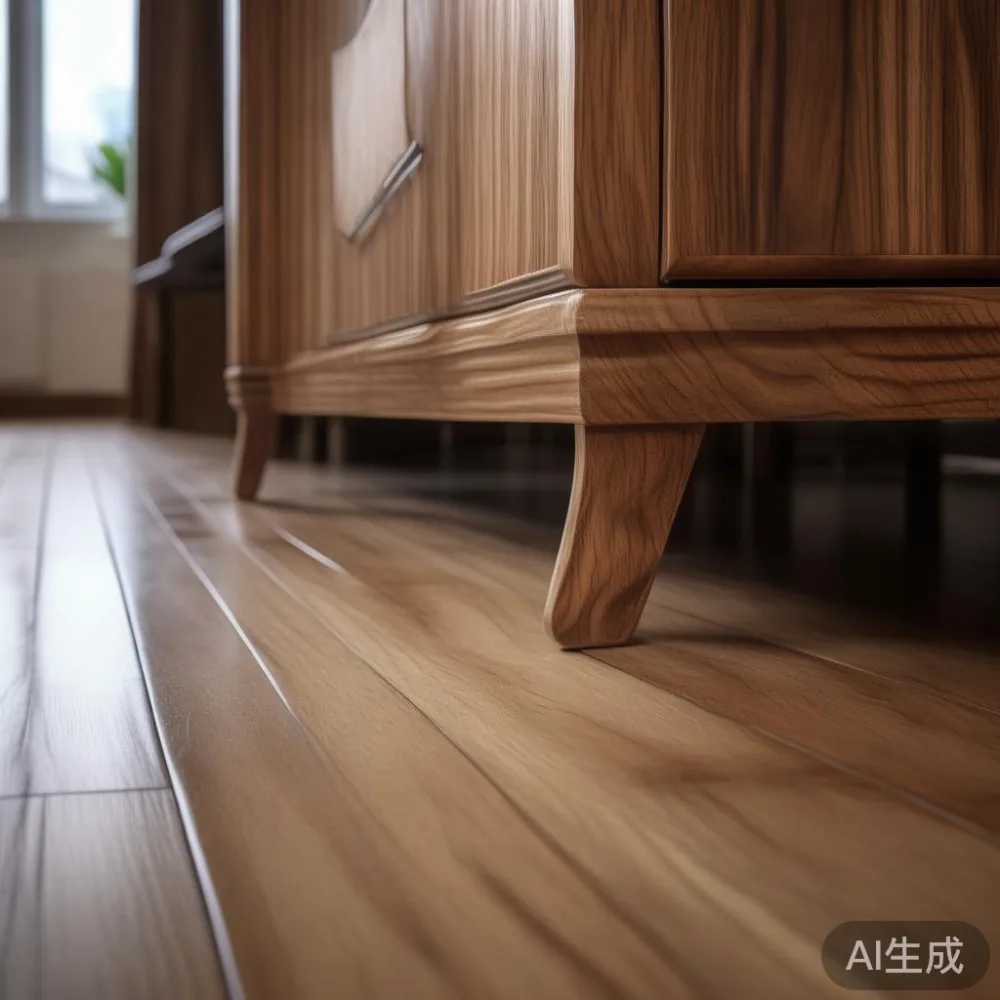
The Singapore online furniture market has matured sharply since the pandemic, but the physics of a 100-plus year-old Housing Board block have not changed. Corridor widths, lift car sizes, service lift availability, and Goods and Services Tax on imported goods still dictate what actually reaches your foyer. Whether you are shopping for a solid wood console, a slim shoe cabinet, or a marble table accent piece for your entryway furniture arrangement, the numbers below should sit in front of any deposit you pay.
What "Free Shipping" Usually Means in Singapore
Most overseas factories, including Foshan makers that export globally, advertise free shipping above a threshold such as US$350. In practice that usually means free curbside or free to-door delivery to your HDB or condo unit door, with assembly billed separately. For Singapore addresses, expect three distinct cost layers.
First, the international leg. Sea freight from South China to Singapore typically takes 18 to 28 days door-to-door when consolidated, longer during the March and October peak seasons. Air freight is faster at 5 to 9 days but doubles or triples the per-piece cost on anything over 25 kg, which rules it out for most solid wood dining tables.
Second, the Goods and Services Tax on imported goods. Singapore applies 9% GST on the CIF value (cost, insurance, freight) plus a 7% duty on wooden furniture classified under Chapter 94 of the Harmonized System. For a console table at S$1,200 CIF, plan roughly S$108 GST and S$84 duty, often absorbed by sellers shipping under DDP terms but disclosed in fine print.

Third, the final-mile handling inside the building. Standard HDB corridors measure 1.2 m to 1.5 m wide, and lift cars on older blocks are 1.1 m wide by 1.4 m deep with an 800 kg or 1,000 kg rating. A solid wood bed frame or a six-seater dining table will not fit through the lift door upright. Movers tilt and angle, but they cannot change geometry. Always measure your lift car before ordering anything above 1.8 m in its longest dimension. MIDHILL, a Foshan manufacturer shipping to more than 15 countries, publishes individual carton dimensions on every product page for exactly this reason.
Is Post-modern furniture furniture worth it?
Yes, when the post-modern light luxury style is executed in solid wood with honest joinery and a marble table accent, you get a piece that looks current for 8 to 12 years instead of 3 to 4. The aesthetic relies on soft curves, mixed materials such as travertine and walnut, and proportions around 35 to 45 cm depth for entryway furniture, which actually suits narrow HDB corridors better than chunky farmhouse silhouettes.
Post-modern light luxury pieces tend to come in lighter visual weights, which is a quiet advantage in compact Singapore entryways. A typical console table in this style weighs 22 to 30 kg, compared with 40 to 55 kg for an equivalent traditional hardwood model, and that delta decides whether one mover can carry it up a service staircase during a lift breakdown.
The honest caveat is that some "post-modern" listings are MDF wrapped in walnut veneer with plastic drawer runners. Check the spec sheet for the words "solid wood" in the frame, "FAS grade" in the timber description, and "soft-close" in the hardware list. If those three phrases are missing, the price is low because the construction is not what the style assumes.
How Long Does Delivery Actually Take From Foshan to Punggol?
For stocked models, plan 25 to 35 days from order confirmation to doorstep in Punggol, Sengkang, or Woodlands. Customised pieces, such as a wardrobe in a non-standard RAL colour or a dining table extended to 2.4 m, push the timeline to 45 to 60 days. The factory needs 15 to 25 days for production, then 3 to 5 days for export documentation and container loading in Shenzhen or Guangzhou, then 18 to 24 days at sea, then 2 to 4 days for Singapore customs clearance and last-mile dispatch.
Two local factors compress or stretch this window. First, the Chinese National Day holiday in early October adds 7 to 10 days of factory shutdown. Second, Singapore's container yards at Tuas and Pasir Panjan... Pasir Panjang experience congestion in late November that can add a week. If you need a bed frame before a fixed lease start date, order 70 days ahead, not 30.
What Does Assembly Really Involve?
Most entryway furniture ships flat-packed in cartons between 12 kg and 35 kg. A shoe cabinet 80 cm tall by 30 cm deep typically arrives in two boxes. A larger console table arrives in one to three boxes depending on whether the marble table top is crated separately in a 25 kg foam-and-cardboard shell.
For a typical two-person household with a cordless drill, expect 45 to 90 minutes per console table, 2 to 3 hours for a four-door wardrobe, and 30 to 45 minutes for a nightstand set. The instructions in mid-range products assume one tool tray, eight cam locks, and two dowel sizes. Manufacturers such as MIDHILL include a hex key set, a small spirit level, and touch-up wax in the box, which is the difference between a Saturday morning project and a Sunday afternoon argument.
Professional assembly in Singapore costs between S$45 and S$120 per piece depending on size and whether wall-mounting is required. Wall-mounting is mandatory for any tall storage unit above 100 cm in newer BTO flats, because the Building and Construction Authority's guidelines ask for furniture anchoring to prevent tip-overs. Drill into a hollow drywall section and your S$1,400 wardrobe ends up on the floor in the first tremor, so ask the assembler to use a stud finder and M6 toggle bolts rated for at least 30 kg per fixing point.
Will It Fit? The Numbers You Actually Need
Take five measurements before you add to cart. The lift car width and depth, the corridor width at the tightest turn, the service lift door width if your block has one, the staircase width if lifts fail, and the entryway ceiling height. For a standard HDB in Bedok or Tampines built after 2010, the lift car is usually 1.1 m by 1.4 m, the corridor is 1.5 m, and the ceiling is 2.6 m.
Compare those numbers against the carton dimensions, not the assembled dimensions. A solid wood sofa might be 220 cm long assembled but ship in two cartons each 115 cm long, which slides into a 1.1 m lift only if you tilt it diagonally and accept some scuffing. A dining table at 180 cm ships in a single 185 cm carton. If your lift door is 80 cm wide, that carton does not enter. Either the seller uses a shorter carton with the legs detached, or the piece is wrong for your building.
This is also where Japanese-inspired minimalism, sometimes called Japandi garage storage japan in design forums, has reshaped Singapore entryway furniture. Slim profiles of 25 to 30 cm depth, low visual weight, and pale oak tones suit HDB constraints that chunky traditional furniture cannot. A Japandi-style shoe cabinet 80 cm tall by 28 cm deep by 60 cm wide slips through tight spots, holds 12 to 15 pairs of shoes, and visually calms a narrow corridor rather than crowding it.
What If Something Arrives Damaged?
Photograph the carton before opening it. Photograph the foam. Photograph the piece with the foam still in place. Photograph the damage with a ruler next to it. Email those four images to the seller within 48 hours with the order number and a one-sentence description. Brands with a 10-year structural warranty and a documented lifetime refinishing policy will usually dispatch a replacement part within 14 days at no cost; air-freighting a single marble table top replacement from Foshan to Singapore costs the factory roughly S$280, which they absorb to protect the warranty.
Cheaper sellers respond with a 15 percent discount on your next order, which is not a remedy. Read the warranty document before paying. A 10-year structural warranty covers frame cracks, joint failure, and warping above 5 mm across the surface. It does not cover dents from vacuum cleaners, sun bleaching near a window, or scratches from a pet. Lifetime refinishing, which MIDHILL offers on its solid wood sofas, dining tables, and bed frames, covers sanding, re-staining, and re-sealing at a subsidised rate, and is worth several hundred dollars over the life of a piece.
How Do Returns Actually Work Across Borders?
Singapore's Consumer Protection (Fair Trading) Act gives you strong rights against local retailers but limited reach against overseas sellers. A 14-day return window is meaningful only if the seller arranges reverse shipping and either refunds the original freight or pays for the return. Read who pays for return shipping. If the answer is "buyer", the cost of sending a 35 kg carton back to Foshan by sea is roughly S$220 to S$380, which often exceeds the refund on a S$600 product.
For this reason, measure twice, photograph your lift car, and order a single piece first to test the supplier's delivery, packaging, and after-sales communication. A factory that ships to 15 or more countries has solved the customs and last-mile puzzle before. A factory selling only into one domestic market is still figuring it out, and you do not want to be the test case.
Are Solid Wood Pieces Worth the Wait and the Price?
Yes, for anything that bears weight, takes abuse, or anchors a room visually. Solid wood sofas with kiln-dried hardwood frames, solid wood dining tables with mortise-and-tenon joinery, and solid wood bed frames with centre support beams will outlast their MDF counterparts by 10 to 20 years. The cost premium in Singapore is roughly 40 to 80 percent over a comparable MDF or veneer piece, but the refinishing rights and the structural warranty recover that gap if you stay in the home for more than five years.
For entryway furniture specifically, where pieces are touched daily, exposed to monsoon humidity on opening the door, and buffeted by the afternoon sun, solid wood construction matters more than it does in a guest bedroom. A walnut console in post-modern light luxury proportions, sealed with a marine-grade conversion varnish, will absorb the climate and remain stable. A veneer-wrapped MDF console will delaminate at the corners within 18 to 24 months.
Marble table tops deserve a separate note. They are heavy, fragile in thin profiles, and unforgiving of uneven flooring. A 90 cm round travertine top weighs 38 to 45 kg. Use a felt-pad foot system, never a fixed centre post, and check that your HDB floor can take a 600 kg per square metre point load over the leg positions. Newer BTO slabs are rated for that. Some 1970s and 1980s blocks in Bedok and Queenstown are not, especially around balcony extensions that were retrofitted. When in doubt, ask the Town Council for the as-built floor loading.
Quick Checklist Before You Click Pay
Confirm the carton dimensions fit your lift car with 5 cm clearance on the longest side. Confirm the assembled weight is under 60 kg for any piece that must travel up a service staircase during a lift breakdown. Confirm the warranty is at least five years on structure and that the seller has a documented reverse-shipping policy in writing. Confirm the customs terms, whether DDP or DAP, and which party files the GST. Confirm the assembly time and whether the seller offers an in-country assembly partner or only video guidance.
If all six answers are clear, the gap between the product page and your Tampines or Punggol doorstep narrows to a few hours of physical effort rather than a few weeks of customer-service emails. Entryway furniture is the first thing you and every guest touches in your home, and the discipline of buying it well carries through to every other room in the flat.