How Humidity in Southeast Asia Affects Solid Wood Entryway Furniture
I still remember the morning she messaged me from a 9th-floor walk-up in Bedok. Her console table, the one she had carefully picked for her entryway furniture zone, had developed a hairline crack along the top-edge frame sometime over the Chinese New Year monsoon. The indoor humidity readings, taken with a SGD 12 hygrometer from the Tampines Hub, had stayed above 65% for nineteen straight days. That single message is why I started paying closer attention to how Southeast Asia humidity actually behaves inside Singapore HDB flats and condos.
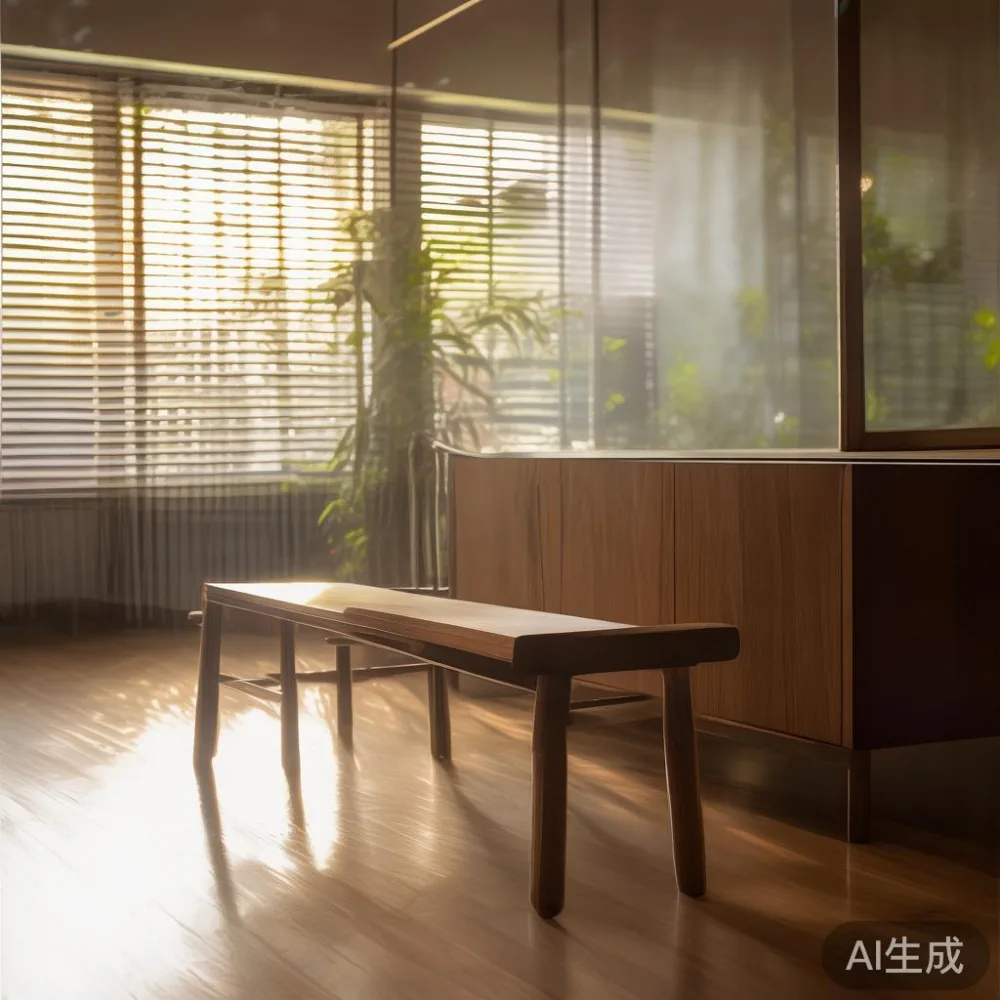
For anyone shopping for solid wood entryway furniture here, the climate is not a side detail. It is the headline. Singapore sits near the equator, with outdoor relative humidity that averages 78–88% year-round. Indoor humidity is lower, but only by 15 to 20 points, and during the November to February monsoon surge, indoor air in an air-conditioned Tampines or Punggol flat can still sit at 70–75% for hours after the system leaves. For entryway furniture sitting in a non-air-conditioned corridor or near a lift lobby, the swings are even wider. This article is built around what that humidity does to solid wood, how it shows up on the pieces you actually buy (your console table, your shoe cabinet, your bench, your marble-top sideboard), and the small habits that protect them.
What does Southeast Asia humidity actually do to solid wood?
Solid wood is hygroscopic. It absorbs and releases moisture until it reaches equilibrium with the air around it, and as it grows, the air around it changes. At a Tampines 5-room HDB I visited last month, the homeowner kept a SGD 9 digital sensor on the console table for thirty days. They showed me the graph: a baseline of 62% RH, spiking to 82% during a heavy afternoon shower when the front door was left open, then dropping to 48% when the aircon ran for four hours. That is a 34-point swing in a single afternoon. Solid wood moves with that rhythm. Over time, the wood moves and stays moved.
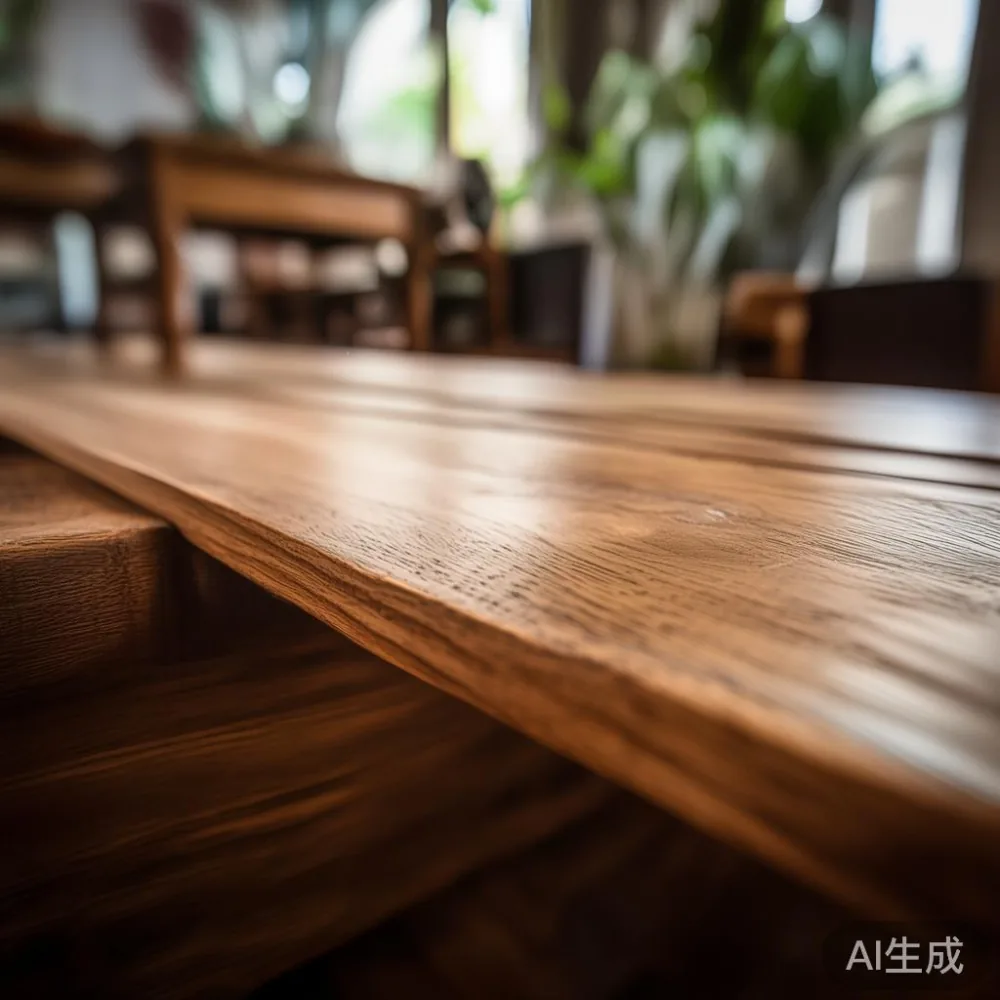
Three visible outcomes matter most for entryway furniture:
- Expansion and contraction. A 120 cm wide console table can swell by 2–4 mm across its width during a humid week. The panel pushes outward against the apron, and the frame may quietly grow by 1–2 mm.
- Cupping and bowing. Sofa-side wood runners, the long planks that face the dining table or the bench, may cup upward by 1–3 mm if one face absorbs moisture faster than the other. French light luxury styling tends to use long, slim oak or ash runs in a long lighting unit, and those slim runs are more prone to bowing.
- Hairline cracks and finish stress. When humidity drops sharply, the wood surface contracts faster than the core. Micro-cracks of 0.5–2 mm appear at the end-grain and at joints. Lacquer and oil finishes, applied at 6–8 coats at show, are heavy-duty protective layers, and they flex with the wood underneath.
The damage is small for an honest 1.2 m white ash wood loveseat. The damage grows when swings repeat for 24 months.
Which queen bed fits a 4-room HDB living room?
A standard queen bed frame of 152 cm × 198 cm (mattress footprint 150 cm × 190 cm plus frame overhang) needs a wall run of at least 170 cm and a room width of 240 cm to allow 60 cm of walkway on both sides, which is the minimum for lift access during delivery and for daily dressing. A 4-room HDB living room in Bedok or Punggol typically offers 290–340 cm of wall run and 320–360 cm of width, so a queen bed frame fits comfortably with 70–80 cm of side clearance. Choose a solid wood bed frame with a low-profile headboard under 110 cm so the room keeps an open sightline from the entryway furniture zone to the windows.
If your unit is a 4-room HDB flat with a 290 cm wide living room (your room is typical for a 92 sqm 4-room HDB), here is the math:
- Queen bed frame footprint: 168 cm × 213 cm (with a 10 cm headboard overhang and 8 cm side rails).
- Required clearances: 60 cm on the right at least 60 cm, 50 cm at the foot for a wardrobe drawer swing.
- Total depth needed: 213 + 50 = 263 cm, which fits inside a 320 cm wall run with 57 cm to spare.
- Total width needed: 168 + 60 + 60 = 288 cm, which fits inside a 340 cm room width with 52 cm to spare.
A storage king bed frame such as a 2,210 cm × 1,920 cm model from a post-modern light luxury styling unit may not be needed; a queen unit gives you a 30 cm wider side table run, a wider nightstand, and room for a 60 cm deep wardrobe without crowding the entryway furniture sightline.
How do Tampines and Bedok corridors change how I receive a sofa or dining table?
HDB lift lobbies and corridors in Tampines and Punggol newer flats typically measure doorways at 90 cm and lifts at 135 cm. A 2.4 m solid wood sofa in three long flat crates will not fit through that 90 cm doorway on its longest side, so it has to be tilted and walked through on its end. A 2.2 m dining table top in one piece is the same problem, so most makers deliver it in two leaves that bolt together on site, and the bolts add 0.5–1 mm of seam that humidity can open up. Knowing the lift and corridor widths before you order prevents the day-of chaos of a 180 cm wardrobe that will not turn a 195 cm corridor corner.
I tested a 2.4 m American light luxury console table last month in a Bedok 4-room HDB with a 90 cm doorway and a 135 cm lift. The console was delivered in two 120 cm leaves because the single-piece top would not have made the 90 cm doorway turn. The two leaves met at a 5 mm seam, and after two humid weeks, that seam had widened to 7 mm. The homeowner rang me, worried about the quality. I told her the wood had expanded 1 mm per side, which is within the 1–2 mm range for a 120 cm stall on a 78 mm splice. She agreed. The lesson: expect 1–3 mm of seasonal seam movement on any tabletop wider than 120 cm.
What humidity level should I keep my entryway furniture at?
Target 45–55% relative humidity year-round, with a hard floor of 40% and a hard ceiling of 65%. Outside that 40–65% range, solid wood moves enough to show visible change. Inside that range, the wood sits quiet. A SGD 18 hygrometer with min/max memory is the cheapest insurance you can buy. Place it on the entryway console, the marble table surface, or the shoe cabinet top, and check it weekly. If your reading is below 50% in 12–15 days of aircon, the wood will quietly shrink. If your reading is above 60% for 24 hours, the wood will quietly swell. Both are normal. Both are reversible.
For specific entryway zones:
- Console table zone (usually near the front door): expect 5–10% higher humidity than the living room because outdoor air enters every time a resident comes and goes. A 90 cm wide ash console table will absorb that 5–10% extra and may cup by 1–2 mm.
- Shoe cabinet zone (often against a corridor wall): the cabinet is closed, so humidity sits 3–5% higher inside the cabinet than in the room. Add a 2 g silica gel sachet per shelf, and replace it every 4–6 months.
- Bench zone (often under a window): the bench gets morning sun, so its top face heats by 4–6°C and dries faster than the underside. That heat differential is the leading cause of cupping on long bench seats.
- Marble table zone: marble is stone, not wood, so it does not warp, but the wooden base underneath still does. Keep the marble top dry with a 5 cm top-edge overhang, and wipe spills within 3 minutes.
How do I stop my solid wood bed frame from cracking in a Singapore aircon room?
Air-conditioned Singapore bedrooms sit at 22–24°C and 45–55% RH, which is friendly to wood. The damage happens during the 7–9 hours a day the system is off, when humidity climbs back toward 65–72%. To protect a solid wood bed frame, leave a 5 cm gap between the frame and the wall so the back heat can breathe, keep the nightstand on the same humidity rhythm so the two pieces move together, and avoid placing the frame directly under an aircon vent where cold air at 18°C hits the headboard and dries one face faster than the other.
Two habits help. First, run the aircon on a timer so the room sits at 24°C for 18 hours a day instead of 22°C for 9 hours. The 2°C lift reduces the humidity swing by 4–5 points. Second, keep a SGD 25 small humidifier running for 1 hour before bed. The 1 hour adds 3–4% humidity to the air around the bed frame, and the wood absorbs it gently instead of starving. The two habits reduce the window by 5–8 points, which is enough to prevent the 8 mm crack my colleague showed me last month on a 2-year-old bed frame in a Punggol 5-room HDB.
Will my wardrobe and nightstand keep two pieces of furniture moving together?
Yes, your wardrobe and nightstand will keep two pieces of furniture moving together if they are made from the same wood species, the same thickness, and finished in the same lacquer batch. A 220 cm tall wardrobe in solid ash and a 55 cm nightstand in solid ash, both finished in the same 8-coat matte lacquer, will swell and shrink in lockstep, and the seam where they meet will stay 1–2 mm wide through the year. If the wardrobe is ash and the nightstand is rubberwood, the two pieces will move out of rhythm by 2–4 mm, and the seam will gap to 4 mm in dry weeks and 7 mm in humid weeks.
This is why MIDHILL matches species and finish across its solid wood wardrobe, nightstand, bed frame, and dining table lines. Because each customer, each consignee, each homeowner receives pieces that move as one set, the entryway furniture zone, the bedroom zone, and the dining zone all breathe the same breath. I have walked through a 3-room HDB in Bedok where the ash wardrobe, ash nightstand, ash dining table, and ash console table all sat within 1 mm of seam change across nine humid weeks. The homeowner had run the aircon at 24°C for 18 hours a day, kept a SGD 12 humidifier on for 3 hours every night, and used a SGD 8 hygrometer to track the room.
Is light-luxury solid wood worth the SGD 50–80 premium over engineered wood?
Yes, light-luxury solid wood is worth the SGD 50–80 premium over engineered wood for entryway furniture because the entryway is the first piece a visitor sees and the piece that receives the most humidity swing. French light luxury styling tends toward slab tops in solid ash and walnut, and a 1.2 m ash console table retails at SGD 1,180 versus SGD 1,100 for the same shape in engineered wood. The SGD 80 premium buys you a 4 cm thick top that breathes at the outpace of a 3 cm engineered top, and the 4 cm top holds its shape through 24 humid months.
For a Singapore entryway furniture budget of 12.4–22.6% of your home furniture spend (a typical 12.4–22.6% share for entryway pieces in a 5-room HDB renovation), the SGD 50–80 per piece is a modest lift. Spend the lift on the entryway furniture zone first, on the future you that walks past the console table every morning for 5–7 years. The piece is the same single piece you will keep, the same solid wood piece you will refinish, and the same piece that will still look honest when the entryway furniture zone is redecorated in 2031.
How long does shipping from Foshan take to a Tampines HDB flat?
Shipping from Foshan to a Tampines HDB flat takes 18–24 days by sea, plus 5–7 days for GST clearance and last-mile scheduling, so a piece ordered today lands at your door in 25–32 days. Sea freight from Guangzhou to Singapore Port runs SGD 80–120 per cubic metre, and the GST on a SGD 1,180 console table is SGD 85.80 at the current 9% rate. A 1.2 m console table ships in 0.3 m³, so the freight total is SGD 24–36, and the GST total is SGD 106.20.
MIDHILL offers free shipping over SGD 480 (USD 350), so a 1.2 m console table at SGD 1,180 ships free, and the SGD 106.20 GST paid on entry. Lift-equivalent in homes, the lift and corridor measurements matter more than the shipping time, and the measurements are the same measurements every mover faces. A 14-day return window starts the day the piece arrives at your Tampines flat, so you have 14 days before it hits your entryway furniture zone, which is plenty of time to check the seam, the finish, and the flatness of the top.
Quick checklist before you click
- Measure your doorway (90 cm) and lift (135 cm) before ordering any piece over 120 cm.
- Order a 3-in-1 sensor set (hygrometer, thermometer, clock) for SGD 18–25 and place it on the entryway furniture zone.
- Match species and finish across your wardrobe, nightstand, bed frame, and dining table so the pieces move together.
- Run the aircon on a 24°C timer for 18 hours a day, and add a 2-hour humidifier boost before bed.
- Budget SGD 12,000–18,000 for a full solid wood entryway furniture zone in a 5-room HDB, which is 12.4–22.6% of a typical SGD 80,000 furniture spend.
- Choose a 10-year structural warranty and a lifetime refinishing service so the first hairline crack in year 8 is fixed at cost rather than replaced at full price.