Warm Minimal Entryway Furniture for Singapore Homes
A warm minimal interior is not an empty corridor. It is a carefully edited sequence of oak, linen, off-white walls, matte black details, and one or two objects that make the entrance feel inhabited. For Singapore HDB flats and condos in Tampines, Bedok, and Punggol, entryway furniture must work hard within a limited footprint while still making the home feel calm rather than clinical. The right console, bench, shoe cabinet, or narrow storage unit establishes the visual language of the entire home before you reach the living room.
Dimensions are only one part of the decision. You also need to account for lift access, corridor turning space, daily humidity, the direction of the light, and the number of shoes, bags, keys, and deliveries that pass through the area. A warm minimal scheme gives you permission to use fewer pieces, but each piece should earn its place through proportion, function, and material quality. MIDHILL designs entryway furniture around this balance: solid timber construction, restrained forms, and practical sizes suited to urban homes.
What proportions work in a Singapore entryway?
Begin with the clear wall length, not the available floor area. Measure it in centimetres from the doorframe to the nearest wall return, and write down the ceiling height as well. A common HDB entrance offers roughly 90–140 cm of usable wall beside the door, while a compact condo corridor may provide only 70–100 cm. Leave at least 5 cm between a freestanding console and a wall when cables or skirting need clearance, and keep 80 cm of circulation space in front where possible.
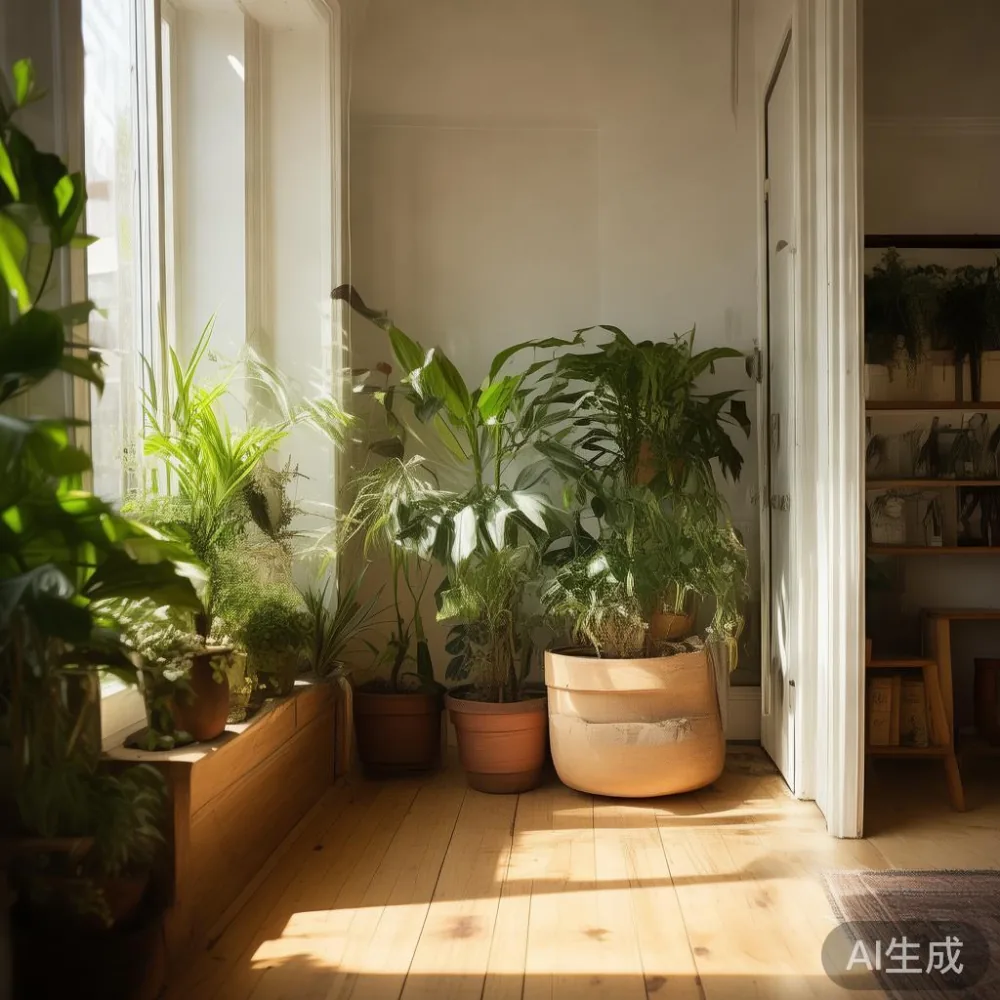
For a slim console, a width of 80–100 cm and depth of 28–35 cm often feels more composed than a larger unit. The ideal height is 75–90 cm, aligned closely with the nearby door hardware and visible at a glance. A bench can be deeper at 35–42 cm if it doubles as seating. Avoid squeezing a 120 cm cabinet into a 90 cm recess merely because it offers more storage; the visible tension outweighs the practical gain.
Delivery access matters just as much as interior proportion. Check the HDB lift dimensions and the turning radius from the lift lobby to your flat. Ask the supplier for the packed carton measurements rather than assuming the assembled size will pass. A console that is 90 cm wide may arrive in a carton measuring 98 × 42 × 18 cm, so the route needs room for that carton to be turned without scraping the corridor.
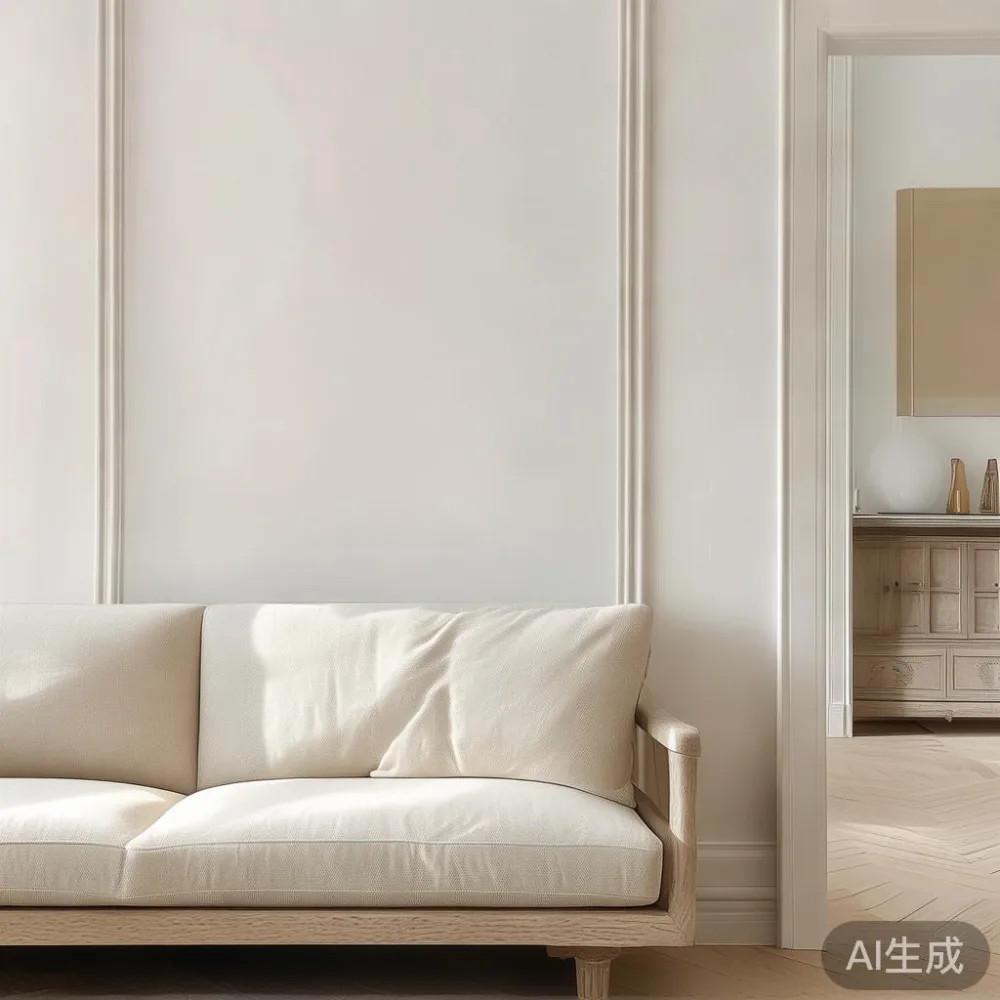
One practical rule is to reserve 15–20% of the entry floor for visual breathing space. This matters in warm minimal design, where light and shadow do more of the work than decoration. A narrow gap beside a full-height storage unit can prevent the entrance from looking crowded even when the actual furniture is modest in size.
Which woods make an entry feel warm instead of cold?
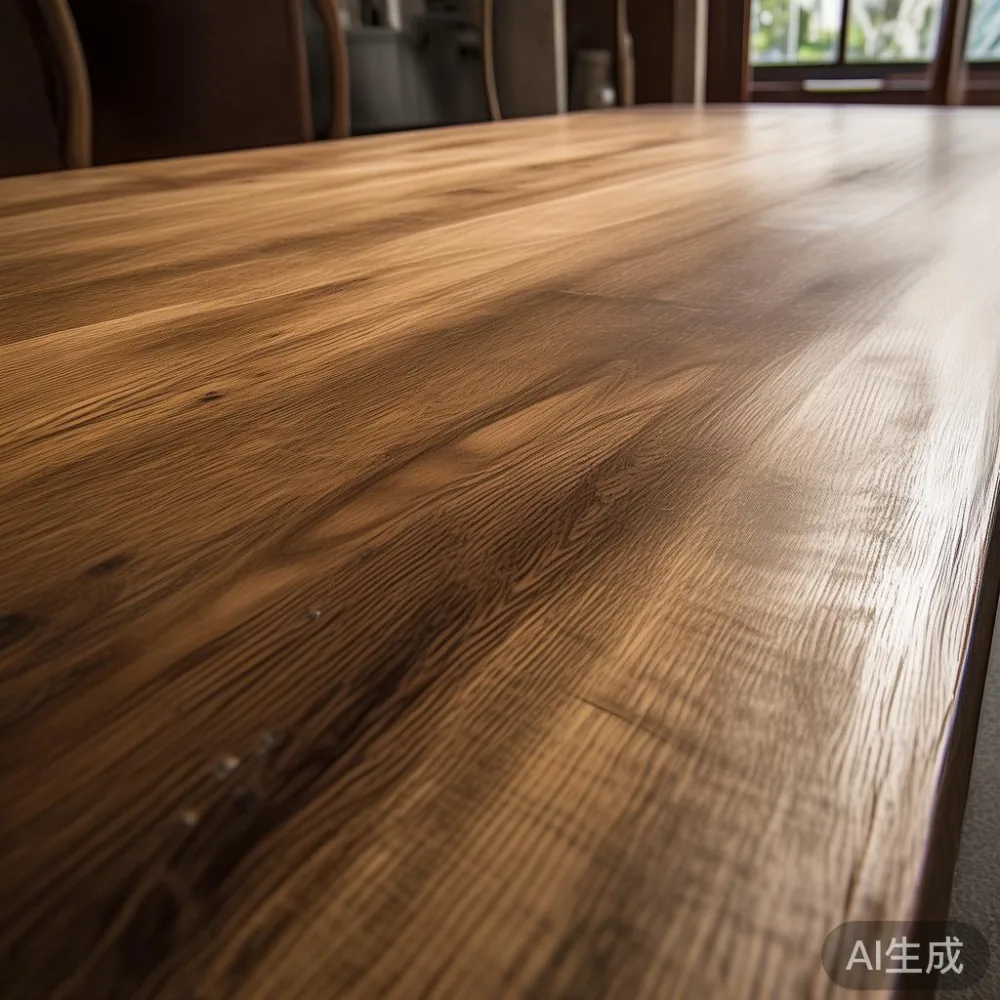
Warm minimal interiors depend on the natural variation in wood. Pale oak, ash, and light beech create an airy Scandinavian effect, while walnut and teak add depth and an American light luxury character. The finish matters more than the colour label: open-grain oak with a matte oiled surface absorbs diffuse daylight and makes white walls feel softer. High-gloss lacquer can look sharper, but it needs careful maintenance and reflects corridor lighting harshly.
In Singapore, choose solid wood or a clearly identified timber construction rather than a thin decorative veneer over unstable board. Look through product specifications for the wood species, panel thickness, joinery, and finish type. A practical entry bench might use 18–25 mm solid timber components, with a moisture-conscious finish suited to the local climate. The furniture should tolerate frequent contact without developing around-the-door hotspots, a problem often caused by radiators or direct air-conditioning airflow.
The same timber language can carry beyond the entrance. If the living room contains a solid wood sofa with oak legs and the bedroom has a matching bed frame, the entry console will feel connected rather than isolated. A dining table with a warm matte top can also set the tone for the home. Maintain a common undertone: pair blond oak with cream upholstery, or walnut with charcoal and brushed brass. Limit the entry palette to 2 main materials and 1 accent, such as timber, ivory, and matte black.
Light-luxury positioning is useful here because it focuses on restraint and finish rather than ornament. French light luxury often uses pale timber, bouclé, and delicate profiles; post-modern light luxury introduces cleaner geometry with one sculptural element. For an entrance, the latter is usually more practical than ornate curves or elaborate carving.
How do you keep entryway furniture functional without making it crowded?
Function should be decided before style. Count the household’s daily footwear and divide it by the number of people using the space. A two-person household may need 8–12 pairs of daily shoes, plus space for 2–4 pairs of guest footwear. A cabinet with 2–3 internal levels is often enough. If shoes are removed at the bedroom or lift lobby, a smaller tray and hanging rail may be sufficient.
Consider what arrives at the door. In HDB blocks, parcel deliveries are frequent, so a surface 20–30 cm above the floor can receive a 30 × 25 cm box without blocking the passage. That measurement also gives room for a slim letter tray, a key dish, and a small lamp. Keep the working zone less than 35 cm deep if the corridor is narrow. If more storage is required, move the shoes into closed cupboards and use the console as a drop zone instead.
For families, a 90–120 cm bench with a removable tray can accommodate 2 people, although crowded corridors may require a 60–75 cm perch. Add a 4–6 cm cushion if the bench is used for longer periods. A hook rail placed 10–12 cm above the console top can hold 2–4 light bags, but hanging heavier totes too low may pull the timber out of alignment over time.
Mirrors can make a compact entrance appear larger, but placement affects usability. A mirror 25–40 cm wide is sufficient for checking one’s appearance; a full-length mirror needs 150 cm of vertical clearance and 8–12 cm of side clearance. Avoid positioning it directly opposite another reflective surface, which can create glare under common corridor lighting.
What should I buy first if I am renovating an HDB flat?
Start with the largest fixed element in the entrance, then work down. If the door position cannot change, design around its swing and the clear route from the lift. A closed shoe cabinet may be more useful than an open console because it conceals visual clutter and controls the tone. For a family of 3–4, a cabinet 80–100 cm wide and 30–38 cm deep can hold daily shoes while keeping the entrance orderly.
Next, establish the main material. If the living room already has a solid wood sofa, echo its timber tone in the entrance rather than introducing a competing finish. If the home’s palette is led by a walnut dining table, use darker wood sparingly on a bench or cabinet base. The entry should preview the interior, not compete with it.
Lighting is the third layer. A warm 2700K–3000K wall light or table lamp softens pale timber and complements brass hardware. Aim for enough illumination to find keys at night, but avoid a bare 5000K bulb, which can make natural oak look grey. Dimmable lighting allows the entry to remain visually quiet during the day. If there is no nearby socket, a rechargeable lamp can reduce the need for exposed wiring.
Budget in Singapore dollars with the installation and delivery process included. Allocate about SGD 400–900 for a well-proportioned solid wood console or compact shoe cabinet, with a complete fitted storage wall potentially ranging from SGD 1,200–2,800. Prices vary with timber, dimensions, hardware, and finish. Local purchases may include GST; for imported pieces, confirm whether the quoted price includes GST and delivery to your block.
Can entryway furniture work with a bedroom and living room in Japandi style?
Yes, provided the entry uses the same principles as the main rooms: light timber, functional storage, clean lines, and tactile textiles. If you are comparing options and searching for “is Japandi bed worth it,” the answer depends on whether its proportions and construction suit your bedroom. A low solid wood bed frame can support the same calm material story as an oak entry bench, but a very low frame is unnecessary in an entrance.
Coordinate scale rather than duplicate every item. A rectangular console with softened corners relates to a simple bed frame, while a round mirror echoes a circular bedside table. The entry can carry a slightly stronger presence because it is the threshold, but it should not introduce a new colour family. Warm Japandi styling often works with cream walls, pale oak, woven fibres, and blackened metal kept to a small area.
When extending the concept into the bedroom, “Modern light luxury for bedroom” can mean a upholstered headboard, a restrained solid wood bed frame, and a compact nightstand with a closed drawer. Keep the nightstand 40–50 cm wide and place it within 15–20 cm of the bed edge for convenient reach. An oak nightstand beside a timber bed reads as calm; beside a glossy marble table, it may look too rustic unless the grain and finish are carefully balanced.
How do you style an American sofa beside warm minimal entryway furniture?
An American sofa brings a more generous, lounge-oriented character, so the entrance should remain disciplined. If you are searching for “how to style American sofa in bedroom,” the material palette matters more than matching the sofa exactly. A deep solid wood sofa in oatmeal, taupe, or muted olive works well with oak entryway furniture. If the sofa has dark walnut legs, a slim black metal frame in the entrance can connect the spaces without requiring identical timber.
Use one repeated detail across the route: for example, brass handles on the entry cabinet and a pair of brass bedside lamps, or black rails on the console and matching bedside frames. Repetition makes a modest flat feel intentional. Avoid placing every colour from the living room in the entrance, where there is less space and less natural light.
For larger homes, the living room may include a marble table with a cream or grey top. That cool surface can be balanced by warm timber at the entrance. Keep the transition gradual: an oak console leads to a solid wood sofa, which sits near a marble table, followed by a bed frame in a related wood tone. The entrance becomes the first chapter of a coherent material story.
How can I compare furniture photos with the actual product?
Gallery images are useful for judging proportion, but they can distort scale. Look for “french sofa gallery photos” that show the complete piece at eye level, then compare the seat height and arm depth with your own room. For entryway furniture, request photographs in daylight, under warm artificial light, and from directly above. The gaps between doors and walls should be visible; an image that crops the edges may hide excess width or poor clearance.
Ask for an unedited photograph of the timber surface, including the underside, rear panel, and internal storage. Natural solid wood can vary in grain and colour, so a representative sample or clear finish specification is useful. Check whether the drawer runner and hinge brands are named, and confirm the warranty covers structural failures rather than only manufacturing defects.
MIDHILL was established in 2008 and exports to more than 15 countries, so product photographs should be treated as a starting point rather than the sole basis for a purchase. Compare stated dimensions with the physical space. A 90 cm console photographed in a 4 m room may overwhelm a 1.2 m corridor in a Punggol condo, while the same piece could look appropriately compact in a larger Tampines flat.
For those studying the wider design vocabulary, a search for “wholesale Mid-century modern furniture” may reveal tapered legs and gentle curves that work well in warm minimal homes. A “Mid-century modern coffee table” can inspire the entry’s rounded edge or slim tapered supports, even if the entry piece itself is a narrow cabinet. The principle is proportion and shape, not a literal historical reproduction.
What delivery and ownership details should Singapore buyers confirm?
Before payment, request the packed dimensions, assembled weight, delivery lead time, and lift-access conditions. Some entryway furniture is delivered fully assembled, while longer console tops or wardrobes may arrive in multiple cartons. A typical lead time can be 7–14 days for standard configurations and 20–35 days for made-to-order pieces, but the supplier should confirm the current schedule.
Check whether the courier carries the item into the flat or only to the ground-floor lobby. Lift reservation may add 1–3 days and could carry a separate fee. Corridors in older HDB blocks may be narrower than internal room doors, so turning the carton at the stairwell or lift entrance can be the most difficult part of delivery. A clear route and two helpers should be arranged for items over 30–40 kg.
Also confirm the warranty and after-sales process. MIDHILL provides a 10-year structural warranty and lifetime refinishing, which is useful for solid timber exposed to daily handling. If the entry receives strong afternoon sun, ask which refinishing service applies and whether there is a recommended maintenance interval of roughly 12–24 months, depending on use and finish.
Shipping offers can simplify comparison, but check the threshold and exclusions. International purchases may qualify for free shipping above US$350, equivalent to approximately SGD 450 at a general exchange rate of about SGD 1.29 per US$1. The rate, customs treatment, GST, and local delivery can change, so use www.midhill.co to verify the current terms. Local buyers should also retain a 14-day return window where applicable, while noting that made-to-order sizes and custom finishes may be excluded.
How do you create a warm minimal entrance with only 3 pieces?
Choose one substantial storage element, one supporting surface, and one soft or reflective detail. A 90 cm solid wood console with closed storage, a 60 cm bench, and a 35 cm round mirror create a balanced entrance without filling the wall. Keep the lower shelf at least 12 cm above the floor so shoes and daily objects remain easy to access. Alternatively, pair a narrow 40 cm cabinet with a 70 cm bench and a small lamp.
Limit decorative objects to 3–5 visible items: a tray, one bowl, and a small plant with a 12–15 cm pot. Avoid several tiny objects that require constant dusting. Warm minimalism works through spacing, texture, and light. Let the timber remain visible, use one textile element, and clear enough surface area for keys and deliveries.
Finally, view the entrance from inside the home and from the front door. The furniture should look proportionate in both directions. If it blocks the door or creates a dark tunnel at night, the solution is not always a larger cabinet; it may be a narrower body, paler finish, or a different position. Measure again after the delivery route is confirmed, then place the console against the longest uninterrupted wall.
The most effective warm minimal entryway furniture feels calm because every dimension has been resolved. Correct width protects the corridor, solid timber brings texture, closed storage contains daily clutter, and warm light softens the transition from shared spaces into the home. The result is not merely a place to leave shoes; it is a durable visual welcome.