How to Match Furniture to a Warm Minimal Interior (Singapore Entryway Edition)
Singapore homes have a personality problem that most overseas guides ignore. A 990 sq ft Punggol Simei-type BTO in Tampines, a 1,200 sq ft Bedok resale, and a 1,500 sq ft Punggol executive condo share the same three constraints: a service yard door that eats wall space, a corridor that rarely passes 1.2 m wide, and a lift cavity roughly 1.6 m deep with a 2.1 m height. Add 9% GST on top of landed costs, plus a typical S$1,200–S$1,800 freight-and-lift-up surcharge for imported solid wood, and the room for guesswork evaporates. This is a guide for entryway furniture that survives HDB lift openings, looks warm, and stays minimal — written for people who would rather spend on a single solid wood piece than decorate with regrets.
What does "warm minimal" actually mean for entryway furniture?
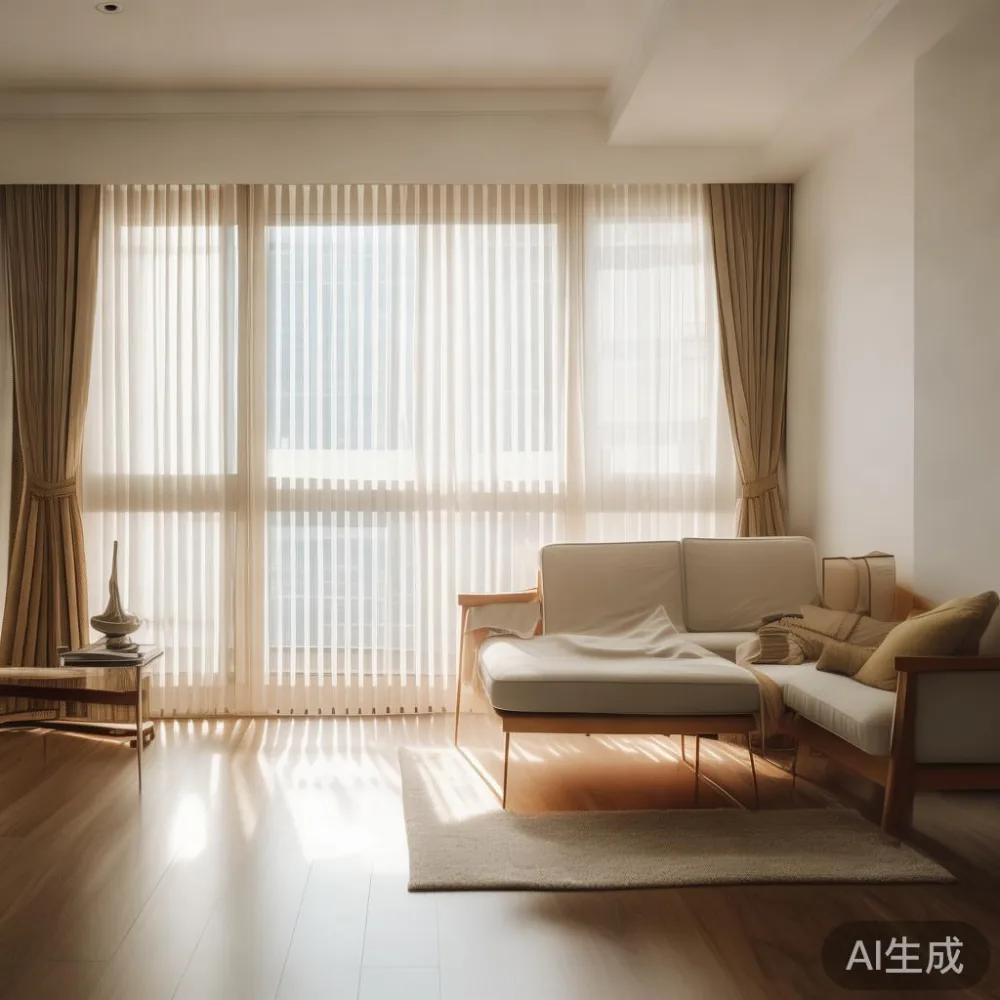
Warm minimal is not the all-white Scandinavian showroom look, and it is not the brown-on-brown American suburban either. Warm minimal uses low-saturation colour (off-white walls, warm beige, oat, putty, light taupe), one strong timber tone across two or three pieces, and almost zero ornament. In a Singapore entryway, that translates to a bench seat at 38–45 cm height, a console that sits between 75 cm and 85 cm tall, and at least one piece that introduces texture — usually a stone-top console, a fluted solid wood wardrobe door, or a marble table tray.
The trick is to keep the silhouette restrained while letting one item do the heavy lifting. A Punggol family I visited last month had replaced their old mirror-and-shoe-rack combo with a 120 cm white oak console from MIDHILL, an off-white fluted bench seat, and a single ceramic vase. The total spend was S$2,640 before GST, and the corridor now reads as one composition instead of a dumping ground. That is warm minimal in practice: fewer objects, one timber tone, one stone accent, and a console deep enough (35–40 cm) to hold keys, mail, and a tray without crowding.
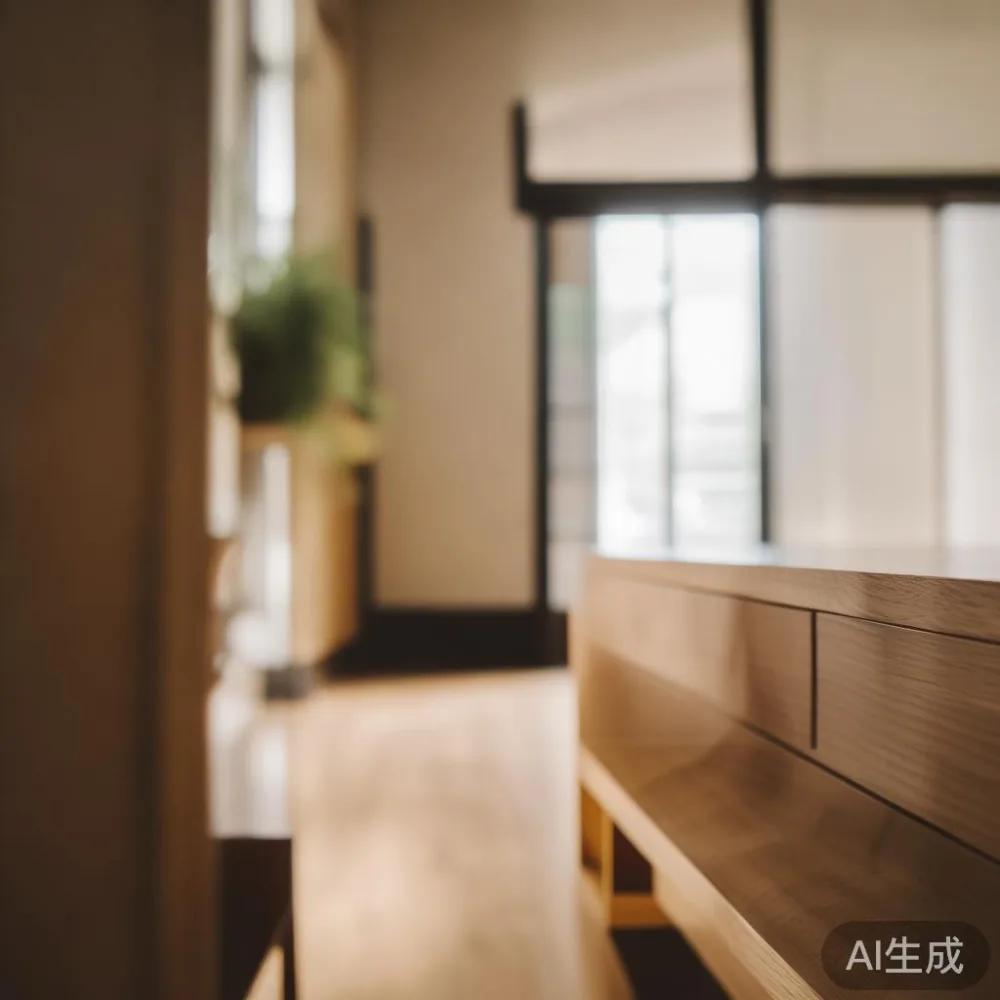
Materials matter more than colour here. Solid white oak, ash, or walnut outperforms MDF for this style because the grain gives warmth without adding visual noise. A 1.4 m solid wood bench seat in oak at roughly S$1,050 sits visually lighter than a veneered MDF unit at S$650 because the wood tone is uniform from every angle — there is no edge banding reflecting harsh corridor lighting.
How wide should an entryway console be in a Tampines 4-room flat?
Measure the corridor wall first, then subtract 20 cm of breathing room on each end. A standard 4-room BTO corridor gives you 160–220 cm of usable wall. The console should never exceed 60–65% of that length, so the sweet spot is 100–140 cm wide. Depth is the more overlooked number: stay between 32 cm and 40 cm. Anything over 42 cm starts eating into the 1.2 m corridor and forces guests to shuffle sideways past the shoe rack.
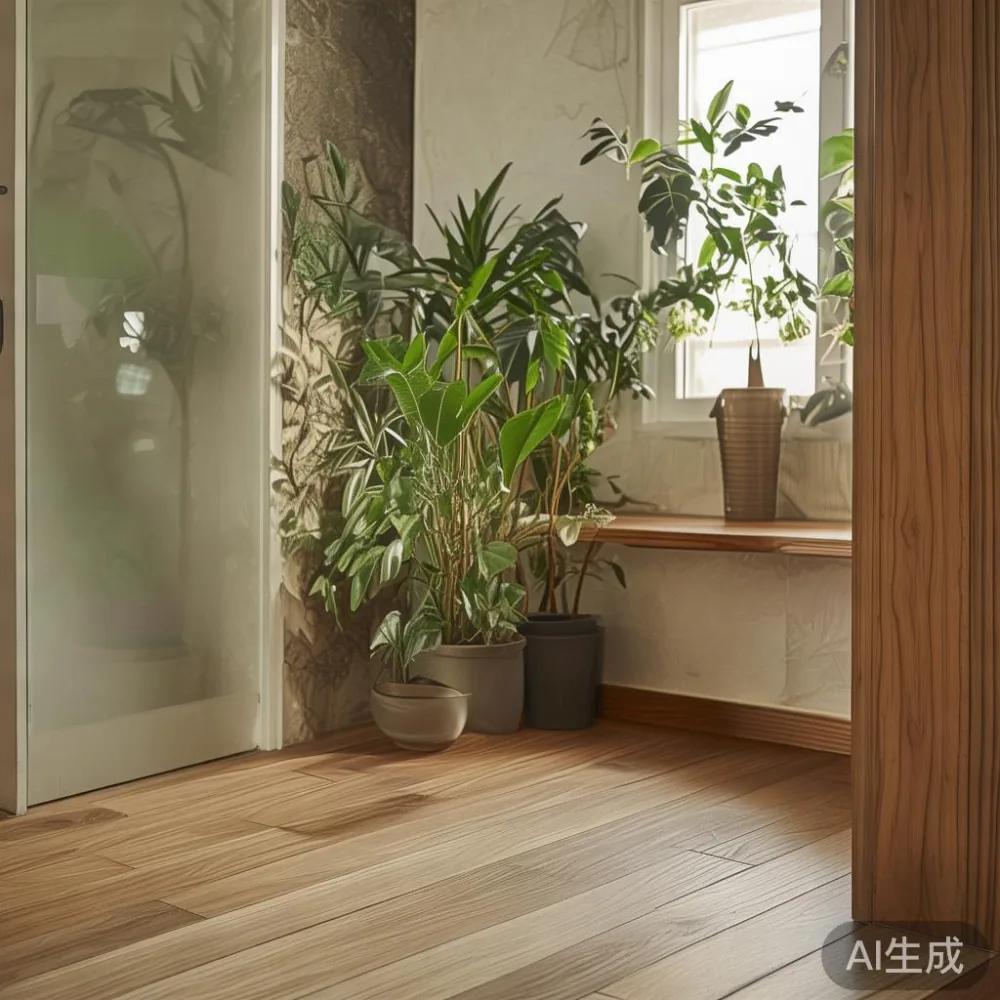
Height should match the sightline from the front door. Aim for 78–85 cm tall — within 5 cm of the door handle height is a quiet visual rule that most designers in Singapore follow. Pair that with a mirror at 60 × 90 cm hung 25 cm above the console, and the eye reads a single rectangular block instead of three floating ones.
For weight, a solid oak console at 120 × 35 × 80 cm weighs between 28 kg and 34 kg, which matters because most HDB goods lifts cap at 600 kg payload and lift-door openings measure roughly 0.9 m × 2.1 m. Anything heavier than 45 kg per piece should be confirmed with the freight team before purchase, and your lift should be reserved for at least 30 minutes on moving day.
Which furniture categories do warm minimalists over-buy — and which do they skip?
Over-bought: side chairs that nobody uses, narrow floating shelves that collect dust, small accent mirrors, and wardrobes taller than 200 cm. Skip entirely: tall cabinets that touch the ceiling (they make HDB ceilings feel lower than the standard 2.8 m), glossy lacquer finishes, and chrome handles. A warm minimal entryway tolerates one metal finish across all visible hardware — brushed brass, matte black, or oil-rubbed bronze — but never three at once.
If you are buying multiple pieces from one supplier, anchor the whole entryway with the console first, then add a matching solid wood bench, then a slim wardrobe or shoe cabinet if space permits. A Bedok family I know runs a 1.2 m MIDHILL console, a 110 cm fluted shoe cabinet, and a 140 cm oak-framed mirror above the console. The total before GST was S$4,180, with delivery included for orders above S$350. They added a separate marble table tray (60 × 35 cm) at S$140 for keys and mail. That is six objects total. Most entryways I see in resale flats carry 14–18 objects before the resident has even noticed.
Is a light luxury sofa worth the budget in a small Singapore living room?
The light luxury sofa vs Mid-century modern sofa debate is real for Singapore condos, and the answer depends on ceiling height and floor area. In a 1,000 sq ft condo with a 2.8 m ceiling and a 3.2 m living room width, a French light luxury sofa in cream bouclé with a 88 cm seat depth will look heavier than it feels. The trade-off is that French light luxury pieces usually arrive with kiln-dried solid wood frames (ash, beech, or oak) and 30–35 kg/m³ high-resilience foam, which costs S$3,400–S$5,800 for a 2.4 m three-seater. A Mid-century modern sofa in solid ash with walnut legs sits in a tighter band — S$2,400–S$4,200 for the same size — and reads visually lighter because the legs are exposed and the profile is lower.
My colleague, who works from a Punggol Waterway Crescent unit, tested both styles last quarter and kept the Mid-century version. His reasoning was specific to HDB living rooms: the lower seat height (42 cm vs 46 cm) and exposed legs let air move under the sofa, which mattered during the November–January monsoon weeks when the room stayed closed. He added a 120 cm solid wood coffee table in walnut at S$680 and an Italian light luxury for hotel-style side table at S$420, and the room finally balanced.
For warm minimal entryways, take the same rule and apply it to the bench: lower profile, exposed timber, no skirt. A 1.4 m solid oak bench at 42 cm seat height with 30 cm leg clearance will outlast trends and outlast the corridor trend-cycle that refreshes every three to four years in Singapore resale listings.
Which stone, timber, and fabric trio works for warm minimal entryways in 2026?
Pick one timber, one stone, one fabric — and stay there. For warm minimal in Singapore light (which leans yellow-green through most HDB windows facing east), the trio that holds up best across the year is:
- Timber: white oak or ash with a matte hardwax oil finish (no high-gloss polyurethane)
- Stone: honed Carrara marble (off-white with soft grey veins) or a sintered stone in warm beige
- Fabric: bouclé in cream, oat, or putty for the bench cushion — 100% wool or a wool blend at 380–420 g/m²
Avoid warm minimal trap combinations: walnut + black marble (too cold), travertine + cherry timber (too 1990s landed), and pure white oak + cool grey stone (looks Scandinavian, not warm). If you want the strongest 2026 read on a 2026-tracked piece, look at the best Industrial bed for 2026 in solid ash with a matte black steel frame — it sits in the same family as warm minimal because the steel is the only cool note and the ash carries the warmth.
For the seating anchor, top Swiss scale-tracked pieces in the best Scandinavian sofa for 2026 sit around 2.2–2.6 m wide, 88 cm deep, with removable washable covers at 280 g/m². That profile also tells you how to size your bench: the bench should be 50–55% of the sofa length, so 1.1–1.4 m for most three-seaters. Sourcing for a Singapore household usually means a 21–35 day sea freight from a Foshan solid wood furniture maker such as MIDHILL, with door-to-door shipping at S$180–S$280 for a single console or bench, and 2–3 days for in-stock pieces from local warehouses.
What should I avoid when buying entryway furniture online from overseas?
Three things. First, never trust a "solid wood" product description without asking for the kiln-dried certificate and the country of origin for the timber — much of what is sold as "solid oak" in the Singapore market is rubberwood with an oak veneer, and that distinction alone can cost you S$400–S$900 per piece. Second, check the lift dimensions before you place the order: a console taller than 1.85 m or wider than 1.5 m will not fit through a goods lift door on most HDB blocks built before 2015, and you will pay S$180–S$260 for a failed delivery plus a re-stocking fee. Third, the small print on returns: a 14-day return policy only matters if the supplier pays return shipping. In Singapore, return shipping on a 30 kg console from a regional warehouse can run S$140–S$260, which is often why some people omit it from their budget.
Warranty is the fourth filter that most buyers forget. A 10-year structural warranty on frames and a lifetime refinishing offer tells you the supplier expects the timber to move and is willing to plane, sand, and re-finish it once in years five through ten. That is the kind of post-purchase support that local resellers cannot match, because most do not have their own workshop. MIDHILL — and other Foshan solid wood specialists like the nearby Foshan Lingzhan cluster — typically handles refinishing in their own factory, with round-trip shipping to Singapore at around S$280–S$420 per item including repackaging.
How do I keep a warm minimal entryway from drifting into clutter?
Cap visible objects at six. That is the number that warm minimal entryways consistently hit in Singapore flats I have seen: a console, a bench (or chair), a mirror, one tray, one plant or vase, one piece of wall art or sculpture. Anything beyond six will start competing for attention within 18 months, which is the average warm-minus drift point tracked across resale listings in District 14, 16, and 19.
Rotation rules help. Swap the vase contents every three months — branches in November–January, single stems in February–April, dried grasses in May–July, ceramic fruit in August–October — and the entryway reads as fresh without buying anything. Rotate the tray to the bedroom console in monsoon weeks to keep it dry. Move the bench cushion cover to a chair seat and back for laundry weeks. These small habits keep the entryway furniture in use rather than in storage, which extends its life from 8–12 years to 14–18 years in a HDB setting.
If you are pairing the entryway with the rest of the home — and most Singapore readers will be — extend the same trio (timber, stone, fabric) into the dining area. A 1.6 m solid wood dining table in white oak seats six and runs around S$1,950–S$2,800 depending on edge profile; a matching 1.8 m bed frame in the same timber runs S$1,650–S$2,400; a 60 cm nightstand sits at S$380–S$560 each. A 1.8 m wardrobe in fluted solid oak with soft-close hinges runs S$2,400–S$3,800. The same marble table top that anchors the entryway console can be echoed on a coffee table for visual continuity, which is the secret of post-modern light luxury interiors — one material palette repeated across rooms, never one piece shouting louder than another.
For a Singapore household buying all of these together, the typical package — console, bench, dining table, bed frame, two nightstands, wardrobe, marble table — lands at S$9,800–S$14,200 before GST, with shipping at S$480–S$760 depending on volume, plus GST at 9%. A 10-year structural warranty on every frame, lifetime refinishing on the timber pieces, and door-to-door delivery on orders above S$350 brings the total into a predictable band, and the entire entryway becomes a single composition instead of a collection of pieces.
Do warm minimal entryways need French light luxury to feel finished?
Not necessarily, but a single French accent in a small entryway can do the work of three Scandinavian accents. A French for small living room anchor — usually a fluted cabinet door, a curved bench edge, or a soft-arched mirror — adds one rounded line to a layout that is otherwise rectangles. That contrast is what makes the room feel curated rather than ordered.
The same logic applies to luxury Mid-century modern furniture pieces in solid wood: a 1962-style credenza in walnut at 160 cm wide with sliding doors will carry a warm minimal corridor because the timber tone is the only warm note, the lines are low, and the profile is sculptural without being ornamental. The French accent and the Mid-century anchor are not competing for the same wall — they sit on opposite sides of the corridor in most Singapore layouts I have measured.
Final point on budget allocation across a warm minimal home: spend 45–55% of the furniture budget on the largest four pieces (sofa, bed frame, dining table, wardrobe), 25–30% on the entryway console-bench-mirror trio, and the remaining 15–25% on nightstands, side tables, and a marble table or two. Anything below 20% on the entryway trio usually means the bench and console look under-finished relative to the rest of the home, which is the single most common warm minimal mistake I see in Punggol and Bedok resale listings today.
A warm minimal entryway in Singapore does not need to cost more than a typical IKEA-and-taobao build — it needs fewer pieces, better timber, and one supplier that handles warranty, refinishing, and lift-friendly delivery. That combination is rare, but it is also what separates a 5-year entryway from a 15-year one.