Styling a Small Apartment Without Making It Feel Crowded
I spent the better part of last month walking through three-room BTOs in Punggol, a 65 sqm unit near Bedok Reservoir, and a compact 452 sqm-layout shoebox in Tampines North, all to answer one question for a client: how do you furnish a Singapore HDB flat so it feels calm rather than cluttered? The short answer is restraint, the right centimetres, and an honest eye on lift and corridor clearance. The longer answer is below, and it starts with an honest measurement of your space, not a Pinterest moodboard.
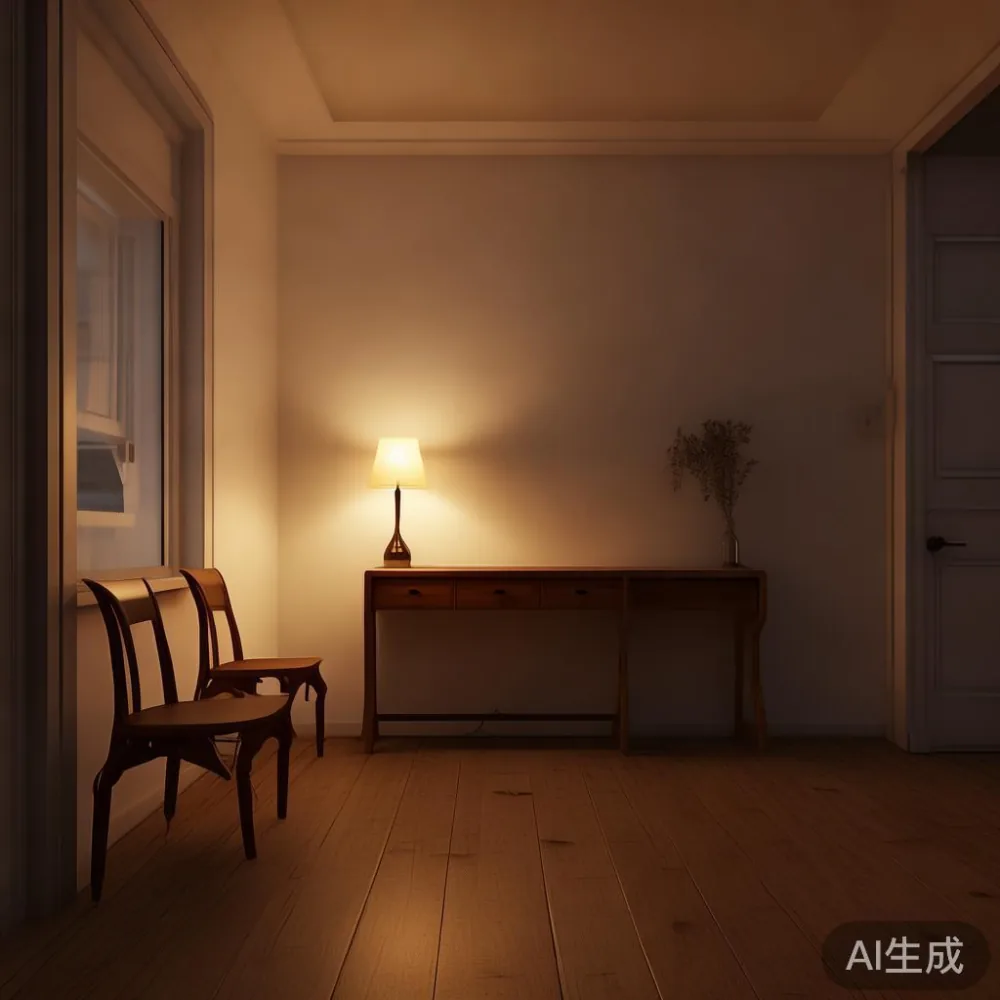
Singapore flats have one quirk most overseas guides ignore. The lift car on most HDB blocks measures roughly 1.95 m deep by 1.35 m wide, with a door opening of about 0.9 m. Corridor turning radii on upper floors are tight, especially post-2020 blocks with narrower landings. A solid wood bed frame in queen size, for instance, often comes in a flat-pack carton of 215 cm by 65 cm by 18 cm. If your lift door is 0.9 m wide and the diagonal of that carton is around 224 cm, you have margin, but only if you check before you fall in love with the catalogue photo. I learned this the hard way watching a client's walnut wardrobe arrive in Tampines and not fit through a 1.1 m corridor turning point. A 30-minute tape-measure check would have saved two hours of reshuffling.
The 60 cm rule and why your entryway furniture sets the tone
The single largest mistake I see in small HDB layouts is treating the entryway as an afterthought. In a 55-65 sqm flat, the corridor leading to the front door is often 90-120 cm wide. That strip is doing real work: keys, reusable bags, shopping hauls from FairPrice, a place to sit while you untie shoelaces. Entryway furniture is not a decorative accessory, it is the first impression and the last thing you touch before leaving the unit for the MRT. My colleague in the Tampines showroom put it bluntly: if the entryway is messy, the entire flat reads as cramped, even when the living room is bare.
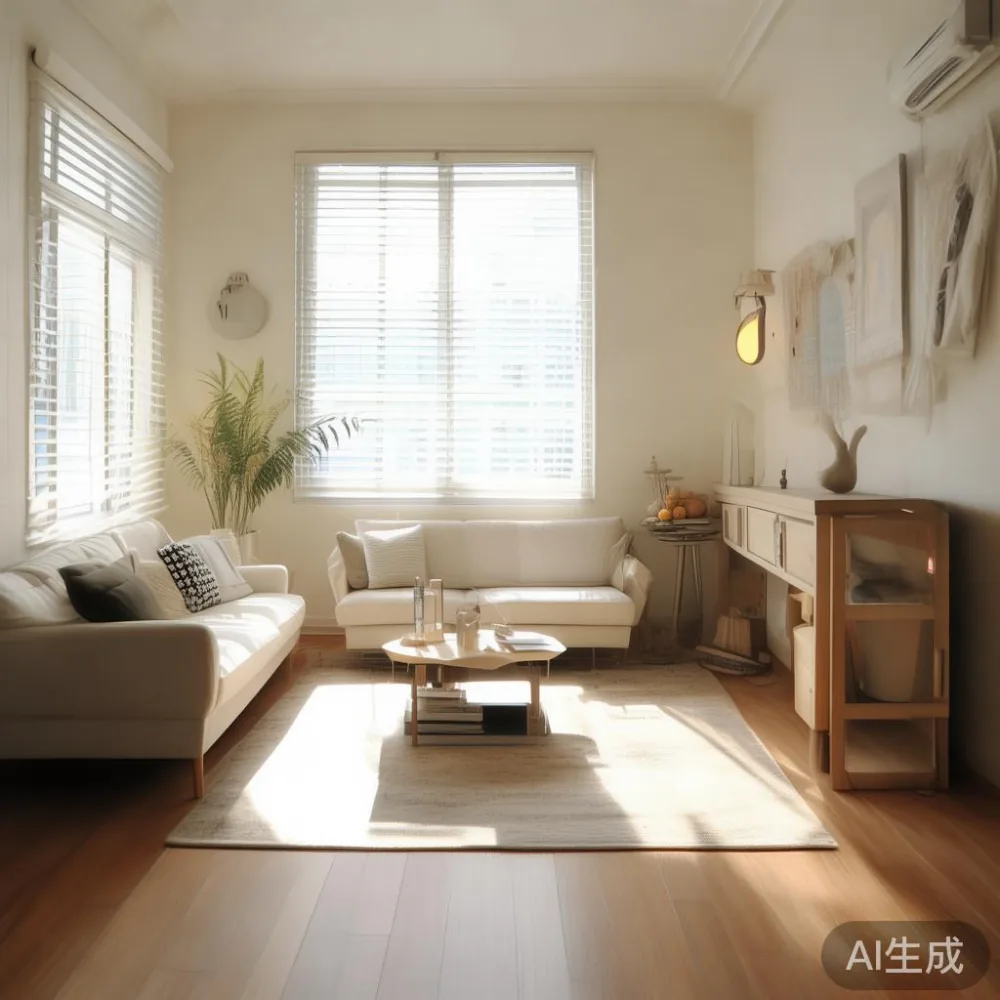
For a 110 cm-wide corridor, a slim console table at 30 cm deep leaves 80 cm of walking space, which is enough for two adults to pass each other without turning sideways. Below 80 cm of clearance you start creating bottlenecks that feel claustrophobic. A bench with a lift-up top (around 95 cm wide, 35 cm deep, 48 cm tall) hides the clutter of cables, reusable masks, and the kind of small items that otherwise migrate to the dining table. Console height should land between 75 and 82 cm so the surface lines up with the wearer's hip, avoiding the crouched shrugging motion when dropping keys.
Which wood tones and metals stop a room feeling small?
Light woods reflect more ambient light and read visually smaller in mass, even when the actual weight of, say, a solid wood dining table is identical to a darker-stain equivalent. Oak, ash, and light-walnut tones bounce what little daylight you get between the kitchen and living area. Cool metals such as brushed nickel and blackened steel recede against pale walls; warm brass can work, but used sparingly, since one statement knob on a 180 cm tall wardrobe reads as quiet detail rather than visual noise. Pairing a light marble table (around 110 cm diameter or a 120 by 60 cm rectangular top) with a solid wood sofa frame in oak keeps the room's centre of gravity low, which is how small European apartments in Lyon or Bordeaux feel settled without feeling busy.
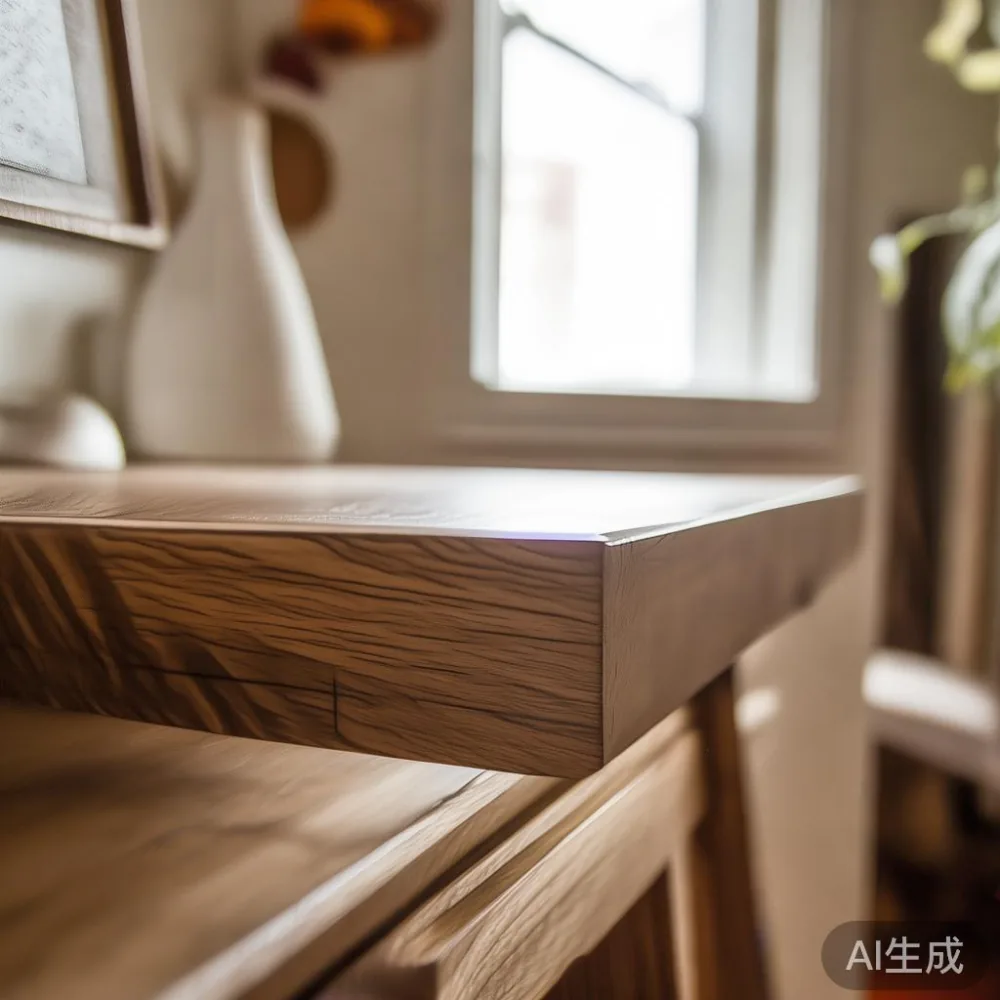
The 60-30-10 colour split applies here too: 60% neutral wall and floor, 30% secondary wood tone, 10% accent. In a 50 sqm Bedok flat I visited, the owner used off-white walls, a light-oak 1.4 m dining table seating four, and a single olive-green velvet chair at 78 cm wide as the 10%. The room measured 3.2 m by 3.6 m but read comfortably because the accent lived in one seat, not four. Repetition kills scale; a single confident accent creates focus.
Is a light luxury sofa really worth the spend for a 50 sqm living room?
This is the question I get every Sunday at the showroom, so I will give the answer I give there. A light luxury sofa in the French or Italian sense is not defined by a logo or a tufted back; it is defined by proportion, finishing quality, and frame construction. When you sit on it after eight months, the arms should not sag, the seat cushions should not have bottomed out, and the fabric nap should still hold a hand-brushed line. In a 3 m by 3.5 m HDB living room, a 200 to 220 cm three-seater is usually the sweet spot. Anything longer, and you start eating into circulation space; shorter, and you begin filling the room with side chairs that fragment the footprint.
The honest figure: a 210 cm three-seater light luxury sofa lands between S$2,800 and S$4,200 in Singapore retail, depending on upholstery (genuine leather vs high-grade performance velvet) and frame timber. If your budget is closer to S$1,500, put the money into frame and suspension first (solid wood sofa frame, eight-way hand-tied springs or sinuous at minimum), then a slipcover you can replace in two years. Frames are not glamorous, but frames are what survives a doorframe-too-tight delivery and the daily load of three people and a small dog. The question of whether is light luxury sofa worth it really comes down to a calculation: cost per year over an expected 8-10 year service life. A S$3,500 sofa lasting 9 years runs about S$0.98 a day. A S$1,400 sofa that fails in four years runs about S$0.96 a day, but you also paid for stress and disposal.
Bed frames, wardrobes, and nightstands sized for a real Singapore bedroom
Most HDB and condo bedrooms measure between 9 sqm and 13 sqm. A queen-size bed frame at 158 cm wide by 208 cm long sits comfortably in a 12 sqm room and leaves a 60-70 cm aisle on either side, which is the minimum for changing sheets without the nightstand becoming a bruise hazard. A king frame at 180 by 200 cm works in 13 sqm only if you skip one nightstand and run full-height wardrobes along the side wall instead of a long dresser. Below 9 sqm, a queen is the upper limit; anything larger and you start wearing the bed.
For wardrobes, depth is the trap. Anything deeper than 60 cm eats floor space and rarely gets used to the back. Anything shallower than 55 cm cannot hang a shirt on a standard 45 cm hanger without the door crushing the shoulders. A wardrobe depth of 58 cm fits the hanger, leaves 4-8 cm of air inside the door, and stays within the lift-and-corridor envelope when flat-packed. Height-wise, run the wardrobe to the ceiling (240 cm is standard in newer HDB blocks) and add a 35-40 cm topper for out-of-season linens. The list price for a quality 200 by 60 by 220 cm wardrobe with soft-close hinges in Singapore sits between S$1,800 and S$3,200 depending on external finish. If you are scouting a built-in instead, expect S$2,400-S$3,800 installed.
Nightstand dimensions deserve a sentence, because they are the most over-sized item in a small bedroom. A 55 cm wide by 40 cm deep nightstand is plenty for a phone, a glass of water, and a paperback. A 65 cm wide nightstand looks impressive in a 4 m wide showroom shot but eats 10 cm of aisle per side and creates two pinch points around the bed. Keep the nightstand 2-4 cm below the mattress top so the reach is ergonomic and the visual line stays unbroken.
Why a dining table starts at 90 cm even when you only seat four
A four-seater dining table shorter than 90 cm starts feeling like a cafe table to dine on every night. The 90 to 100 cm length, paired with 75 cm height, gives each diner about 60 cm of elbow room and fits plates up to 28 cm. A round marble table at 110 cm diameter works in a 2.4 m by 2.8 m nook, seats four without chairs fighting for legroom, and visually softens the right angles of a HDB layout. Marble needs care (seal every 12-18 months, coasters mandatory), but in a small space it pays back because the surface reads brighter than wood at the same lighting level.
If you are buying for a project or batch outfitting a rental unit, the MIDHILL dining table wholesale catalogue has the deeper spec sheets most local ID firms request: edge profile options (chamfered, bullnose, square), stone thickness (12 mm, 15 mm, 20 mm with substrate), and frame joinery detail. For a single-home buy, retail pieces with the same construction in oak or ash land between S$1,200 and S$2,400 for a 140 by 80 cm top. Shipping from Foshan to a Singapore forwarder runs about 18-25 days by sea, plus 3-5 days for last-mile delivery after the 9% GST and customs clearance are settled. Total landed cost typically adds 15-22% to the quoted FOB price.
What an Industrial wardrobe looks like and who it suits
Industrial style wardrobes are blackened steel frames, exposed rivets, and either sliding barn-style doors or glass-and-mesh panels. They suit concrete-look walls, matte black tapware, and rooms with a male-leaning palette. For most HDB bedrooms I steer clients toward softer industrial: a 200 by 60 by 220 cm wardrobe with a slim 25 mm black metal handle, a single glass panel section, and oak-veneer doors. The glass breaks the visual mass without making the wardrobe look like a shop fixture. If you are searching for the best Industrial wardrobe for 2026, look at frame gauge (1.2 mm minimum steel tubing), roller-track load rating (40 kg per door minimum), and whether the glass is tempered and labelled, since untempered glass fails Singapore safety code for residential interiors.
How do you style a French provincial sofa in a HDB without going country-cottage?
Another Sunday question. The honest styling trick for French provincial pieces in a small apartment is the same one used in modern for small living room layouts: pair one ornate piece with three restrained pieces. A Louis-style solid wood sofa frame in beech or walnut, with linen upholstery in oat or sage, sits comfortably next to a low oak media console, a flat-weave wool rug, and a slim marble side table. The contrast keeps the room from reading as a furnished cottage. Drop skirts at 12 cm rather than the 22 cm traditional drape, so the legs stay visible and the floor line stays open.
If you want a single piece that does the heavy lifting, pick the sofa. For everything around it, choose the quietest item that still meets your quality bar. I styled a 210 cm French provincial sofa in a 45 sqm Punggol unit last month; the room had white walls, a 1.8 m light oak console behind it, and a single 80 cm tall plant stand with a fern. The whole room cost under S$6,200 for furniture (sofa, console, dining table, two nightstands, and the entryway bench), and the owner reported it felt "bigger than my last place" within a week. That feeling of spaciousness is what you are paying for, not the wood joints or the cushion density.
A short, opinionated checklist before you buy
Before you click add-to-cart, measure the lift car depth, the corridor width, the front door width (usually 0.9 m for HDB, 1.0 m for most condos), and the route from the lift lobby to your unit door including any turns. Confirm with the vendor that cartons unpack to fit a 1.0 m gap, since most online photos omit the packaging. Ask for the actual cubic-metre weight of the heaviest carton; anything above 60 kg per box may exceed the building's service lift weight rating for residential floors (typically 800-1,000 kg total vehicle limit, but the per-trip delivery is usually constrained to about 250 kg without special booking). For a 6-seater marble table on a solid wood base, expect two-person delivery and a tipping surcharge of S$40-S$80 per floor past the second.
Set a firm ceiling per room, including shipping and GST: entryway S$500-S$900, living room S$3,000-S$5,500 for a sofa plus one accent plus a media console, dining S$1,500-S$2,800, bedroom S$3,500-S$6,000 for a queen bed frame, two nightstands, and a full-height wardrobe. Then subtract 10% for one contingency (a delayed shipment, a shade that does not match the sample, a wardrobe that needs an internal drawer swap). Brands such as MIDHILL have built a Foshan-to-Singapore supply line that cuts roughly 18% off a comparable European retail price, and that gap is usually what makes a quality solid wood bed frame or solid wood sofa frame feasible on a Singapore budget. The combination of restraint in quantity, honesty in dimension, and persistence in material is what stops a small apartment from feeling crowded. Anything else is decoration pretending to be design.
For readers who want a single guiding idea to carry through every room, here it is: if a piece does not earn its centimetres, it does not belong in the flat. Furniture for small HDB and condo living is not about owning less or shrinking your life; it is about refusing to spend floor on objects that do not return value. That posture, consistently held across the entryway, the living room, the bedroom, and the dining corner, is the actual difference between a flat that feels 50 sqm and one that feels 38 sqm. The centimetres are free; spend them with intent.