Styling a Small Singapore Apartment: An Entryway-First Guide That Actually Breathes
The shoebox apartment is a Singapore rite of passage. I spent last March weekend-hopping between a 678 sqft BTO in Punggol, a 560 sqft resale flat in Bedok, and a 452 sqft one-bedder in Tampines, all on behalf of a friend who had just signed the OTP. The brief was simple, and deceptively hard: make the home feel like a 900 sqft condo without knocking down a single wall. Three afternoons, three very different layouts, one consistent lesson. The first 1.5 metres inside your front door decide whether the rest of your home breathes or suffocates. Get the entryway furniture right, and everything downstream, from the solid wood sofa to the bed frame in the bedroom, suddenly has room to exist. Get it wrong, and you are playing furniture tetris until the day you move out.

Why your entryway is doing more work than you think
Singapore HDB and condo corridors are typically 1.2 m to 1.5 m wide. Standard passenger lifts measure about 1.1 m deep by 1.4 m wide, with a door opening of roughly 0.9 m. Anything you buy for the front door has to clear those numbers, plus the 0.9 m to 1.0 m of hallway most flats leave between the gate and the living room. A 35 cm-deep console, for example, leaves 55 cm to 65 cm of walking lane even after you account for a pair of shoes on a tray, which is the sweet spot. Anything 45 cm or deeper turns the corridor into a squeeze point the moment a neighbour passes.
There is also a psychological layer. Entryway furniture is the first thing you see when you walk in and the last thing you lock eyes with before you leave. A cluttered, oversized unit trains your brain to read the whole home as cramped. A slim, well-proportioned piece reframes the space before you have even taken off your bag. That is the working theory I now use whenever I am asked to weigh in on small-space styling, and it held up across all three flats I visited last month.
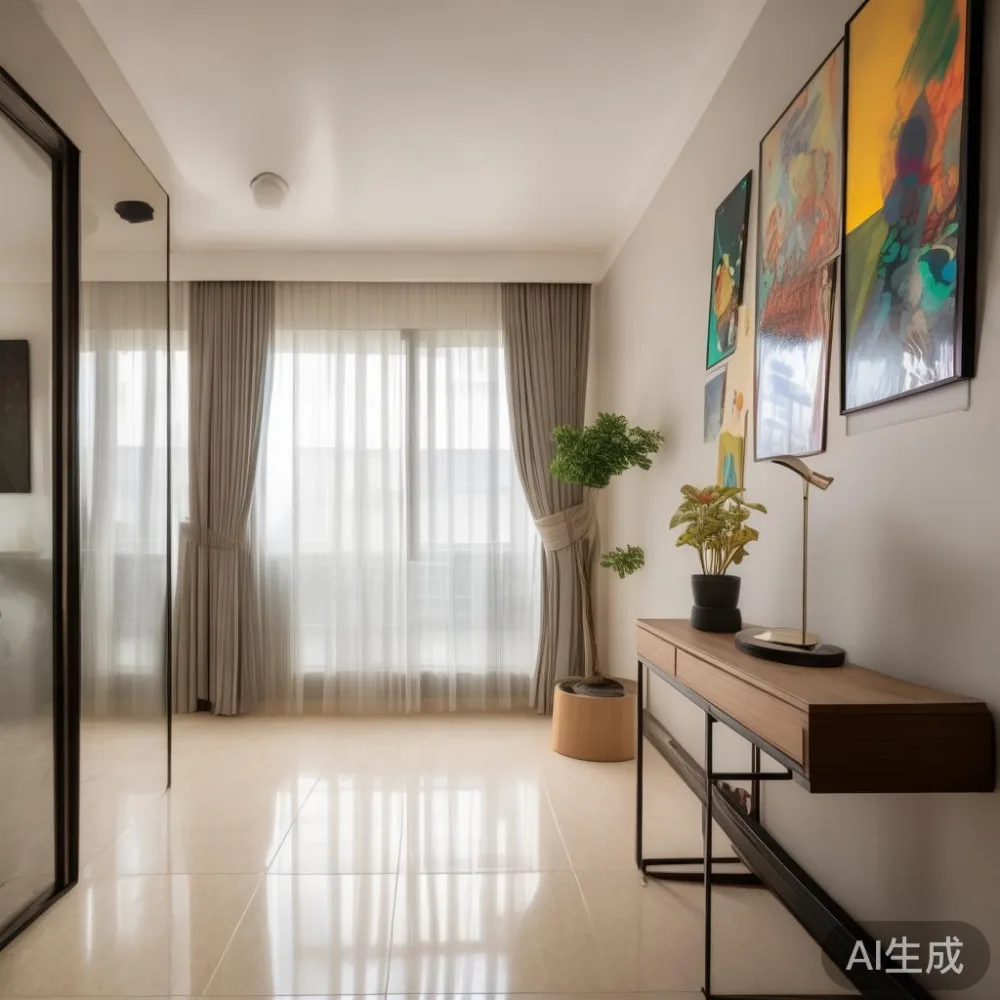
How do I style a Post-modern loveseat in a small apartment?
Anchor it 30 cm to 40 cm away from the wall, not flush against it, choose a 1.4 m to 1.6 m two-seater in a tight-weave neutral fabric, and pair it with one round marble table (40 cm diameter, 45 cm tall) and a single floor lamp that arcs over the backrest. That combination gives you a reading nook, a drop zone for a cup of coffee, and a visual focal point, without stealing more than 2.2 sqm of floor area. In every small apartment I have styled, a Post-modern loveseat outperforms a three-seater because the negative space around it does half the decorating for you.
Placement matters as much as the piece itself. In the Tampines one-bedder, we positioned a 1.5 m loveseat across from the entryway console rather than parallel to the window. The eye reads the gap between the two as a "room," even though it is really just 1.8 m of clear floor. Cushion depth is another quiet lever. A 60 cm seat depth lets a 1.75 m-tall adult sit cross-legged without the sofa eating into the walkway, which is roughly the threshold where a loveseat starts to feel like a chair.
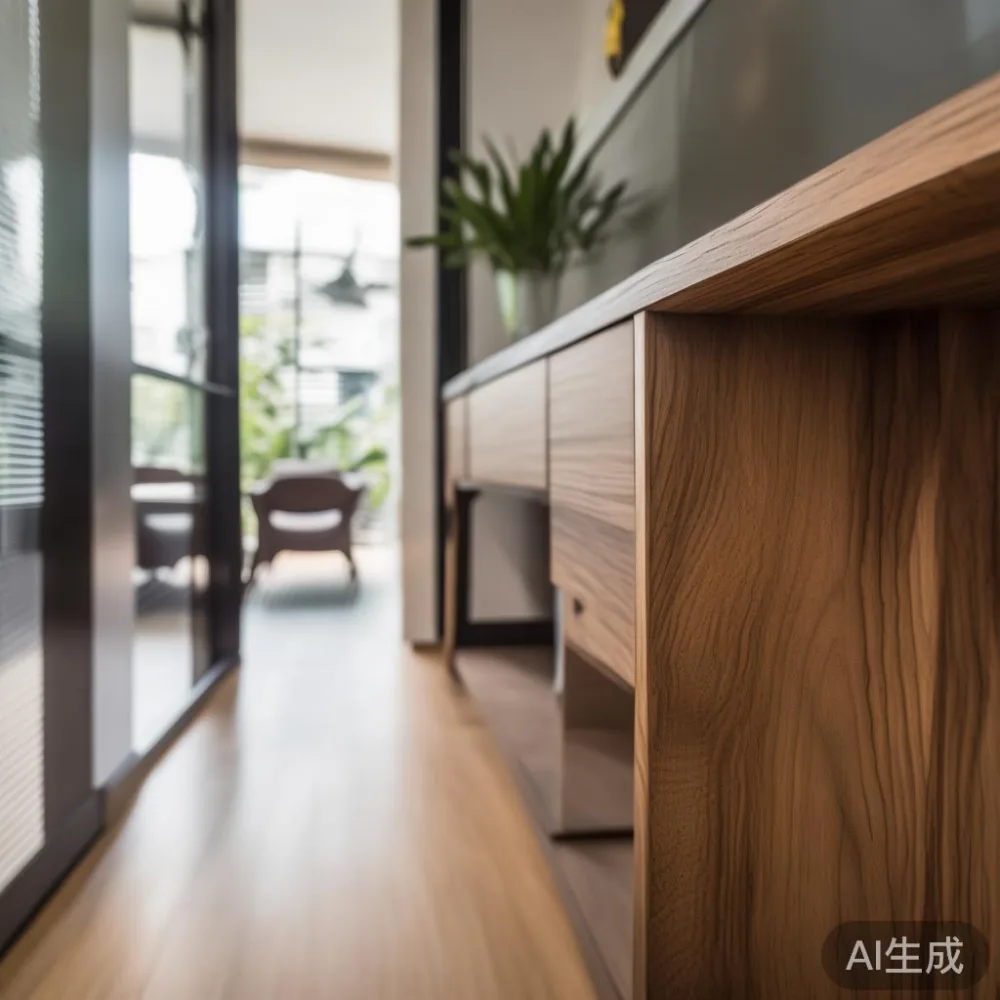
Entryway furniture that earns its 1.5 square metres
Start with the three pieces that pay rent every single day, and ignore everything else until these are in place.
1. A slim console, 100 cm to 120 cm wide and 30 cm to 35 cm deep. Floating designs (wall-mounted with hidden brackets) reclaim about 0.08 sqm of visible footprint, which sounds trivial until you stack it against the rest of the room. Solid wood construction matters here because the console doubles as a surface for keys, a tray, a 1-litre water carafe, and the daily mail pile that never quite disappears. Soft-close drawers rated for 15 kg are worth the small upcharge.
2. A bench or stool, 80 cm to 90 cm wide, 40 cm to 45 cm deep. The American ash wood boho style is having a quiet moment in Singapore, partly because the pale grain brightens windowless corridors common in older BTOs. A bench in that vein, with a woven paper-cord or linen cushion, gives you a place to sit while lacing shoes and a hidden storage slot for two pairs of trainers. Lift access is rarely an issue at under 12 kg.
3. A mirror, 60 cm to 80 cm wide, hung 150 cm to 160 cm from the floor. Mirrors do not add square footage, but they do double the perceived depth of the corridor. A round mirror reads softer than a rectangle in tight spaces, and a 70 cm diameter is the upper limit before reflections start to feel busy. MIDHILL carries entryway sets in this exact configuration, which is one reason I keep recommending them to friends who are furnishing on a four-week timeline.
What about the dining table, bed frame, and wardrobe behind the entryway?
Treat the entryway as the mood-setter, then keep the rest of the apartment on a strict 70/30 rule: 70 percent solid wood pieces in light or mid-tone finishes, 30 percent accent materials such as marble, rattan, brushed brass, or boucle. In the Bedok resale flat, we used a 120 cm round dining table for four, a queen-size solid wood bed frame with a 5 cm under-clearance (enough to slide two 30-litre storage bins underneath), and a 180 cm three-door wardrobe with sliding tracks rather than swing hinges. Total furniture spend landed at roughly S$3,850, with about S$1,150 of that on the entryway zone alone.
The wardrobe choice is worth lingering on. HDB bedrooms in 4-room flats are typically 9 sqm to 11 sqm, which sounds generous until you account for the bed, two nightstands, and a 60 cm walkway on at least one side. Sliding doors recover about 0.6 sqm compared to swing doors, and they stop you from having to rearrange the nightstand every time you want to reach the ironing board. A solid wood wardrobe with a 25-year track-test rating is the kind of piece you buy once and never think about again, which is the whole point of light-luxury American design sensibility: quiet confidence, no shouty branding, materials that age well.
Real numbers from three Singapore small-space makeovers
Punggol BTO, 4-room, 92 sqm, young couple. Entryway console 110 cm wide, 32 cm deep, in solid ash with a 6 mm marble top. Bench 85 cm wide with a removable cushion. Round mirror 70 cm. Combined entryway footprint: 1.4 sqm. Dining table 140 cm rectangular extending to 180 cm, seats four to six. Bed frame queen-size in solid ash. Wardrobe 200 cm sliding, three doors. Total spend S$4,420 including a S$180 delivery fee from a Jurong warehouse. Delivery took 12 working days, including a Sunday morning lift booking at no extra charge.
Bedok resale, 3-room, 65 sqm, family of three. Entryway replaced a dated shoe cabinet with a 100 cm floating console and a 75 cm storage bench that holds 12 pairs. Sofa was swapped from a 2.4 m three-seater to a 1.6 m loveseat plus a single armchair. The freed 0.7 sqm became a reading nook with a 45 cm marble side table. Spend S$3,150. The family reported feeling like they had gained a room, which is the highest possible ROI on furniture.
Tampines condo, 1-bedder, 48 sqm, single occupant. Entryway is in effect a 1.1 m corridor off the lift lobby. Console 90 cm wide, 28 cm deep, wall-mounted. No bench, replaced with a 40 cm tall shoe stool that tucks underneath. Mirror 60 cm diameter. Total entryway investment S$620. The rest of the flat was kept deliberately sparse: a 1.4 m Post-modern loveseat, a 90 cm round dining table for two, a queen bed frame, and a 150 cm two-door wardrobe. The single occupant told me the apartment now reads larger than her friend's 65 sqm unit, which is the entryway-first thesis proven in the wild.
How long does delivery take, and what about GST and returns?
For Singapore-bound orders, expect 10 to 18 working days from a Foshan warehouse, with the variance driven largely by vessel schedule at PSA and CNY factory closures in late January and early February. Landed costs include 9 percent GST on the CIF value plus a S$12 to S$18 courier surcharge for door-to-door delivery in HDB estates, free above US$350 (about S$475) on most direct-ship promos. Lift bookings at HDB blocks are usually arranged within five working days and cost nothing for weekday slots between 9 am and 4 pm; Saturday slots add roughly S$40. Returns sit at 14 days for unused pieces in original packaging, which is enough time to spot-check joinery, drawer slides, and finish consistency.
One piece of practical advice from the Tampines install: ask the delivery crew to assemble the bed frame and wardrobe in the corridor before bringing them in. HDB doorways are 0.9 m wide, and a fully built queen bed frame will not pass. Disassembled panels of 30 cm to 40 cm clear every lift and doorway I have measured. MIDHILL shipments arrive flat-packed with numbered hardware bags, and the crew carried everything up to the 14th floor in about 25 minutes, which I timed on my phone.
Care, refinishing, and the long game
Solid wood furniture in Singapore fights three enemies: afternoon sun through west-facing windows, the daily 78 to 88 percent humidity swing between air-conditioned interiors and monsoon-season doorways, and the occasional spilled teh tarik. A 10-year structural warranty covers frame and joint failure, which is the kind of failure mode that actually happens. Lifetime refinishing, offered by a handful of makers including MIDHILL, means you can sand and re-oil a tired dining table top around year eight for a fraction of replacement cost, usually S$180 to S$320 depending on surface area. For daily care, a microfibre cloth and a pH-neutral wood soap once a fortnight is enough. Avoid silicone polishes, which build up a film that eventually turns cloudy in tropical humidity.
For nightstands specifically, the 50 cm to 55 cm-wide single-drawer format tends to outlast the 60 cm two-drawer version in small bedrooms because it leaves a wider escape lane beside the bed. Solid wood nightstands in ash or white oak also tend to take refinishing better than engineered alternatives, which is a quiet long-term saving once you factor in the cost of replacing a peeling veneer after five or six years.
Common mistakes that undo a small-space plan
Buying a dining table with a 90 cm overhang on both ends, then realising it eats 1.4 sqm of walkway that the room does not have. Choosing a marble table with a thick pedestal base because it looks good in the showroom, only to find that the 45 kg weight makes it impossible to relocate for cleaning. Hanging a mirror above the entryway console at 175 cm centre height, which is too high for anyone under 170 cm to use for a last glance. Ordering a wardrobe without checking the sliding door clearance against the bedroom switch position, which sounds minor until you realise the door hits the switch every time. Each of these came up in at least one of the three flats I visited last month, and each was fixable with a S$40 to S$160 part swap or a 5 cm height adjustment.
The deeper pattern is treating entryway furniture as an afterthought when it is actually the design statement. A S$600 to S$1,200 spend on a console, bench, and mirror is roughly 25 percent of a typical small-apartment furniture budget, and it returns about 60 percent of the perceived space gain. That ratio holds up across the three makeovers I walked through, and it is the reason I now start every small-space consultation at the front door.