Singapore Entryway Furniture: What Actually Works From the Front Door
A practical Singapore guide to entryway furniture sizes, materials, costs, storage, delivery and assembly for HDB flats, condos and landed homes.
- How do I choose entryway furniture that fits a Singapore home?
- What size should a Singapore shoe cabinet be?
- How much clearance should I leave around entryway furniture?
- Does Singapore humidity affect wood entryway furniture?
- How can I build a shoe bench that works in a small HDB flat?
- What should I store at the entrance without making it look cluttered?
- How much does entryway furniture cost in Singapore?
- How do delivery and assembly work for Singapore HDB and condo homes?
- Which entryway furniture style suits Singapore interiors?
- What mistakes should I avoid when buying entryway furniture?
How do I choose entryway furniture that fits a Singapore home?
Start with the route from your front door
Measure the narrowest point, not the empty wall
Choose furniture for daily habits
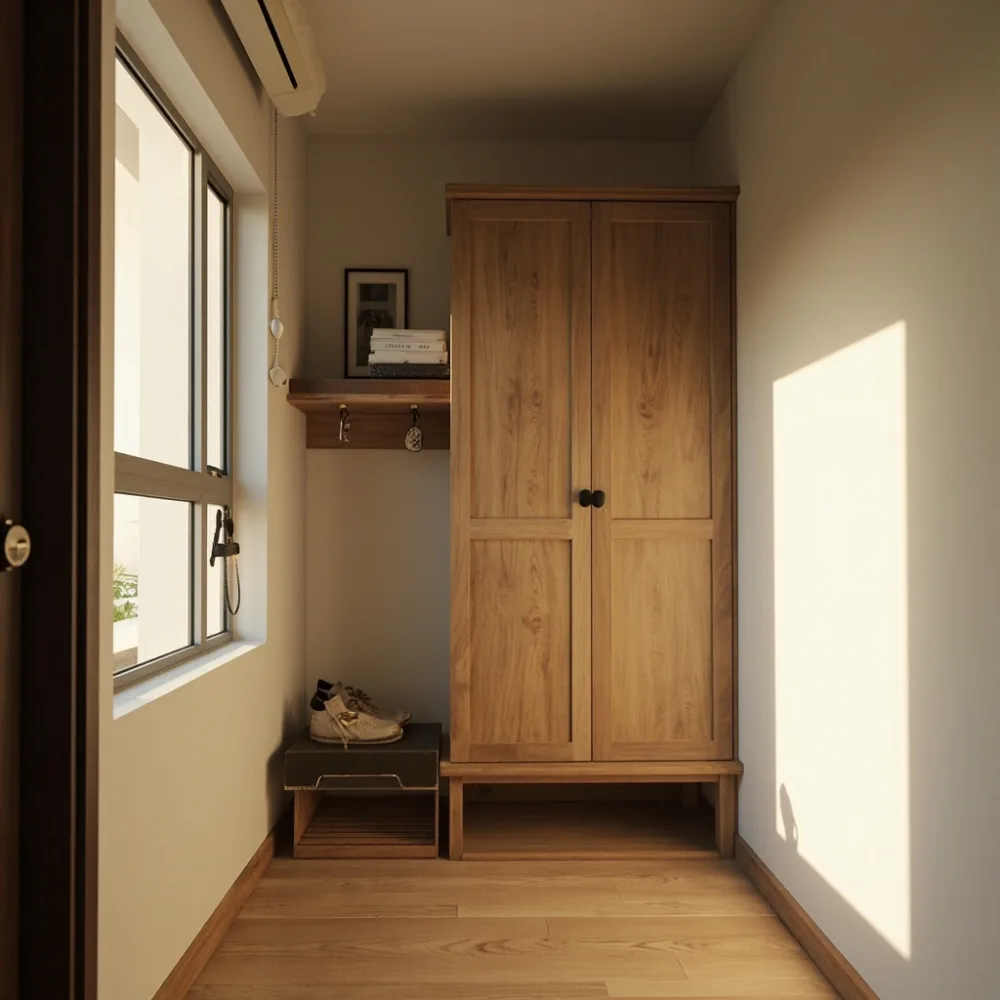
I start with the journey from the lift or front door to the inner corridor. A shoe cabinet may look generous against the wall, yet it can become a bottleneck when several people enter at once. For an HDB flat, I usually reserve at least 90 cm of clear passage where there is no fixed cabinet. In a compact condo, the usable route may be only 75–90 cm wide, so every centimetre matters.
Measure the narrowest point, including the shoe rack, key tray and any open door. I also check the ceiling height because tall cabinets can feel oppressive in a low-ceilinged corridor. A practical rule is to keep furniture below 180 cm where the hallway is under 240 cm high.
Next, I think about what happens here every day: shoes, keys, mail, helmets, umbrellas, bags and perhaps a child’s sports gear. The best entryway furniture supports that routine without turning the corridor into a drop zone. Small space furniture works best when it includes defined storage and a place to sit, rather than relying on several small decorative pieces.
| Home and route | Useful entryway depth | Clear passage target | Practical note |
|---|---|---|---|
| Compact HDB, 75–90 cm corridor | 18–25 cm | 60–70 cm | Use a shallow cabinet; avoid wide doors that swing into traffic |
| Standard HDB, 90–120 cm corridor | 25–35 cm | 70–90 cm | A 25–30 cm cabinet can include a narrow bench |
| Condo foyer | 25–40 cm | 80–100 cm | Coordinate with access panels and fire-sprinkler clearances |
| Landed-house porch | 35–45 cm | 90 cm+ | Outdoor-rated storage may be suitable with weather protection |
- Measure width at three points: entrance, narrowest turn and cabinet position.
- Photograph the area in daylight; shadows often hide skirting boards and pipes.
- List daily items before deciding between closed storage, open shelving and hooks.
What size should a Singapore shoe cabinet be?
Match the cabinet to the household shoe load
Check the daily number of shoe pairs
Allow for a future bench or charging point
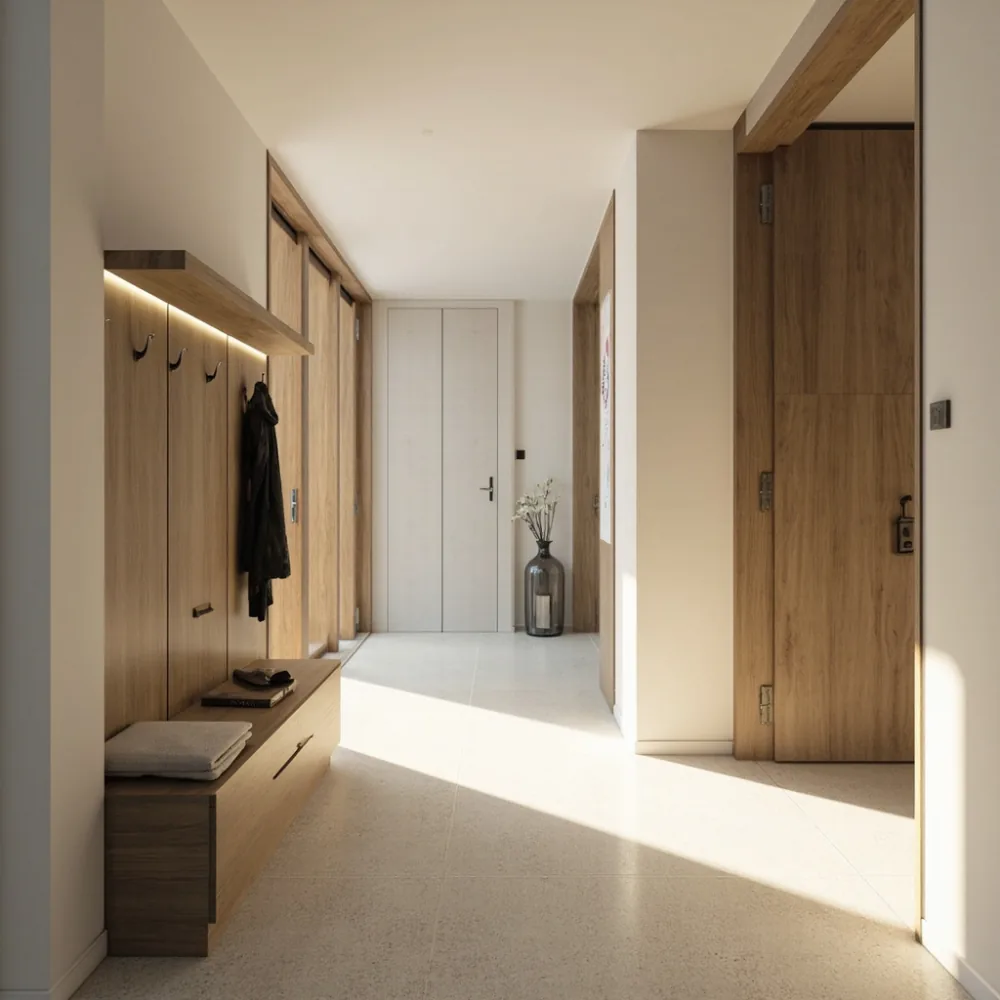
For a couple or single resident, I usually begin with a shoe cabinet holding six to ten pairs. A family of three with frequent visitors may need twelve to sixteen pairs, plus space for sandals or boots. The dimensions below are external dimensions, and internal shelf spacing can reduce actual capacity.
| Cabinet type | Width × depth × height | Approx. weight | Typical use |
|---|---|---|---|
| Sliding 2-door unit | 60 × 24 × 90 cm | 22–30 kg | Six to eight pairs in a narrow HDB corridor |
| 2-door unit with fixed shelf | 80 × 30 × 100 cm | 32–42 kg | Eight to twelve pairs plus small daily items |
| 3-door unit with lower drawer | 100 × 35 × 110 cm | 45–60 kg | Family use, bag drawer and wider shoe storage |
| Bench with under-seat cubbies | 90 × 35 × 45 cm | 18–26 kg | Quick seating where a full-height cabinet is unsuitable |
I prefer adjustable shelves for growing families. A fixed “one-size-fits-all” shelf may suit sneakers but waste space around dress shoes. If the cabinet is also a sitting bench, I check that its seat height is around 42–46 cm; taller seats are uncomfortable for children and older adults.
Price is only useful when the specification is clear. A basic particleboard cabinet may cost SGD 120–220, while a solid wood furniture option from an established maker may be SGD 450–900 before delivery. Custom furniture can reach SGD 1,000–1,600 when dimensions, drawers, matching timber and installation are included.
- Check every pair of shoes, including slippers worn indoors.
- Prefer adjustable or tilt-out storage if boots and sandals are common.
- Leave 5–8 cm above tall boots for a shelf that can actually close.
How much clearance should I leave around entryway furniture?
Keep the main walking route open
Account for doors, sockets and service access
Test the route with bags and footwear
The cabinet itself is rarely the main problem; opening doors and squeezing past coats create the friction. I aim for a 60–70 cm clear route beside a slim cabinet in an HDB corridor, and 75–90 cm where residents use larger bags or wheelchairs. This does not mean the entire corridor must be that wide, only the section beside projecting furniture.
I use the 90 cm rule for seating: leave about 90 cm in front of an entryway bench so someone can sit, stand and put on shoes without blocking the route. At a cabinet with hinged doors, add the full door width to the projection when judging clearance. Sliding doors are useful here because they do not project into the passage.
Condo owners should also check access panels, electrical sockets, ventilation grilles and sprinkler heads. I have seen attractive foyer furniture installed straight across a sprinkler pipe or make a utility panel impossible to reach. The practical solution is usually a shallower central unit with narrow side pieces.
For a real check, I push a full laundry basket along the route and carry a backpack at shoulder height. If both pass without scraping the wall or forcing a turn, the layout is likely workable. I also leave around 25–30 cm above a low cabinet for keys, post and a charging ledge.
Does Singapore humidity affect wood entryway furniture?
Understand the difference between solid wood and engineered board
Control moisture at the edges and base
Choose finishes that tolerate frequent wiping
Humidity does not mean every wooden cabinet in Singapore will fail. It does mean I pay closer attention to movement, finishes and ventilation. Singapore’s humid conditions can cause timber to swell, shrink or develop small surface marks, especially near air-conditioning vents, windows and an entrance exposed to rain.
Solid wood furniture is not automatically moisture-proof, but quality joinery and a stable finish can handle normal indoor humidity well. I look for solid timber in load-bearing parts, sound joints and a finish applied to all faces, including the back and underside. For engineered boards, I check whether all edges are sealed; exposed particleboard can absorb moisture and swell.
I keep furniture a little away from the exterior wall where possible, but I do not trap it against the wall without an air gap. Around 3–5 cm of ventilation space can help. Wiping a wet surface immediately matters too. I use a slightly damp cloth and dry it rather than leaving puddles around the base.
| Material and finish | Humidity response | Maintenance | Best fit |
|---|---|---|---|
| Sealed solid oak or ash | Low-to-moderate movement with good joinery | Dry wipe; renew finish every 2–3 years if used heavily | Long-term, repairable furniture |
| Quality plywood with sealed edges | Generally stable indoors | Wipe promptly; inspect edge seals yearly | Shelving, cabinets and custom sizing |
| Particleboard or fibreboard | Swelling risk at exposed edges | Keep dry; replace if swollen or delaminated | Budget units in dry, enclosed areas |
For coastal-facing or landed-home porches, durable furniture should be rated for indoor use only unless the maker confirms outdoor treatment. I also avoid placing a wooden shoe cabinet directly under an air-conditioning condensate outlet.
How can I build a shoe bench that works in a small HDB flat?
Choose a bench by the available depth
Decide whether shoes go inside or beneath
Check whether the bench can move
A shoe bench is useful when the household wants somewhere to sit without dedicating a separate chair. In a small HDB flat, I look for a depth of 35–40 cm, which accommodates most slippers and low shoes, but may not hold deeper ankle boots. Height should be around 42–45 cm, and width should reflect how many people need to sit at once.
A 90 cm bench comfortably suits one adult or two children. For one adult plus occasional guest seating, I would choose 110–120 cm. Widths beyond 120 cm can dominate a compact corridor, so I might pair two narrow benches instead. A bench placed opposite another seat also needs around 75–90 cm between them.
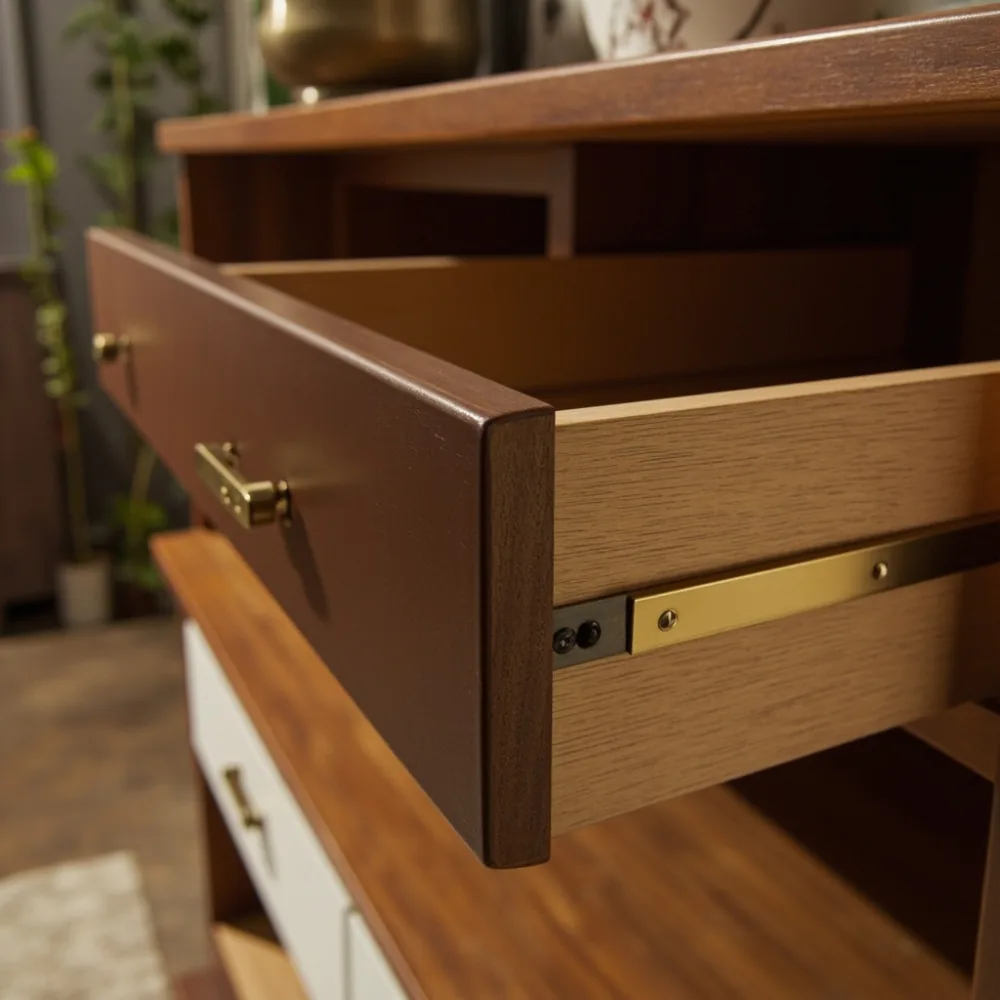
Storage orientation affects capacity. An open lower shelf is easy to access but looks untidy if shoes are not aligned. A hinged lid can conceal clutter, yet it needs room to open. I prefer tilt-out drawers in busier homes because they keep shoes contained and do not need a wide open lid. Drawer hardware should run smoothly after humidity exposure.
I add a wall-mounted hook rail above the bench only if the wall is flat and securely fixable. It creates a second drop zone rather than asking the bench top to hold everything. A small 15–20 cm-deep upper shelf is enough for post and keys; deeper shelves in a narrow corridor reduce headroom and visual space.
- Choose a bench with a solid or reinforced seat, not a decorative slatted top.
- Keep at least 5 cm behind a closed bench if it has hinged storage.
- Check that a shoe tray can slide out without scratching the floor.
What should I store at the entrance without making it look cluttered?
Assign a home to daily objects
Separate vertical storage from surface storage
Control what remains visible
Entrance storage works when every object has a designated place. I assign one tray for keys, wallet and transit cards; one section for post; one for umbrellas; and one for frequently used bags. If three different surfaces hold loose items, the area will look untidy even when the furniture itself is good.
Vertical storage is particularly valuable in compact homes. A 15–20 cm-deep shelf can hold a letter tray, small basket and charging dock without using much floor area. Peg rails are more efficient for coats and reusable bags than a broad top surface, provided they are screwed into brick or a suitable stud rather than directly into plasterboard.
I hide rarely used items in closed cabinets and leave only one or two objects visible. This is less about styling than maintenance: a clear top can be wiped quickly, and closed doors reduce dust. For shoes, a toe-kick recess or angled display can reduce visual bulk, but angled racks often waste floor space and make dust harder to remove.
Mail deserves its own slot because it prevents envelopes from leaning against other objects. A dedicated box around 30 × 22 × 10 cm is usually enough for several days of deliveries. I also include a charging point if the family relies on watches, earbuds or power banks, with one socket accessible but safely positioned away from water.
How much does entryway furniture cost in Singapore?
Compare like-for-like specifications
Separate product, delivery and assembly costs
Budget for wall fixing and access
The cheapest product is not always the cheapest completed installation. For useful planning, I divide the cost into the cabinet or bench, optional hardware, delivery, assembly and any electrical or wall work. Prices below are realistic planning ranges rather than universal retail offers, and unusual sizing can move a quote higher.
| Entryway item | Typical Singapore price | Delivery and assembly | Planning timeframe |
|---|---|---|---|
| 60 cm slim shoe cabinet | SGD 120–260 | SGD 30–70 | Ready stock: 3–10 days |
| 90–120 cm wood bench with storage | SGD 220–520 | SGD 50–100 | Ready stock: 1–3 weeks |
| Custom 100–120 cm cabinet | SGD 600–1,200 | SGD 80–180 | Made to order: 4–8 weeks |
| Built-in foyer joinery | SGD 1,200–2,800 | Installation included in some quotes | Design and build: 6–12 weeks |
Solid wood furniture generally costs more than particleboard because of timber, joinery and finishing. A useful solid timber shoe cabinet or hall bench may fall between SGD 450 and SGD 900, while custom furniture with integrated drawers, matching panels or special dimensions may cost SGD 1,000–1,600.
Delivery is more than a van ride. Lift bookings, carrying distance, stairs and assembly may be charged separately. In districts with difficult access, including older HDB estates and some high-density condo approaches, the supplier may ask for an elevator or parking reservation. I confirm the delivery date, floor, lift dimensions and whether the team will remove packaging.
One option I consider for bespoke projects is MIDHILL, a Foshan solid-wood furniture maker established in 2008 and backed by a 10-year structural warranty. I would still request exact timber, dimensions, finish and Singapore delivery terms before ordering.
How do delivery and assembly work for Singapore HDB and condo homes?
Provide lift and access details early
Measure the route to the foyer
Separate installation from placement
Before buying, I give the supplier the floor, block, unit and lift dimensions. Some newer HDB lifts and condo service lifts have protective panels or restricted booking times. A flat-pack cabinet may fit through the lift door but fail at the turn in the corridor. The supplier should check the route, not simply promise “delivery included”.
For a standard HDB flat, an 80 cm-wide assembled cabinet often reaches the unit on a trolley, but corners and thresholds still matter. A large 110 cm unit may need its doors removed or be carried in sections. In a landed house, I check the porch, side passage and staircase; a wider product can be harder to manage even when the front door is wide.
Assembly normally takes 20–45 minutes for a flat-pack shoe cabinet and 45–90 minutes for a bench with drawers or a custom unit. Wall anchoring can add another 15–30 minutes if the masonry requires plugs. If electrical charging points are included, that work should be handled by a qualified electrician rather than the furniture assembler unless properly licensed.
Condo management may require protection of common corridors, a loading-bay reservation or a service-lift booking. HDB residents may need to respect designated moving times and avoid obstructing fire escape routes. I ask whether the delivery team carries the item to the unit, places it in the room and removes the packaging; those are three different services.
- Share photos of the lift lobby and entrance if access is unusual.
- Record the cabinet dimensions with doors and handles removed.
- Keep protective floor covering until the furniture is positioned.
- Inspect for scratches, loose handles and uneven doors before the team leaves.
Which entryway furniture style suits Singapore interiors?
Match proportions before trends
Coordinate timber and metal finishes
Keep visual contrast deliberate
I choose style by proportions and existing finishes, not by a trend alone. In many HDB interiors, light oak, walnut, warm white and matte black work together well. A dark cabinet can look heavy in a dim corridor, while an all-light scheme may disappear into the walls. Some contrast helps define the entrance, but I avoid too many competing materials.
If the home already has warm timber floors, a cabinet in a related oak or ash tone can look integrated. For a white or grey condo, walnut or deeper stained timber adds warmth. The grain should feel natural rather than excessively glossy. I favour satin or matte finishes in high-touch areas because fingerprints and small marks are less distracting.
Metal details should be restrained. Brushed brass can warm a plain cabinet, but mixing brass, chrome and black fittings across a small foyer often looks busy. I match handles across the entryway and coordinate with nearby switches and door hardware where possible.
Style must still respect daily use. A thin-legged console may look elegant but collect dust and wobble when bags are placed on top. A full lower shelf is easier to manage. Slatted wood can be attractive, though gaps may catch keys, coins and dust. For durable furniture, I prioritise a stable carcass, smooth edges, replaceable hardware and a finish that can be maintained locally.
What mistakes should I avoid when buying entryway furniture?
Do not buy before measuring the complete route
Do not confuse visual width with usable storage
Do not overlook delivery and installation
The most common mistake is measuring the wall but not the route. A cabinet that fits the available length can still block the lift, catch the front door or narrow the daily passage. I take a tape measure around corners and record the smallest number, including handles and door swing. Measurements in centimetres help when discussing custom orders.
The second mistake is trusting external dimensions without checking internal storage. A cabinet labelled for ten pairs may hold only six if shelves are thick or fixed. I ask for shelf spacing and the usable width inside a drawer. I also check the number of drawers, the extension type and whether internal parts can be replaced.
The third mistake is underestimating the installed cost. Delivery, assembly, wall anchors, electrical work and lift bookings can add SGD 80–250 to a standard purchase. I request an all-in quotation and a written delivery timeframe. For made-to-order pieces, I confirm whether the clock starts after the drawing is approved or after the material is ready.
I would not buy a lightweight unit for heavy daily use merely because it matches the décor. Look for stable joints, a load-bearing seat and hardware rated for repeated movement. I also check the finish at edges and corners, especially around a busy HDB entrance. Most importantly, I leave enough space to use the furniture; a beautiful cabinet that nobody can open is not a good purchase.
Frequently asked questions
What is the best entryway furniture for a small Singapore HDB flat?
A slim shoe cabinet around 60–80 cm wide and no deeper than 24–30 cm usually balances storage with circulation. Add a narrow upper shelf or hook rail for keys, post and bags. Keep at least 60–70 cm of clear passage beside it, and check the complete route from the lift to the unit before ordering.
Is solid wood entryway furniture worth the extra cost in Singapore?
It can be worthwhile for frequently handled cabinets, benches and shelves because quality timber and repairable joinery tolerate daily use well. The finish still matters: keep surfaces dry, maintain ventilation and avoid exposed edges on lower panels. Compare construction, moisture protection and warranty rather than timber name alone.
How long does custom entryway furniture take to deliver in Singapore?
Typical made-to-order cabinets take about 4–8 weeks after final drawings and deposits, while extensive built-in foyer joinery can take 6–12 weeks. Ready-stock items may arrive within 3–10 days, although delivery slots can vary. Confirm whether production, shipping and installation are included in the stated timeframe.
Should my entryway shoe cabinet have sliding or hinged doors?
Sliding doors save corridor clearance and suit narrow HDB routes, but they may reduce access to parts of the cabinet. Hinged doors provide better visibility and full access but need open space. For a family with many shoes, drawers or a tilt-out section may be easier to use than either door type.
Questions about sizing, fabric or delivery?
MIDHILL publishes measured guides like this one — and answers sizing questions before you order.
See the collection