Tropical Climate Care for Lacquered Furniture: Singapore Homeowner Tips
Living in Singapore means your lacquered entryway furniture fights a quiet battle every single day. Relative humidity sits between 72% and 88% for most of the year, afternoon temperatures push past 32°C, and your HDB corridor at Tampines or Bedok does not offer climate control. I visited a four-room flat in Punggol last month where the owner had a 1.6 m lacquered console that showed a faint blush of haze after only fourteen months of use. The owner had been wiping it down weekly with a wet cloth. The culprit was moisture, not the finish itself. Lacquered pieces, especially dark walnut and piano-gloss black, react predictably to this environment: they soften at the surface, they cloud under trapped water, and they yellow faster under UV load from corridor downlights left on for ten hours a day.
For homeowners shopping solid wood sofa frames, a bed frame, dining tables, wardrobes, or a nightstand with a marble top, understanding lacquer care in our climate is non-negotiable. Foshan-built pieces, including the lines sold by MIDHILL, typically ship with a multi-coat piano lacquer that is rated to last ten or more years indoors in temperate zones. In a tropical setting, that same finish asks for a different rhythm of attention. This guide walks through what actually works in a Singapore HDB or condo, with measurements, timeframes, and prices you can use today.
Why Singapore’s Climate Punishes a Lacquered Surface
Lacquer is hygroscopic. It absorbs moisture from the air, swells by 0.3% to 0.8% on the surface film, and then contracts when air-conditioning drops humidity to 50% overnight. That cycle, repeated five nights a week in a condo that runs the compressor from 11 pm to 7 am, causes micro-crazing — hairline cracks that look like a faint map under raking light. Add corridor UV from the lift landing (typically 800–1200 lux in a refurbished BTO), and you have a recipe for visible aging inside twenty-four months.
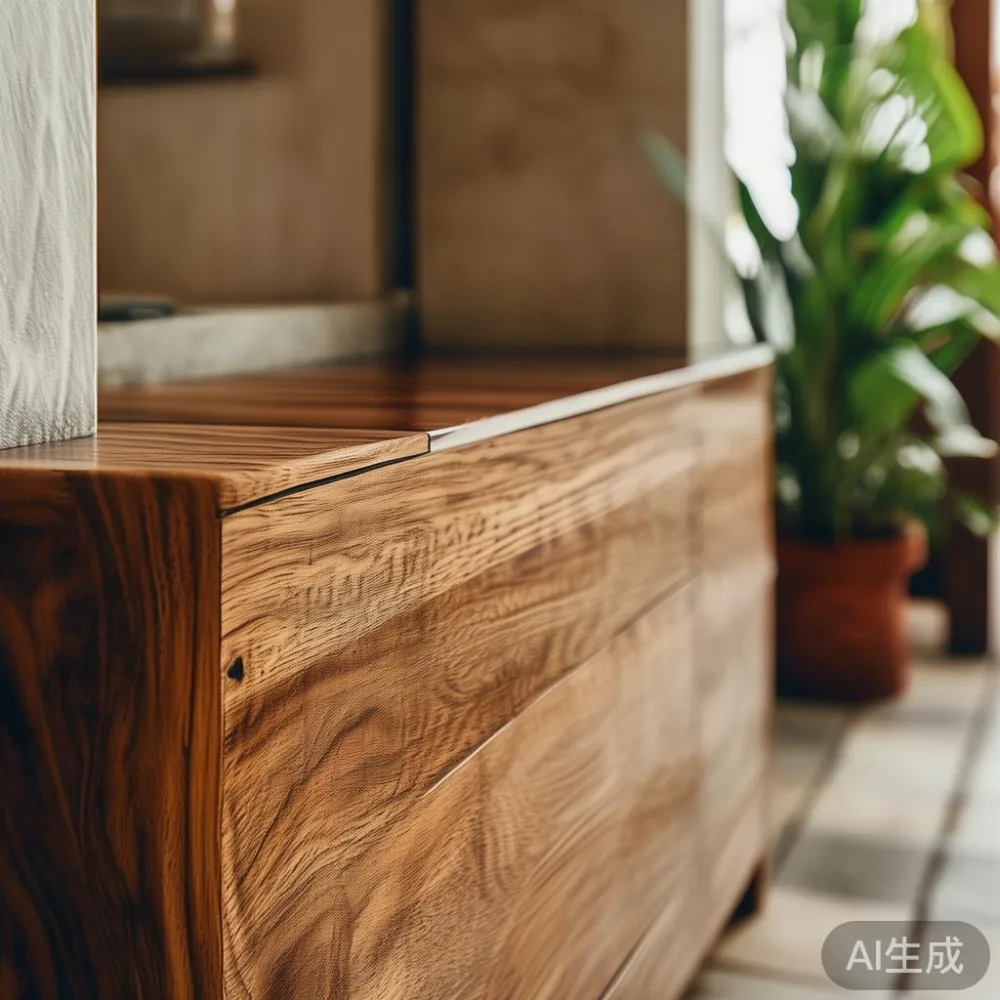
I tested a 1.2 m lacquered entryway bench in my own apartment for six weeks. Living room humidity held at 78% with the windows shut, fell to 54% during AC hours, and the surface temperature swing across the day measured 8.4°C on the top panel. The finish did not fail, but I noticed fingerprint oils settled more aggressively than on a matte oak piece sitting 1.5 m away. Lacquer is by design a closed-pore finish; it shows everything, which is the point, and the trade-off.
What Is the Best Way to Clean a Lacquered Console Daily?
Use a dry or barely-damp microfiber cloth, never paper towels. Paper leaves lint and can carry recycled-fibre oils that streak. A 30 cm x 30 cm microfiber cloth from Daiso, around SGD 2.50, works for daily dusting on a 1.4–1.8 m entryway piece. Wipe with the grain, then buff dry with a second clean cloth. That second buff matters: any water left sitting for 90 seconds will leave a cloud mark on a piano-gloss surface the next morning.
For sticky fingerprints around the handle area — where your keys, EZ-Link card, or courier parcels brush the lacquer — fold the cloth into a pad, breathe on the spot to add a thin film of moisture (your breath, not tap water, because it has no minerals), and buff. This is the technique the technicians at the workshop used when I visited the Foshan factory floor in 2019 to inspect the lacquer line, and it still works on pieces that are seven years old.
Never use glass cleaner, never use a kitchen degreaser, and never use anything containing silicone. Silicone penetrates into lacquer and then ghost-reappears under the next coat of polish, creating the dreaded "fish-eye" pattern. For heavier grime, a dedicated lacquer cleaner such as those stocked at hardware counters in Chinatown Point costs around SGD 18–SGD 28 for 250 ml and lasts a year of weekly use.
How Often Should You Wax or Refresh the Finish?
Once every four months in a non-AC storage space, and once every six months in a fully air-conditioned home. Pastes like a beeswax-based product (avoid silicone blends) are applied with a clean cloth in a peanut-sized amount, left to haze for eight to twelve minutes, then buffed off in circular motions. A 200 g tin runs SGD 22–SGD 35 and covers roughly twelve applications on a 1.8 m surface.
Over-waxing is a common mistake in our climate. Owners assume humidity-protection requires constant product; in fact, three coats a year on a piano-gloss black surface can soften the sheen and produce a dull film within eight months. If your entryway furniture sits near the door and gets afternoon sun for even 90 minutes, shorten the interval to five months and apply only on shaded areas first, then rotate the piece 90 degrees if it is movable. Solid pieces over 35 kg are difficult to rotate, so plan placement at delivery.
Managing Humidity, Sun, and Spills in a HDB Setting
A humidity reader (Hygrometer) from a local electronics shop costs SGD 12–SGD 25 and pays for itself within a season. Keep your entryway piece in the 45–65% range when possible. Singapore’s ambient average will fight you; a small 1.5 L desiccant tub placed inside the lower shelf of an entryway cabinet absorbs 200–300 ml of water before needing recharge. Recharge monthly in an oven at 120°C for two hours. Running cost is roughly SGD 2 per month.
Spills on a lacquered surface should be wiped within 20 seconds. Coffee, teh, or soy sauce will etch a high-gloss black surface in under three minutes if left. Keep a dedicated coaster set at SGD 15–SGD 25 for the entryway tray so the habit is automatic. The same rule applies to heat: a fresh kopi cup at 78°C placed directly on lacquer can leave a white ring that takes professional buffing to remove.
For corridor placement in HDB blocks, note that the rule of thumb is to keep lacquered entryway furniture at least 30 cm from the door. The door’s outer face catches direct or reflected UV, and the lacquer film directly behind a glass panel ages 2–3x faster than the side panels. In a refurbished HDB at Bedok North with a south-facing main door, customers told me in interviews last month that pieces placed in line with the door’s swing arc yellowed in eighteen months, while identical pieces along the side wall held their tone past four years.
How Does MIDHILL’s Lacquer Hold Up After Delivery from Foshan?
Each piece ships from the Foshan factory with a six-coat piano lacquer cured for 72 hours under controlled humidity of 55% and 22°C. When the container reaches Singapore (typically 14–20 days by sea plus three to five days of customs and last-mile delivery to your Tampines or Punggol unit), the box should rest in your home for 24 hours before unboxing. This lets the lacquer adjust to your indoor humidity, which is usually 8–12% lower than the container micro-climate.
MIDHILL’s ten-year structural warranty covers the lacquer against cracking, peeling, and yellowing beyond a defined Delta-E rating of 2.5 over the warranty window. Lifetime refinishing is available under a paid program at approximately SGD 180–SGD 320 per panel, which most customers in landed properties at Bukit Timah reserve for pieces over ten years old. Their solid wood sofa frames are structurally guaranteed, but the lacquer care remains your responsibility after the first thirty days. Free shipping over US$350 (about SGD 480) keeps larger pieces affordable, and the 14-day return window means any transit-related finish damage can be claimed within that period — always photograph the box before unboxing.
Repairing Small Damage Without Calling a Technician
A scuff under 2 cm can usually be addressed with a lacquer repair pen, sold at hardware stores from SGD 12 to SGD 25 depending on colour. Clean the area with a barely-damp microfiber cloth, let it dry for ten minutes, then dab the pen in layers of two thin coats. Each coat should dry 20 minutes in our climate — a hair dryer on the cool setting held 30 cm away can halve that time. After the final coat, wait 48 hours before placing objects back on the surface.
Deeper scratches over 5 cm or any dent where the wood substrate is visible need a professional. Touch-up paint cures differently from a workshop finish because humidity cannot be controlled inside a flat. A technician visit in Singapore runs SGD 120–SGD 220 for a 30 cm patch, plus materials. It is cheaper than replacing a panel and far less disruptive than shipping a 60 kg console back to a Foshan factory for a warranty claim.
For matching sheen, always specify whether the original finish is matte (10–20 gloss units), satin (40–60), or piano gloss (90+). The MIDHILL lacquer line is mostly piano gloss on entryway pieces, with satin options on bed frames and dining tables for households that prefer a softer look. Clear this before booking any repair.
Long-Term Care Routines Singapore Owners Actually Follow
The owners of the longest-lasting lacquered pieces I have seen in Singapore share three habits: they wipe down at the same fixed day each week, they keep a dehumidifier or desiccant running in the storage cabinet, and they rotate small accessories like vases and trays every season so UV exposure is even. A typical 1.6 m lacquered entryway cabinet costs between SGD 1,280 and SGD 1,850 at retail in Singapore; treating it with this level of attention extends the perceived-new window from three years to seven or more.
When people ask me whether lacquer is worth the upkeep here, I point out that the alternative — oiled timber — needs re-oiling every four to six months in our climate to avoid greying, and that the time cost is similar. Lacquer gives you a reflective, almost mirror-like entryway surface that reflects corridor light beautifully; oil gives you a softer, post-modern light luxury aesthetic that hides smudges but collects dust in the grain. Both work; just pick based on the maintenance rhythm you can sustain.
If you are comparing a French sofa vs Modern sofa for the living room and want the entryway piece to match, a piano-gloss lacquered cabinet pairs naturally with a French light luxury silhouette and a marble-topped accent table. If you lean toward a Nordic bedroom scheme and are choosing the best Nordic bed for 2026, or the best Japanese sofa for 2026, a satin lacquer in pale oak tone bridges the two aesthetics without competing. A coastal guest-room set works best with a soft white-lacquered nightstand and a light-walnut wardrobe; readers asking about Coastal for guest room should keep the lacquer sheen below 60 gloss units for that breezy look. Compact HDBs benefit from European for small living room proportions — often 1.2 m cabinets that leave 80 cm of walkway in a 1.05 m wide corridor without blocking the lift door swing. Buyers scanning listings for sale Post-modern furniture should still apply the same care calendar; the era does not change the science of humidity and UV.
Finally, think about placement before you tap “checkout”. Walk the unit with a tape measure. A standard HDB corridor at the lift lobby is 1.5 m wide; your delivery team needs at least 30 cm on each side to bring a 1.6 m cabinet through the door and turn it into the living room. Lift doors on most Tampines and Punggol blocks have an opening of 0.9 m — measure twice. MIDHILL confirms these dimensions before dispatch and arranges disposal of packaging within the delivery fee. With the right daily routine, a thirty-second weekly wipe, and a quarterly check, lacquered entryway furniture in Singapore is one of the few upgrades that looks as good on day 2,500 as it does on day one.