How to Match Solid Wood Entryway Furniture to a Warm Minimal Interior in a Singapore HDB
Stepping through the door of a Tampines 4-room flat last month, I noticed something almost every visitor comments on: the entryway is the smallest room in the house, yet it sets the tone for everything beyond. The corridor outside a Singapore HDB unit is rarely wider than 1.2 m, the lift opening 800 mm on the narrow side, and the floorplan often leaves you with a footprint under 1.5 m by 2 m to work with. That tiny rectangle is where warm minimalism either survives or collapses, and where entryway furniture has to do twice the work of a larger piece.
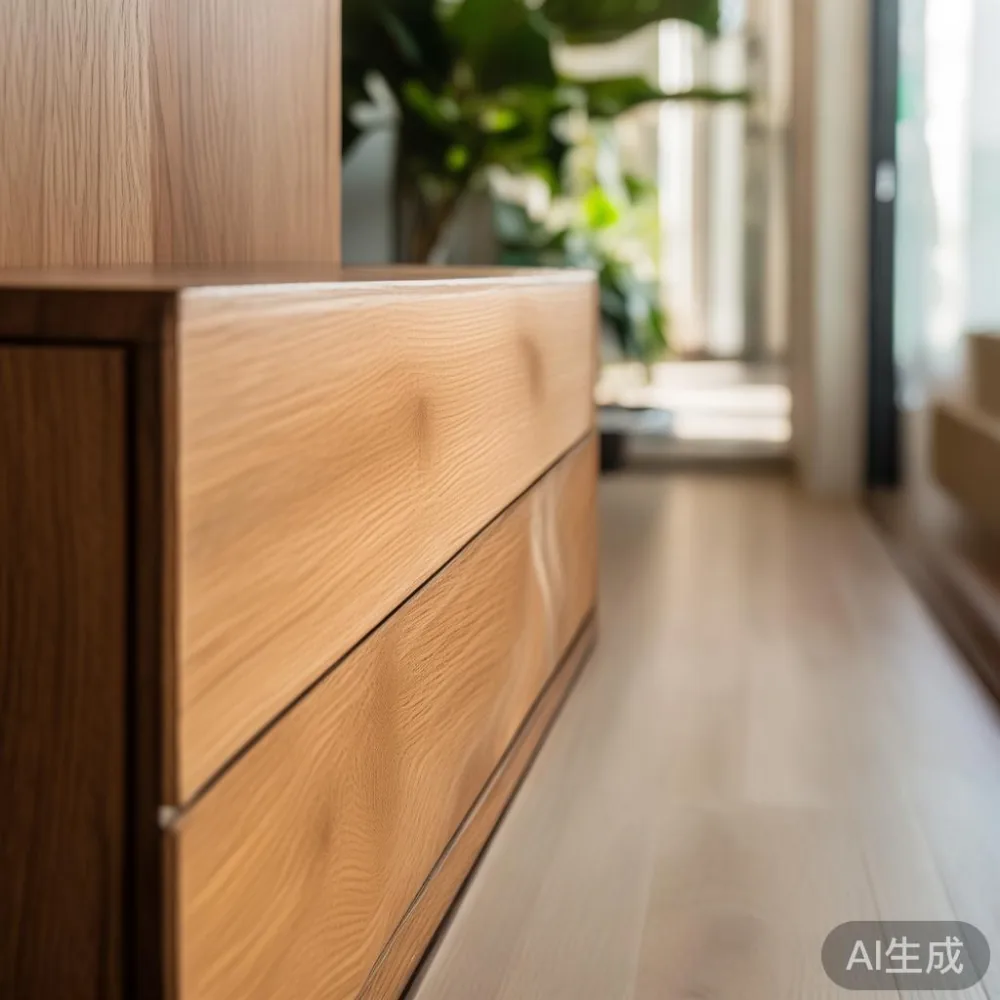
Warm minimalism is a quiet counter-movement to the cold, gallery-like interiors that flooded Instagram around 2018. It keeps the discipline — fewer objects, calm surfaces, generous negative space — but swaps stark white-on-white for honey-toned solid wood, brushed brass, raw linen, and a single warm-white wall in something like Dulux Natural White (NNW1). Think French light luxury: a Parisian apartment where every object is expensive but understated, and the room still feels lived in. Post-modern light luxury pushes this slightly further, mixing a curved marble table edge with a rectilinear oak console — a deliberate tension that reads as confident, not chaotic.
The pieces we will discuss — entryway benches, slim consoles, shoe cabinets, a small side table, an umbrella stand, and a wall-mounted coat rack — sit at the very front of the home. They are also the items most likely to bump against a HDB corridor railing on the way up, which is why construction quality matters as much as colour. MIDHILL, a Foshan workshop running since 2008, ships solid oak and ash pieces to 15+ countries with a 10-year structural warranty and lifetime refinishing, and Singapore orders over S$350 ship free in about 14 to 21 days. That kind of after-sales grounding is what lets you buy a warm wood console for S$680 and know the joints will still be tight in 2034.
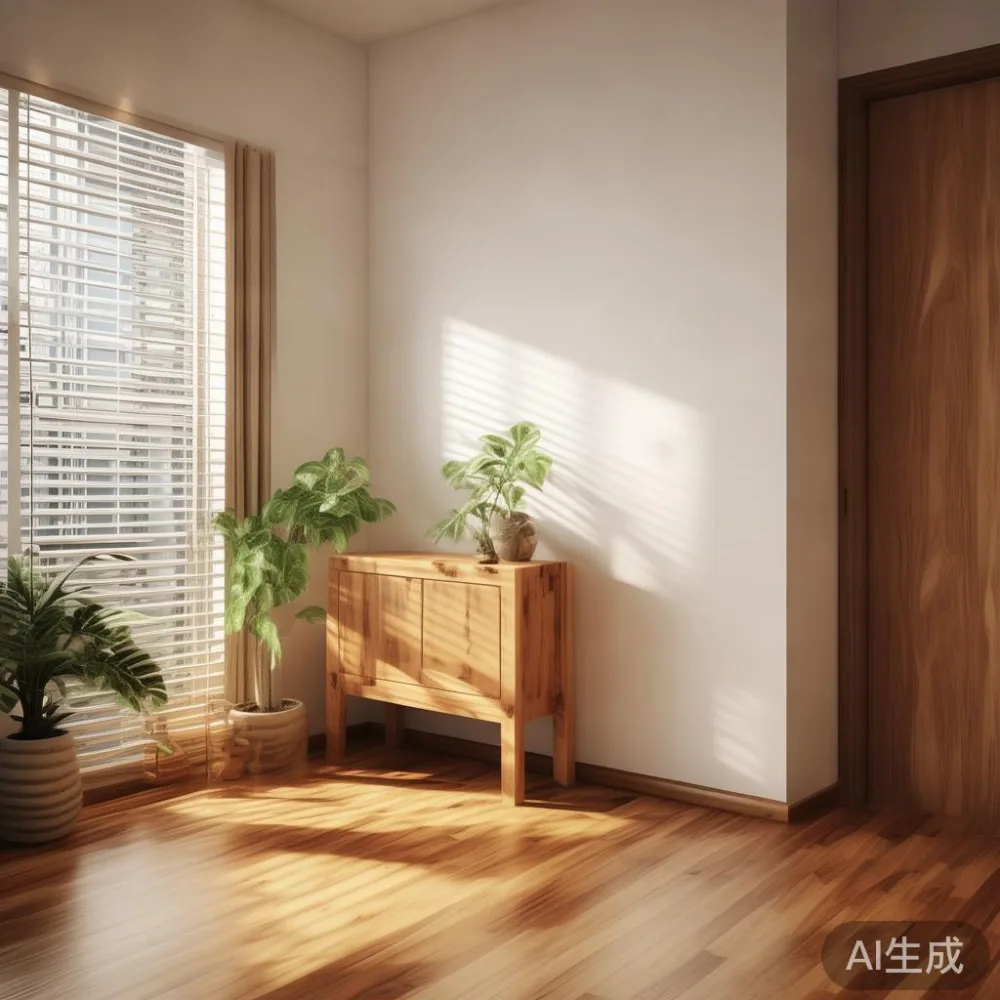
What does warm minimal actually look like in a 4-room HDB?
Warm minimal is a controlled palette, not a stylistic idea. In a typical Bedok or Punggol BTO, you are dealing with a 1.8 m entrance wall, often with the DB box on one side and a metal gate at the front. The walls are off-white, the floor is usually 600 mm x 600 mm porcelain tile in pale grey or warm beige, and the ceiling sits at 2.6 m. To make the entryway read warm without clutter, I work with three rules.
First, lock the wood tone. Pick one — natural oak, light ash, or a slightly smoked walnut — and let it appear on the bench top, the console surface, the shoe cabinet front, and the small wall-mounted shelf. Two different woods in a 3 m space will always look accidental. One wood in three shades of the same stain looks intentional. For Singapore humidity, which sits at 75–85% most afternoons, ask whether the piece is kiln-dried to 8–10% moisture content; this is the difference between a flat top in year one and a crowned top in year three.
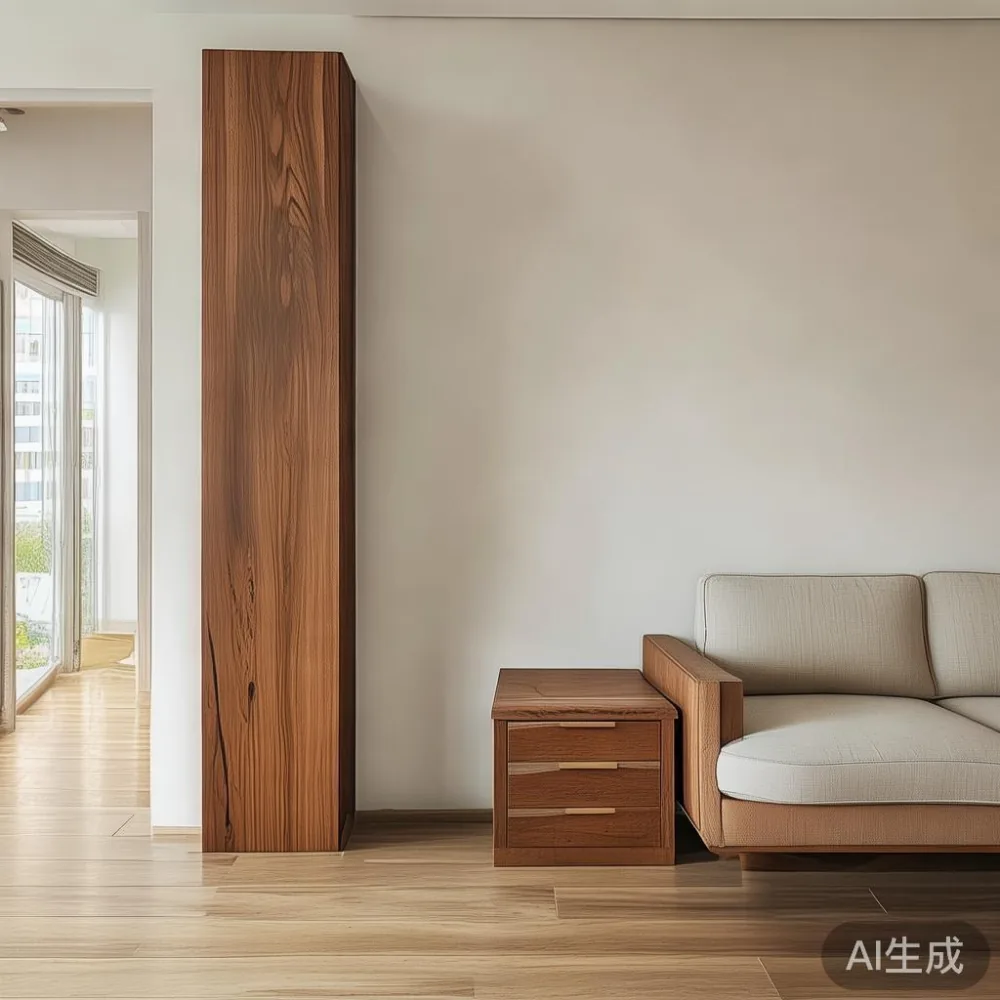
Second, keep the metal consistent. If your door handle is brushed brass, repeat that finish on the coat hooks, the lamp base, and the cabinet pulls. Black iron is the alternate route, more American light luxury than French — slightly cooler, slightly more architectural. Avoid mixing three metal finishes; in a 1.5 m wide entrance, three finishes become four, which becomes visual noise.
Third, commit to one soft surface. A 60 cm x 90 cm wool entry rug in oat or terracotta, or a woven rattan doormat if your block is ground-floor. Warm minimal is generous on touch — your hand should graze wood, wool, linen, and one small ceramic or marble accent on the way in.
How do I style a storage bench in a modern Singapore home?
Choose a 100 cm to 120 cm solid wood storage bench in natural oak, lift the lid to reveal a 90-litre compartment sized for two pairs of trainers and a folded umbrella, then style the seat with one 45 cm linen cushion in oat and a single ceramic vase no taller than 25 cm.
That sentence is the short answer. The long answer is more interesting, because a storage bench at the HDB entrance has to solve three local problems at once: shoes, parcels, and the visual weight of the metal gate.
On shoes, count them. A family of four in Tampines keeps roughly 12 to 18 pairs in rotation — school shoes, work shoes, weekend trainers, house slippers. The bench compartment should be at least 85 cm wide internally so a size 44 trainer sits flat. Lift-up lids with soft-close hinges (test them; they should take 3 to 4 seconds to close from a 60° drop) prevent the slam that wakes a baby at nap time. The outside can stay clean: a single drawer at the front for keys and the EZ-Link card is enough.
On parcels, the bench doubles as a staging surface when the delivery arrives. Singapore courier habits mean 3 to 5 packages a week above S$50 — buffer for a 30 cm x 35 cm flat envelope or a 40 cm cube box. The seat height should sit around 45 cm, which matches a standard HDB chair and lets an elderly parent push up without strain.
On the gate, the bench needs to be slim enough not to crowd the threshold. A depth of 38 cm to 42 cm is the sweet spot — narrower reads as flimsy, deeper eats the corridor and bumps the door arc. Place it 8 cm to 10 cm off the wall so the lid can open fully without scraping the skirting. A colleague of mine in Punggol anchored her 110 cm oak bench with a 60 cm round mirror above it and a 25 cm brass wall sconce on the side; the three pieces line up like a still life and the gate disappears into the background.
If you prefer a softer reading, swap the solid wood seat for a woven rattan top — a quiet nod to rattan furniture for small bedroom styling, but brought into the entry. Rattan breathes better in our humidity, costs around S$120 less than an equivalent oak bench, and softens the look if your walls have leaned cool grey. The trade-off is load: a rattan bench is rated to about 90 kg seated, versus 140 kg for a kiln-dried oak frame.
Which solid wood pieces actually earn their floor space in a HDB entryway?
Three pieces, no more. The storage bench above, a 90 cm to 120 cm slim console table against the longer wall, and a wall-mounted coat rack with 4 to 5 hooks. Anything past that count becomes a lobby, not an entry.
The console table is the hardest piece to get right. In a 1.5 m wide corridor, a 90 cm long x 30 cm deep console in solid ash gives you a landing strip for mail, a car key tray, and a 20 cm tall table lamp without blocking the path to the kitchen. The standard move is two drawers (one shallow 8 cm for envelopes, one deeper 15 cm for chargers) and an open shelf underneath for house slippers. Prices for a well-made solid ash piece from a Foshan maker running modern light luxury lines sit between S$520 and S$780 landed in Singapore, including GST at the prevailing 9% rate. Below S$400 you are usually looking at veneer over MDF, which will peel at the corners within 18 months in our climate.
The coat rack is the unsung hero. A wall-mounted solid oak rack, 60 cm wide with 5 hooks rated to 5 kg each, handles a school bag, a tote, a folded umbrella, a guest jacket, and one of those courier reflective vests my Punggol neighbour insists on keeping by the door. Mount it at 150 cm from the floor so a 165 cm adult can hook a tote without bending and a 110 cm child can still reach the bottom hook. Spacing between hooks should be 12 cm to 14 cm — tighter than that and a bag strap tangles with the next one.
If you have a square entrance wider than 1.6 m, you can afford a small accent piece: a 45 cm round marble side table at S$420 to S$650, used for a plant and a single book. Marble in the entry is a French light luxury signature; it also wipes clean when a muddy football boot tracks in from the void deck.
What colours, finishes, and lighting make a small entryway feel warm rather than cramped?
Three moves: warm-white walls at around 2700K to 3000K, a single wood tone repeated across pieces, and one statement lamp instead of ceiling downlights.
Lighting is the cheapest upgrade. Most HDB entrances ship with one fluorescent tube at 4000K, which reads clinical. Swap it for a 2700K warm-white LED panel (about S$18 at any local hardware shop) or, better, remove the tube entirely and install a 25 cm brass wall sconce above the console. The sconce throws light down onto the wood, which bounces it back as a soft amber glow. Pair with a 20 cm table lamp on the console for layered light at night; the total wattage should not exceed 12W LED, or you will heat a 1.5 m square room faster than the aircon can pull it down.
On paint, the warm-minimal palette runs from Dulux Natural White (NNW1) on three walls to a single accent wall in a muted clay, such as Nippon Clay 1034 or Jotun Soft Clay. One accent only, and it should sit behind the bench so the wood pops forward. If your HDB came with the standard cream, leave the ceiling and skirting in the original tone and only repaint the entry — a full-house repaint costs S$1,800 to S$3,200 in Singapore and is unnecessary for this exercise.
On hardware, satin brass reads warmer than polished brass and forgives fingerprints, which matters when every guest touches the door handle. Black iron is the alternate, more American light luxury route, slightly cooler, slightly more architectural. Avoid mixing three metal finishes; in a 1.5 m wide entrance, three finishes become four, which becomes visual noise.
How should I plan delivery and installation for a narrow HDB corridor?
Measure the corridor width, the lift depth, and every right-angle turn before you order, then plan for a two-person carry on a Sunday morning when the lift is empty.
Most Singapore HDB lift cabins measure about 1.1 m deep x 1.4 m wide x 2.3 m tall. A 120 cm console table will fit flat, but a 120 cm bench usually has to go in diagonally. Wrap the piece in moving blankets (S$6 each at HomeFix) and use a furniture dolly rated to 200 kg. If a piece exceeds 90 kg — a solid wood wardrobe or a king-size bed frame delivered early by mistake — refuse the delivery on the spot and ask the warehouse to re-route via the loading bay. This is not theoretical; my colleague in Bedok had a 95 kg oak dining table refused at her floor because it could not clear the 12th-storey lift door.
For entryway furniture specifically, the realistic weights are: storage bench 28 to 38 kg, console table 22 to 32 kg, coat rack 4 to 6 kg, marble side table 18 to 26 kg. Two people, one dolly, one Sunday morning slot from 9 am to 11 am, and the job takes 40 minutes including unboxing. MIDHILL's free-shipping threshold for Singapore sits at S$350, well below the cost of any of the entryway pieces above, so delivery is in effect included; allow 14 to 21 days from Foshan and you will not be disappointed.
Once inside, give the wood 48 hours to acclimatise to your aircon humidity (which usually runs 55–65%) before mounting anything to the wall. HDB walls are hollow-backed concrete with a skim coat, so use 6 mm x 40 mm plastic anchors rather than the drywall plugs that come with most IKEA kits. The bench should never be screwed to the wall in a rental; a 12 kg anti-tip strap under the rear leg is enough to keep it planted if a child climbs on it.
What are the most common warm-minimal entryway mistakes in Singapore flats?
Buying three different woods, choosing black-and-brass together, and ignoring the lift door. These three errors account for about 80% of the entryways I am asked to fix.
The wood-mix mistake is the easiest to avoid: one tone, three pieces, that is the rule. The black-and-brass mistake is subtler — they look great in a 30 m² studio but fight each other in a 1.5 m entry. Pick a lane. The lift mistake is purely logistical: I have watched a S$900 oak wardrobe get turned away at the 8th floor because the buyer never checked the diagonal. Always measure the diagonal of your largest piece and the diagonal of the lift opening, and keep 10 cm clearance on each side.
A smaller mistake is over-styling. Warm minimal rewards restraint. A 1.5 m entry should hold at most six visible objects: bench cushion, vase, lamp, mirror, coat rack contents, and one small tray for keys. Add a seventh and the room tips from curated to crowded. The other common error is buying a slim console at 25 cm deep to save space; below 28 cm the surface is too narrow for a standard A4 envelope and your mail ends up on the floor.
Where does MIDHILL fit into this picture, and is it worth the wait?
If you want warm minimal entryway furniture that survives a Singapore decade, MIDHILL is one of the few makers that ships solid oak and ash pieces at the right weight, the right moisture content, and with a 10-year structural warranty. Their slim consoles, storage benches, and small side tables in the modern light luxury line sit cleanly in a HDB entrance without shouting for attention, and the lifetime refinishing offer means a 2034 piece can be sanded back to the 2024 colour for the cost of shipping.
The trade-off is patience. Custom pieces take 21 to 35 days, stock pieces 14 to 21 days from Foshan, plus 7 to 10 days for sea clearance and last-mile delivery to a Singapore address. If you are renovating a new BTO and the entryway is the last zone to furnish, that timeline is comfortable. If you are replacing a broken piece this week, look at local stockists and accept that you will pay 20 to 30% more for the privilege of speed.
One last piece of advice from that Tampines visit: before you buy, walk to your front door, stand inside, and look back toward the kitchen. That reverse angle is what your guests see as they leave. If the bench top, console lamp, and mirror all read clearly from 3 m away, the entry is doing its job. If they blur into one beige smudge, the room is too monochromatic — add a single brass hook or a green plant and try again. Warm minimal is a feeling, not a checklist, and the feeling should be: I am home.