How to Care for Lacquered Entryway Furniture in Singapore's Humid Climate
Walk into any Tampines HDB executive apartment on a Tuesday afternoon in March and you can feel it before you see it: the air is heavy, the corridor is warm, and the lift smells faintly of rain that has not actually started. Singapore sits almost on the equator, and most months the relative humidity hovers between 70 and 90 percent. That is wonderful for skin, less wonderful for a hand-lacquered console table sitting one metre from the door. If you have ever watched the sheen on a console dim after a single wet season, you already know why a care routine written for temperate Beijing or Madrid is not enough. This guide is tuned for HDB flats, condos in Punggol, and landed homes in Bedok, and it focuses on the piece of furniture that takes the worst beating in any home: the entryway.
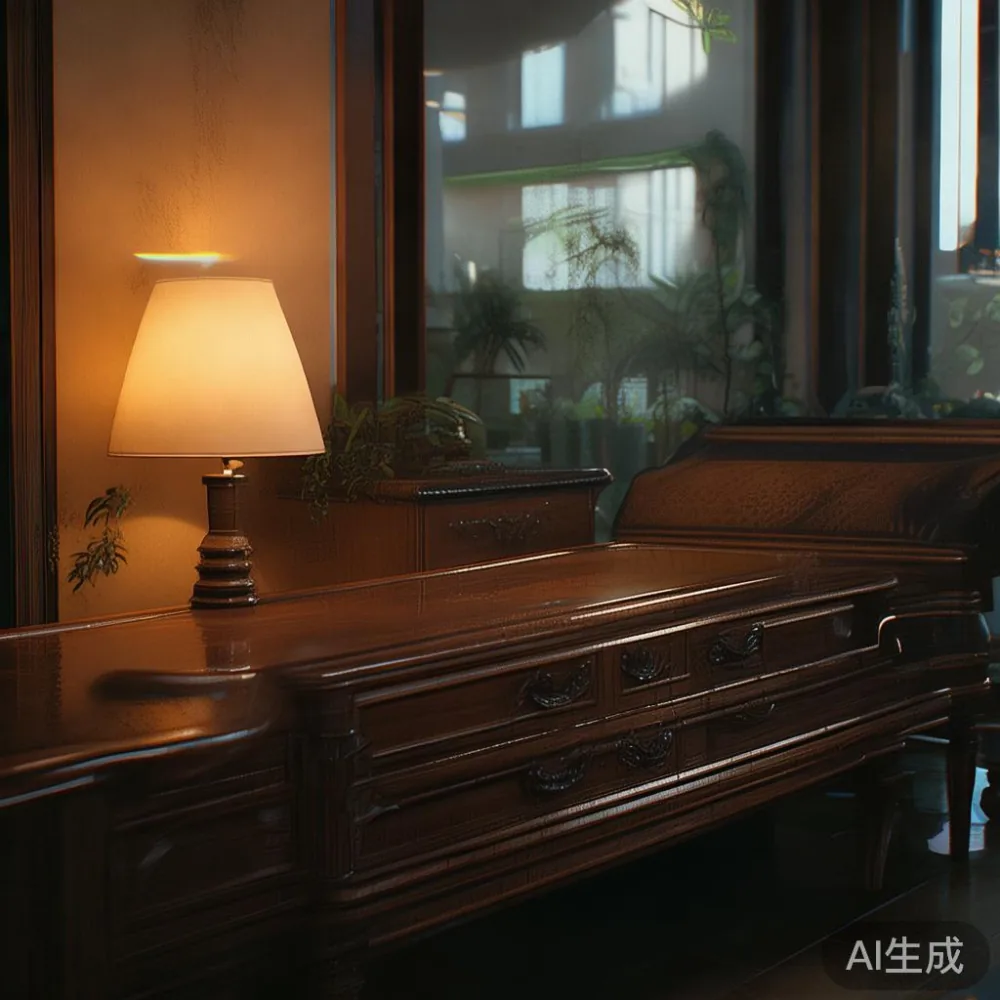
Entryway furniture is exposed to all the indoor extremes a tropical home can produce: dust carried in by shoes, salty air from an open balcony door, the daily squall that drives wet umbrellas straight past the console. A solid wood console, a lacquered bench, or a slim shoe cabinet will absorb this all year long. A short routine — three to five minutes a day, fifteen minutes a week, one inspection every quarter — is enough to keep the surface reading like glass for a decade. The rest of this article breaks that routine down, with the actual numbers a Singapore household needs: humidity targets in percent, wipe-down intervals in days, refinishing costs in SGD, and realistic timelines for delivery and warranty.
Why Singapore's Climate Is Harder on Lacquer Than You Think
Lacquer is a film. It sits on top of the wood as a continuous skin roughly 0.3 to 0.8 mm thick, and its job is to keep oxygen and water away from the timber underneath. In Foshan or Hangzhou, the wood stabilises around 12 to 15 percent moisture content. In Singapore, indoor timber often sits between 16 and 22 percent, and swings of 4 to 6 percent between monsoon and dry spell are normal. Every time the wood expands and contracts, the lacquer is asked to stretch a fraction of a millimetre. Cheap lacquer will craze — those tiny white hairline cracks that look like cracked ice under raking light. Mid-quality lacquer, the kind you find on a MIDHILL dining table or a higher-grade European light luxury sofa frame, is engineered to flex within a tight range, but only if humidity stays inside a 45 to 60 percent band.
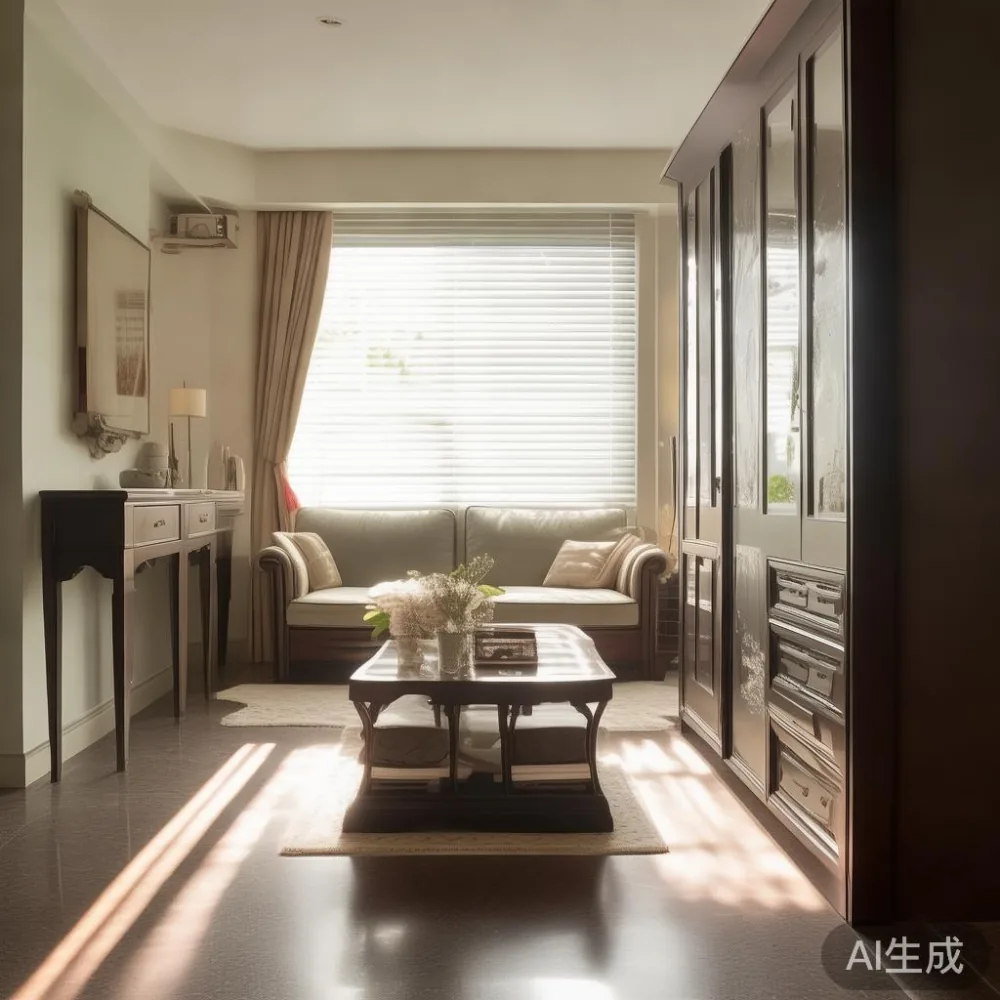
The second issue is salt. Singapore's coastal breeze carries chloride particles that settle on horizontal surfaces. On an open-pore lacquer, salt pulls moisture out of the film overnight and leaves a faint bloom the next morning. On a closed-pore piano finish, the same salt deposits sit on the surface until wiped. Either way, the residue is mildly hygroscopic, meaning it actually pulls more humidity to itself, accelerating the very cycle you are trying to control. I saw this last month when I visited a 92 sqm condo in Punggol where the homeowner had placed a low console about 30 cm from the entrance. After eight months the surface read 10 percent glossier near the wall than at the door end — proof of how unevenly humidity loads the same panel.
Daily and Weekly Habits That Actually Move the Needle
For a single console in a Tampines 4-room flat, the routine fits inside a tea break. Every day, before you leave for work, run a dry microfibre cloth — 40 by 40 cm, 250 to 300 gsm — across the top in long, overlapping passes. One pass with the grain, one against. That is 30 seconds. Microfibre picks up dust without scratching the 60 to 90 gloss unit surface the way a cotton tee will after a few months of use. Avoid feather dusters; their natural oils leave streaks that build up under the lacquer and dull it.
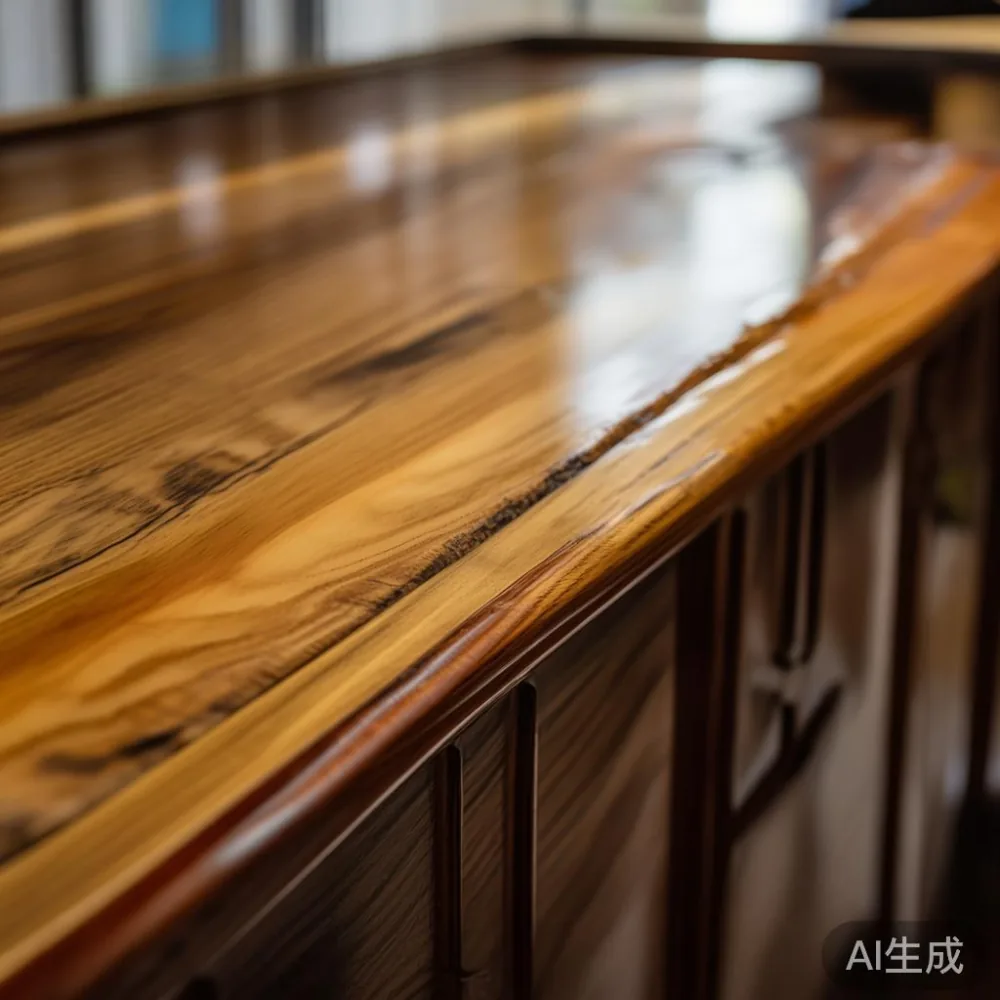
Once a week, ideally on Sunday morning before the house gets busy, mist a clean microfibre with a 1:4 solution of isopropyl alcohol to distilled water — never tap water in Singapore, because the 30 to 80 ppm calcium will leave a visible film within four weeks. Wipe in straight lines, then immediately buff with a dry cloth. The whole sequence should take 90 seconds for a 120 cm console. If you have a marble-topped entryway bench, the same wipe works, but skip the alcohol; use a pH-neutral stone cleaner priced S$12 to S$18 for a 500 ml bottle at any Cold Storage or FairPrice.
Keep a small entry tray by the door, sized roughly 35 by 45 cm, to corral keys, sunnies, and the wet wallet that comes back from the MRT. Direct contact is the single most common cause of ring marks on lacquer — a wet kopi-O cup placed down for 90 seconds can leave a faint ghost ring if the lacquer is older than five years. The tray costs S$18 to S$45 and saves a S$120 to S$280 refinish.
What Should I Do When the Console Already Shows Cloudy Patches?
Cloudy patches are usually one of three things: mineral film from hard water, wax build-up from a previous polish, or early-stage moisture blush under the lacquer. Diagnose before you treat. Lightly mist the area with distilled water and rub with a microfibre for 15 seconds. If the cloud lifts, it is surface film — keep going. If the cloud stays but feels slightly tacky, you are looking at a wax build-up, and a single application of a proper wax-and-grease remover (like a mineral-spirit-based cleaner, S$22 to S$35 for 250 ml) will cut it. If the patch is under the lacquer and the surface still feels glass-smooth, do not rub harder. That is moisture blush in the film, and the only real fix is a professional refinish.
Choosing the Right Finish for a New Entryway Piece
If you are still shopping, the lacquer you choose at the start determines how much of this article you will ever have to read. Open-pore lacquers (sometimes called natural or matte) feel like a freshly oiled teak surface; they show fewer marks but hold more dust. Closed-pore high-gloss (90 to 95 gloss units) reads like a Steinway and repels moisture better, but every fingerprint shows. For most Singapore entryways a satin lacquer of 55 to 70 gloss units is the practical sweet spot. It forgives morning foot traffic, hides the inevitable salt bloom, and photographs well for the inevitable family photo with the new console.
Two finishing traditions dominate the light-luxury category. French light luxury tends toward warm honey tones, soft champagne highlights, and a satin sheen that flatters walnut and ash. American light luxury leans cooler, with grey-rubbed oak and a low 25 to 35 gloss unit sheen that reads as understated and casual. A third school, post-modern light luxury, plays with high contrast — black lacquer frames against brass inlays — and demands stricter humidity control. If you are weighing a European light luxury sofa for the living room against a post-modern entryway console, ask about matching sheen so the two pieces do not visually fight.
For clients asking is Mid-century modern sofa worth it as an investment piece, the parallel question for entryway furniture is whether the savings on a cheap Italian light luxury furniture import outweigh the lifetime refinishing costs. Imported entryway pieces landed in Singapore carry 8 percent GST plus S$80 to S$220 delivery to a fourth-floor HDB walk-up, and refinishing a single 120 cm console locally runs S$140 to S$260. Doing the math over ten years, a slightly higher upfront cost for a properly sealed solid-wood entryway piece from a maker like MIDHILL — backed by a 10-year structural warranty and lifetime refinishing — usually works out cheaper than the second or third refinish on a cheap import.
Humidity, Air Conditioning, and the Numbers That Matter
The single most effective intervention in a Singapore home is controlling humidity at the entry threshold, where the door opens and closes 20 to 60 times a day. A small dehumidifier set to 50 percent relative humidity, placed within 5 metres of the entryway, will cut lacquer stress dramatically. Models sized for a 10 to 20 sqm space cost S$179 to S$329 at Harvey Norman and pull 6 to 10 litres a day, which is more than enough for a 4-room HDB. Run it on a smart plug from 11pm to 7am when the nightly humidity spikes and electricity is cheapest.
If your entry opens straight onto the living room with no partition, the air-con's dry mode can do similar work for the whole 40 to 60 sqm hall. Aim for 24 to 26 degrees Celsius and a measured relative humidity of 50 to 60 percent inside. A S$25 thermo-hygrometer from Challenger is accurate to plus or minus 2 percent and will keep you honest; guessing by feel is what gets consoles through four monsoons and then suddenly blooming white along the joints.
When the Piece Needs More Than a Wipe-Down
Every solid wood entryway piece will eventually need a fresh coat of lacquer. The frequency depends on use. A console in a Tampines family of five that opens onto a sun-drenched corridor will want a fresh topcoat every 4 to 6 years. A bench in a Punggol couple's air-conditioned entry might go 8 to 10 years. A wardrobe fitted into the entry niche — useful for coats, helmets, and the second pair of trainers — will often outlast the consoles, because vertical panels shed dust rather than collecting it.
On that note, anyone choosing a best Nordic wardrobe for 2026 type of built-in should think about the same film system used on freestanding pieces, and ask for a 20 to 25 gloss unit closed-pore finish on door fronts; it hides fingerprints while sealing against moisture. A light luxury bed vs Modern bed debate, or the choice between a modern bed with a low platform and a tall European headboard, rarely changes the lacquer care routine much, because the bed sits in the bedroom, where humidity is generally 5 to 10 percent lower than the entry hall. The piece taking the most punishment is still the door-side console, every time.
Professional refinishing in Singapore costs roughly S$140 to S$260 for a 100 to 130 cm console, S$220 to S$380 for a 140 to 180 cm sideboard, and S$60 to S$110 per coat of lacquer above the included two. The shop collects, works the surface, and returns within 7 to 14 working days. If you are weighing this against a new piece from MIDHILL, remember that the brand's lifetime refinishing offer covers structural pieces, and a new entryway console shipped from Foshan with free delivery over US$350 (about S$480) clears GST at 8 percent and arrives in 25 to 35 working days.
Fitting a Console Through a Singapore HDB Door
Practical size matters in HDBs. A standard entry niche in a 4-room flat in Bedok measures 130 to 160 cm wide and 35 to 45 cm deep, with a corridor clearance to the lift lobby of about 110 to 130 cm. Lift interior dimensions on most HDB blocks are 1.1 m wide by 1.4 m deep with a door opening of 0.8 m. A console wider than 140 cm will not fit the lift on its side and must come in flat, which adds 80 to S$120 to the delivery quote and sometimes forces a corner-of-the-stair turning that few movers will attempt on the eighth floor.
The safe rule: keep entryway consoles under 130 cm wide, under 40 cm deep, and under 85 cm tall. That fits both the lift and the door frame, and weighs in at 25 to 45 kg so it does not need a second mover. Slim solid wood benches at 90 to 110 cm long are even easier to place, and pair nicely with a wall-mounted mirror and a small accent chair — the kind of seat often sourced as an Italian light luxury accent chair with a curved back and brass-tipped legs that slip through any standard 0.9 m corridor.
Putting Together a Realistic Care Calendar
Print this and stick it inside the console drawer. Daily, 30 seconds: dry microfibre wipe-down. Weekly, 90 seconds: distilled-water wipe, then buff. Monthly: clean the metal hardware with a dry cloth; brass pulls oxidise within 6 to 10 months in coastal air and a quick polish restores them to S$8 worth of material. Quarterly: move the console 5 cm from the wall, vacuum the back with a soft brush attachment, and check for the first signs of edge lifting — that is the cue to bring in a refinisher within the next 12 months.
Annually: a fresh coat of paste wax if you chose an open-pore satin finish, or a professional two-coat lacquer refresher if you chose high gloss. Budget S$45 to S$90 for wax and your own time, or S$180 to S$320 for a professional top-up. Either way, every dollar spent here is a dollar saved on a premature replacement.
The Quiet Payoff of a Good Routine
The first time you walk through the door after a properly maintained entryway console has been cared for a decade, you will notice it. The morning light from the corridor window lands on the surface and reads like still water instead of a foggy mirror. The keys land in the tray without a clatter, the wet umbrella goes into the stand, and the bench where you tie your shoes still feels solid underfoot. A piece of lacquered entryway furniture done well is not loud furniture. It is the piece that quietly holds the house together while everything else in the room gets the attention. With fifteen minutes a week and a realistic budget of S$40 to S$120 a year on consumables, that quiet is something any Tampines or Bedok household can keep for ten, fifteen, even twenty years — long enough for the kids to grow up and bring their own keys home to the same door.