Entryway Furniture: How to Choose the Right Size Furniture for a Singapore HDB
Measuring a Singapore HDB living room for new furniture feels simple until the sofa arrives and blocks half the corridor. I learned this the hard way last month while delivering a 2.4 m solid wood sofa to a 4-room flat in Bedok: the lift opening was 1.8 m wide but the L-shaped corridor on level 7 was only 1.1 m, and the sofa nearly did not make the turn. By the time the second unit showed up, the buyers had taken a folding tape to the lift, the corridor, the front door, and the living room. The whole process took 35 minutes. That is roughly the same amount of time most HDB owners spend on a furniture purchase and about ten minutes more than is wise.
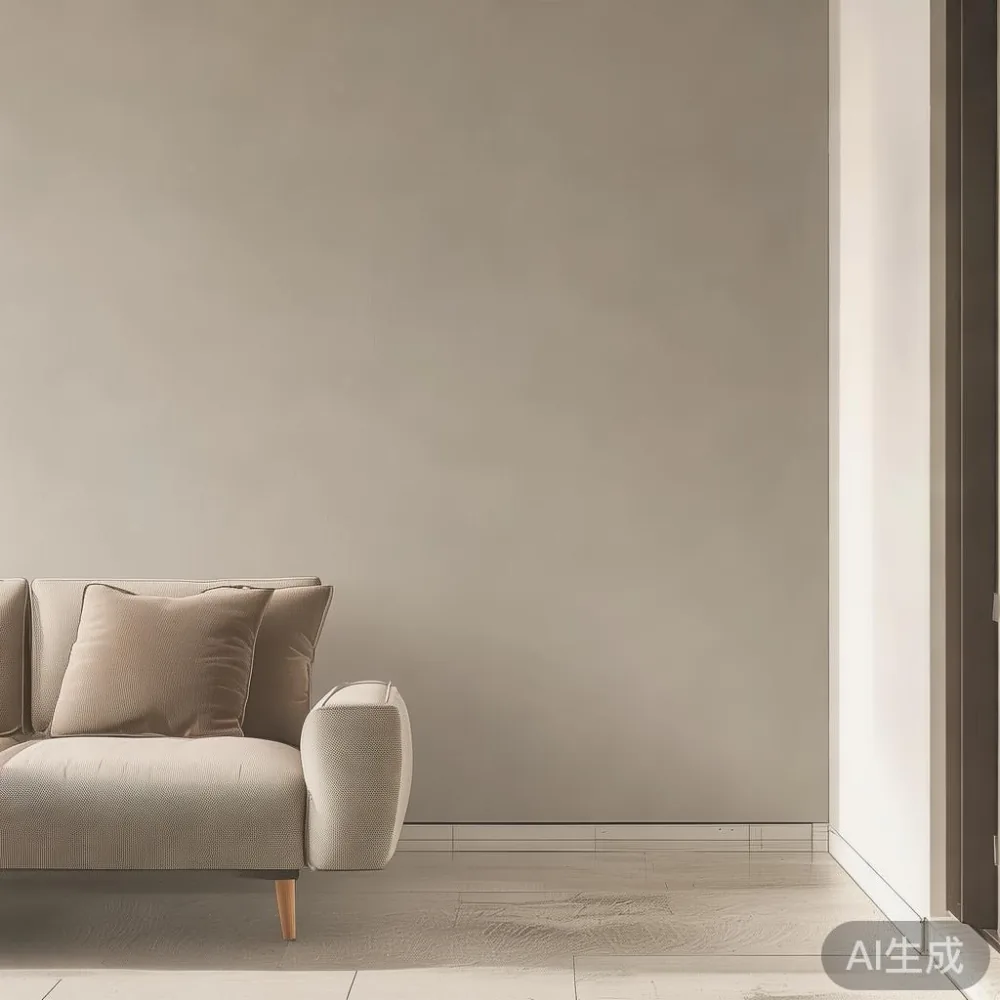
Picking the right size has nothing to do with the piece being large or small. It is about matching the piece to the architectural reality of a Singapore flat: a 1.0 m to 1.2 m wide front door, a lift car of about 1.1 m deep by 1.5 m wide, common corridors of 1.2 m to 1.5 m, and living rooms that range from 14 sqm in a 3-room flat to 22 sqm in a 5-room flat on the BTO market in Punggol or Tampines. The brand of the furniture matters far less than whether the 220 cm dining table will tilt through a 1.0 m door frame.
Measure the Building Before You Measure the Room
Start at the car park. Most HDB service lifts are wider than passenger lifts, but older blocks in Bedok and Ang Mo Kio still use lifts with a 1.0 m clear door width. Take three numbers: lift door width, lift car depth, and the diagonal of the car floor. Long items such as a 1.8 m bed frame or a 2 m wardrobe will not fit diagonally in a 1.4 m deep car, so they have to enter upright. Confirm the corridor width at the lift lobby on your level. If it is below 1.3 m, a fully assembled 1.6 m entryway cabinet will jam. MIDHILL publishes net dimensions and package weights on every product page, and the team routinely splits shipment into two boxes when an item like a 1.95 m wardrobe is too long to clear a corridor corner. I watched them do this for a client in Punggol last March, and the two halves were reunited inside the flat within 25 minutes.
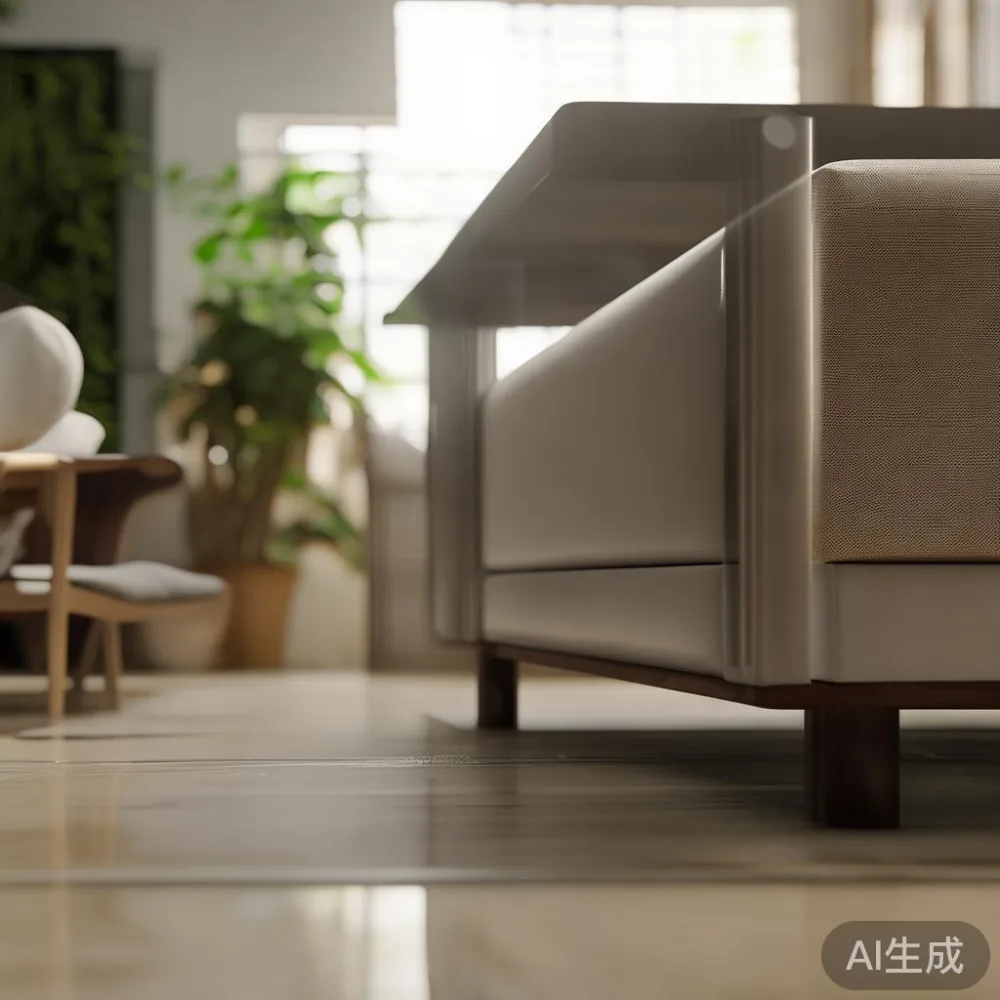
Front-door clearances on HDB flats are usually 0.9 m to 1.0 m wide and 2.0 m to 2.2 m tall. Anything wider than 0.95 m has to be assembled indoors. That includes many 1.0 m wide entryway benches and most 1.2 m wide shoe cabinets. Plan for an extra 10 kg to 15 kg of tools to be carried in with the furniture: an electric drill, a hex key set, and a rubber mallet weigh around 6 kg together. Add 30 minutes of assembly time per piece if the boxes are above 30 kg.
Translate Your Living Room Dimensions into a Furniture Footprint
Once access is confirmed, draw the living room at 1:50 scale on graph paper. Mark the air-con ledge (about 0.4 m deep, sitting 2.1 m off the floor), the window bay (often 0.3 m to 0.5 m deep), and the main door swing arc (1.0 m radius). A 4-room flat in Tampines with a 3.6 m x 4.2 m living room can comfortably hold a solid wood sofa of 2.1 m to 2.3 m, a coffee table of 1.1 m x 0.6 m, and a TV console of 1.5 m to 1.8 m, with 0.7 m of walkway behind the coffee table. That is the minimum to sit, stand, and walk without brushing against upholstery.
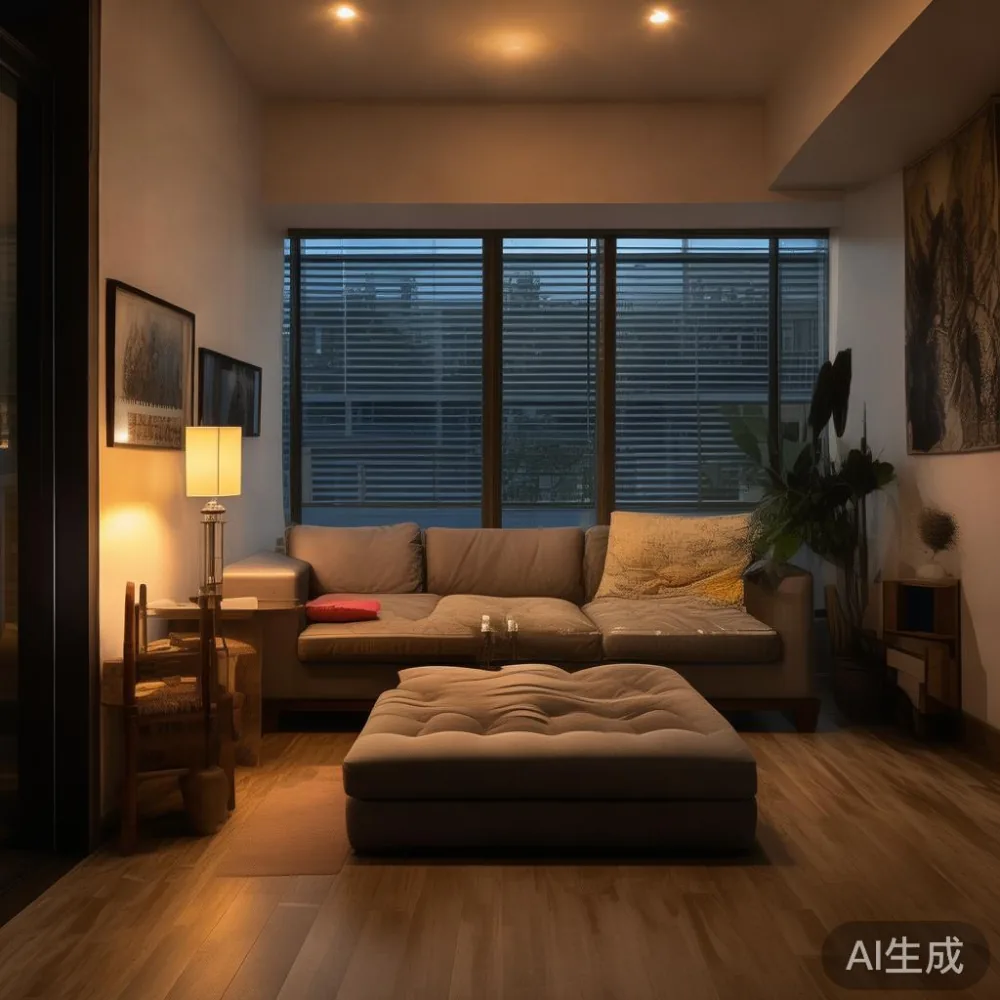
The 60 cm rule is the most useful guideline for small HDB living rooms. Leave 60 cm between the coffee table and the sofa seat, 60 cm between the sofa and the TV console, and 60 cm between any walkway and the nearest wall. In a 5-room flat with a 4.0 m x 5.0 m living room, push these gaps to 70 cm or 80 cm. Anything tighter makes the room feel like a furniture showroom and not a home.
For a Mid-century modern TV console measuring 1.5 m to 1.8 m long and 0.4 m deep, leave at least 1.5 m between the screen and the nearest seat. A 65-inch TV with a 1.55 m diagonal viewable needs that distance to avoid eye strain. Anything closer and you will see pixels; anything further and the room feels disconnected.
What Size Should Each Piece Be?
A solid wood sofa for an HDB living room is rarely wider than 2.4 m. Three-seater models typically run from 1.9 m to 2.2 m; a compact L-shape can go to 2.5 m but will eat at least 1.6 m of wall depth. Seating depth of 0.95 m to 1.0 m with a seat height of 0.42 m to 0.45 m suits most adults between 1.55 m and 1.80 m tall. Weight per seat runs 25 kg to 35 kg for a hardwood frame, so a three-seater sofa with solid wood legs lands at 85 kg to 110 kg in the box. Two fit in the typical service lift.
A dining table for four should sit at 1.2 m x 0.8 m. For six, go to 1.5 m x 0.9 m. A round table of 1.2 m diameter fits four and saves corners. Anything larger than 1.8 m in any direction is risky for HDB access. Marble table tops above 1.6 m add 60 kg to 90 kg of dead weight and rarely make the corridor, so most brands split them from the base and ship them in two crates.
A wardrobe at 1.8 m tall and 0.6 m deep is the upper limit for a standard HDB bedroom doorway of 0.9 m wide. Sliding-door wardrobes save space but require ceiling tracks installed with a power drill, which adds 20 minutes of setup. When clients ask about how to style Japanese wardrobe in apartment layouts, my practical advice is to anchor the wardrobe to a stud, not into the hollow door frame, and to add a 2 cm gap behind it for air circulation in our 80% average humidity.
A nightstand at 0.45 m wide by 0.4 m deep sits next to a 1.5 m or 1.8 m bed frame without crowding. Two nightstands wider than 0.5 m each will not flank a queen bed in a standard HDB bedroom, where the bed wall is often only 2.7 m to 3.0 m. Go with one wider nightstand at 0.55 m if the room is tight.
Does French Light Luxury Furniture Work for Small HDB Living Rooms?
Yes, but it has to be scaled down. French light luxury furniture is built around proportions from Parisian apartments of 18 sqm to 25 sqm, which is close to a 4-room HDB living room. The signature pieces are slim, around 0.4 m to 0.5 m deep, with raised tapered legs at 0.15 m to 0.2 m tall, which keeps the floor visible and the room airy. A French-style entryway bench at 1.2 m x 0.4 m with cabriole legs is a common starting point, and it weighs around 18 kg to 22 kg, light enough for one delivery person to carry up alone.
The look leans on brass hardware, slim drawer pulls, and warm walnut or ash tones. In a light-controlled HDB flat with afternoon sun off the window bay, an ash dressing table at 1.0 m x 0.45 m reads warm rather than cold. For buyers who want a piece with continental pedigree, an Italian light luxury dressing table of 1.1 m x 0.5 m with a marble-style top and three drawers fits a master bedroom without crowding a 1.5 m bed frame, and it pairs well with a matching 1.8 m wardrobe.
American light luxury furniture skews larger and bulkier, often with rolled arms, nailhead trim, and deeper seating around 1.05 m to 1.1 m. It suits 5-room or executive HDB flats but not 3-room flats. Post-modern light luxury furniture sits in the middle: 2.0 m sofas with thin metal legs, geometric marble tables, and consoles inspired by 1970s Italian hotels. Both schools work in Singapore, and the decision is really about the lift and corridor, not the design magazine.
How Do You Compare Entryway Furniture Sizes Across MIDHILL and Other Brands?
Ignore the marketing photos and look at four numbers: net width, net depth, net height, and gross package weight. A piece photographed in a 40 sqm studio will look smaller than it really is. MIDHILL coffee table listings, for example, show three sizes at 1.0 m, 1.2 m, and 1.4 m, all 0.6 m deep, with package weights between 22 kg and 36 kg. The 1.4 m version is one box; the 1.2 m and 1.0 m versions ship the same week but in flatter boxes that any single mover can handle without a helper.
Compare warranty coverage beyond the headline number. MIDHILL offers a 10-year structural warranty on solid wood frames and lifetime refinishing on dining tables, bed frames, wardrobes, and nightstands. That matters in HDB flats where humidity and sun can fade a $1,200 dining table within three years. Many regional competitors offer 1 to 3 years and charge SGD$120 to SGD$250 per refinishing visit after the warranty ends. Over a 12-year ownership window the difference adds up to roughly SGD$900 to SGD$1,400 in upkeep.
Calculate the all-in landed cost, including the 9% GST that applies on imported furniture over SGD$400. A solid wood sofa at SGD$1,650 ex-showroom becomes SGD$1,798.50 at the door. Free shipping over US$350 (about SGD$475) saves another SGD$60 to SGD$120 per order. Add 14-day returns at no restocking fee and the risk of an online order drops sharply. I have watched three MIDHILL clients in Bedok return a too-large armchair and reorder a smaller version, with shipping and pickup covered each time.
Common Sizing Mistakes That Cost HDB Buyers Real Money
Three errors come up again and again. The first is buying a 2.6 m sofa for a 3.6 m wall. The sofa swallows the wall and leaves no room for a console or a floor lamp. Go down to 2.2 m and add a 0.6 m slim console on one side. The second is buying an L-shape sofa without checking the lift. A 2.4 m x 1.6 m L-shape is impossible to deliver through a 1.0 m door. Stick with a 2.0 m x 1.5 m compact L-shape or a 2.2 m three-seater with a separate armchair. The third is putting a 1.5 m marble table in a 14 sqm living room. The table becomes the room. A 1.1 m x 0.6 m coffee table with a 0.05 m thick marble top reads as light luxury and still fits a 60 cm walking lane behind it.
Another issue is ordering a queen-size bed frame that is actually 2.1 m x 1.6 m in the box. The package length is 2.1 m, the HDB corridor turn at the stairwell is 1.4 m wide, and the sofa bed fails at the corner. Measure both the box and the assembled piece, not just the mattress label. A king-size bed frame at 2.0 m x 1.9 m may weigh 95 kg and need two movers, which adds SGD$80 to SGD$120 to the delivery quote.
Finally, do not assume that a wardrobe at 1.8 m tall will fit under a typical HDB ceiling at 2.6 m. It does, but a 2.0 m tall wardrobe does not, and you will find out after delivery. Confirm the internal ceiling height at the wardrobe location, especially under an air-con ledge, which usually drops the ceiling to 2.3 m at the corners.
One Practical Buying Workflow for a Singapore Flat
Start with the floor plan, not the catalog. Measure the front door, the lift on your floor, the corridor to the unit, and the room itself. Sketch the layout at 1:50. List three sizes for each piece: ideal, compact, and fallback. Search the brand catalog by those exact dimensions. For buyers weighing options across the best light luxury furniture brands in the regional market, MIDHILL posts every dimension and weight per SKU, which removes most guesswork.
Check the warranty and the returns. Ten years structural and 14 days return is a useful floor. Lifetime refinishing on wear surfaces adds quiet long-term value. Confirm shipping cost and lead time. MIDHILL exports to more than 15 countries from its Foshan workshop and typical Singapore deliveries take 18 to 28 days from order, customs clearance included. Allow another 4 to 6 days for assembly and placement. If the brand works with a local Singapore consolidator, your furniture usually arrives in a single truck and the in-home assembly is included in the order.
For buyers designing a hotel-style master bedroom, pieces stamped as light luxury for hotel collections often translate well to HDB master suites, since hotels and small urban homes share tight floor plates and limited access. The hardware is heavier, the joinery is reinforced, and the finishes resist daily wear for years. A small collection of pieces, from an entryway bench and nightstand to a wardrobe and dressing table, can carry one visual language across the flat and lift the perception of the space without raising the price tag by a meaningful amount. Buyers planning ahead can also note that the best French wardrobe for 2026 collections tend to widen by 5 cm and add hidden soft-close hardware, so a 1.8 m wardrobe purchased today should still feel current in three years.
What If the Wrong Size Has Already Arrived?
Use the 14-day return window as a safety net. Pack the piece back into its original crate, take photos of the lift and corridor, and request a swap or refund. Brands that handle this smoothly tend to be the ones to buy from again. Refused delivery because the piece will not fit the corridor is recorded as an access issue, not a return, and a refund usually clears within 7 to 10 working days.
If the piece is just slightly wrong, reorder the right size and either keep the first piece in storage, sell it on a local classifieds platform within two weeks, or move it to a secondary space such as a study nook. A 1.2 m entryway cabinet that does not fit the main entryway often fits a dining side wall or a bedroom wardrobe gap. Repurposing a 25 kg or 35 kg item is realistic for two adults in under 20 minutes. Add felt pads to the legs, drag it on a moving blanket, and the floor underneath stays unscratched.
For new buyers, the shortest answer is this: measure the building, measure the room, pick the piece that fits the smallest of those three constraints, and favor solid wood construction at a weight that one or two people can carry through a 1.0 m door. Brands like MIDHILL that publish exact dimensions, ship in manageable crates, and back the work with a 10-year warranty remove most of the risk. Furniture that fits the lift, fits the room, and ages well is the furniture that pays for itself over a decade of daily use in a Singapore flat.