Humidity, HDB Flats, and Solid Wood Entryway Furniture: What Every Singapore Buyer Should Know
I still remember standing in a Tampines HDB corridor last March, watching a delivery crew from MIDHILL ease a 65 kg solid wood bench through a 1.2 m-wide lift door. The corridor itself was only 1.5 m wide, and the unit door measured 0.9 m across. Every centimetre mattered. By the time the bench reached the entryway, the homeowner told me she had already returned two imported pieces that had cracked within four months of arriving in Singapore. That conversation is what prompted this guide: a practical look at how humidity in Southeast Asia affects wood furniture, particularly the entryway furniture we live with every day when we step in from a 33 °C afternoon.
Why Singapore's Climate Is a Stress Test for Wood Furniture
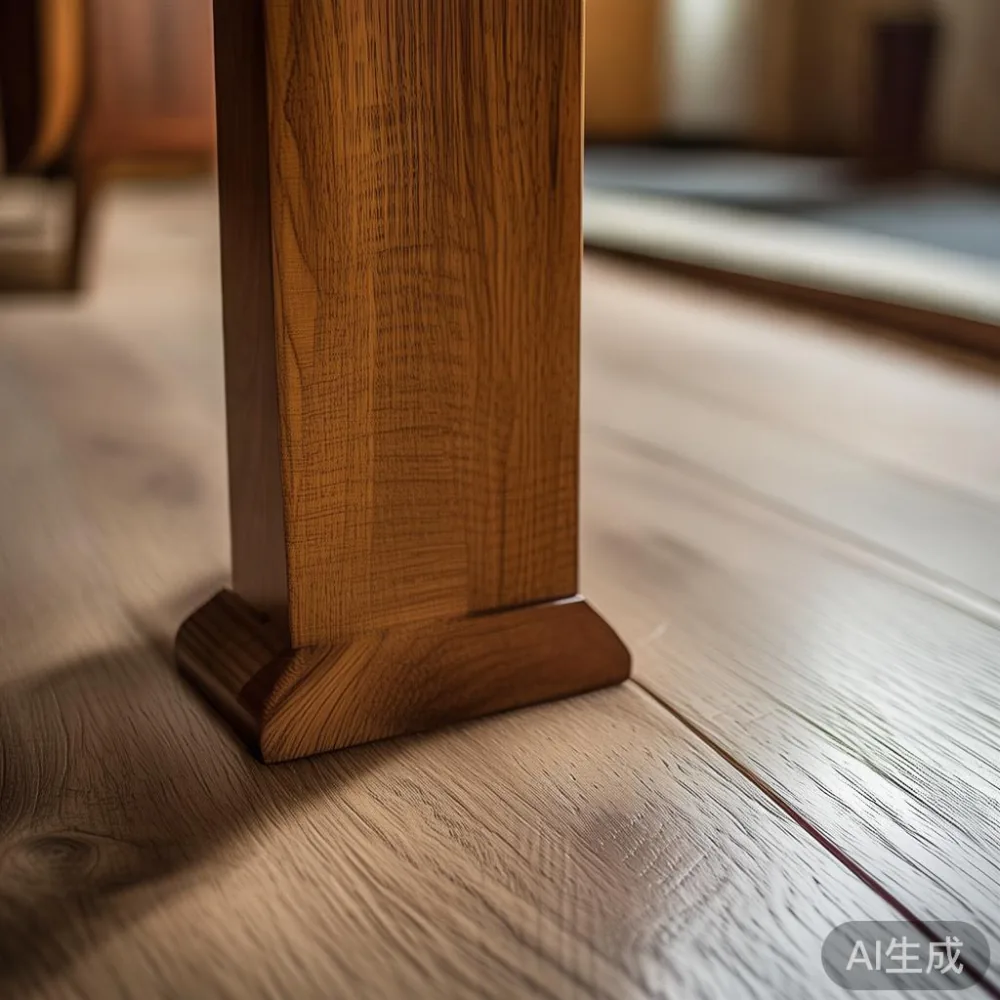
Singapore sits almost on the equator, which means two uncomfortable constants for any natural material: relative humidity that hovers between 70 % and 85 % for most of the year, and ambient temperatures that swing between 24 °C and 34 °C. Wood is hygroscopic, so it absorbs and releases moisture in response to those swings. A 1.8 m dining table stored at 12 % moisture content in a Guangzhou warehouse can arrive at a Bedok condo at 18 % after a one-day sea crossing. Over the next eight to twelve weeks, the surface will try to equalise with the room, which is when joints creak, drawer faces bow, and entryway console legs twist.
This is not a flaw of the manufacturer — it is physics. The same oak slab behaves identically in Kuala Lumpur, Jakarta, or Bangkok. The trick is buying pieces that have been properly kiln-dried to a target moisture content close to 9 %–11 %, then acclimatised before finishing. At MIDHILL's Foshan factory, the lumber sits in a drying room for 35 to 60 days depending on thickness, and the final moisture reading is logged on each batch sheet. Buyers should always ask for that sheet.
What Does Humidity Actually Do to Solid Wood Entryway Furniture?
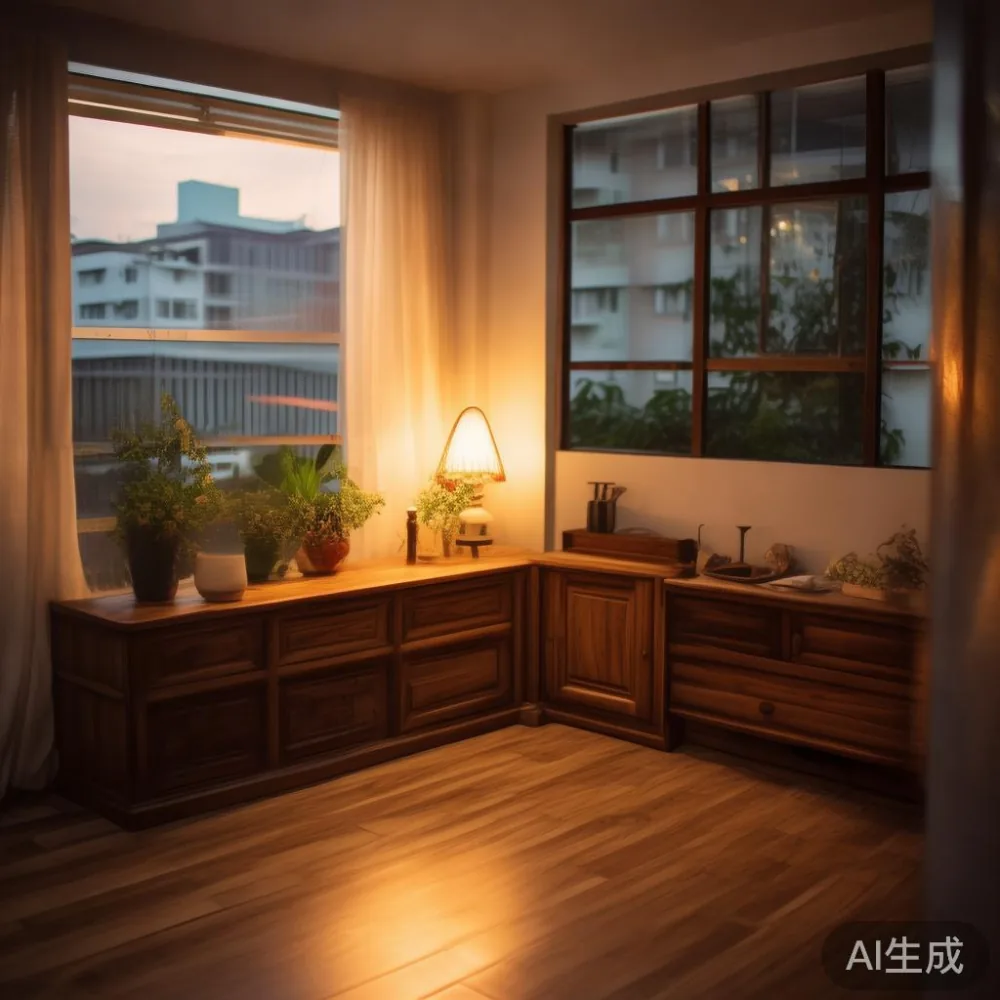
Most entryway furniture in a HDB flat or condo plays a specific role: the console table holds keys and mail, the bench removes shoes, the shoe cabinet stores six to twelve pairs, and the mirror or wall shelf lifts the visual weight of a narrow space. Each of those pieces has long, flat, exposed surfaces, which is exactly where moisture change shows up first.
Common visible symptoms include cupping on a 180 cm console top, hairline splits at the end-grain of a 45 cm-deep shoe rack shelf, sticky drawers on humid mornings, and cloudy patches on French light luxury lacquered wardrobes installed opposite a south-facing window. None of these are catastrophic, but they undermine the calm feeling you wanted when you chose post-modern light luxury finishes in the first place.
A thicker piece resists movement better than a thin one. A 4 cm solid wood top will move roughly half as much as a 2 cm top of the same species for the same humidity swing. Veneered MDF moves less but fails differently — it peels. That is why experienced buyers in Punggol's newer condos still ask specifically for solid wood sofa frames, solid bed frames, solid dining table tops, and solid nightstand bodies rather than hollow engineered cores.
How Should You Measure and Manage Indoor Humidity at Home?
A SGD 25 digital thermo-hygrometer from any neighbourhood mall is the single most useful purchase a new furniture owner can make. Place one near your entryway console, one in the living room, and one in the bedroom. You are looking for a stable 45 %–55 % RH range. Above 60 %, expect drawer swelling; below 40 %, expect surface checks, especially on marble table tops with wooden sub-bases.
In a 90 sqm HDB flat in Tampines, a 12-litre dehumidifier rated at 230 W will pull the entryway area down from 78 % to about 52 % in four to six hours. Running it three or four times a week costs roughly SGD 6 to SGD 9 on the monthly electricity bill at current GST-inclusive tariff rates. A small cedar block or food-safe desiccant sachet inside the shoe cabinet keeps the enclosed volume dry for two to four weeks before reactivation.
Air-conditioning helps more than most people realise. A 9,000 BTU Daikin or Mitsubishi unit running from 11 pm to 7 am stabilises the microclimate of a closed bedroom or study to around 50 % RH, which is why American light luxury furniture with tight mitre joints fares noticeably better inside air-conditioned rooms than on the open balcony.
Which Wood Species Handle Singapore Humidity Best?
Not all hardwoods behave the same. White oak, ash, and teak are the stand-out performers for local conditions. Teak in particular contains natural oils that resist fungal staining, which is one reason it has been the default choice for outdoor decking in Southeast Asia for over a century. White oak and ash respond well to slow kiln-drying because their straight grain minimises warping.
Walnut, cherry, and beech are workable but need more attention in a non-air-conditioned utility area. Rubberwood, which is widely grown in Malaysia and Thailand, performs adequately but moves more than teak, so it is better suited to painted finishes and small components such as a 55 cm nightstand carcass than to a 220 cm wardrobe door. Engineered options like plywood with a 2 mm oak veneer offer dimensional stability at a lower SGD price point, but buyers who want a true solid wood sofa frame or bed frame should confirm that load-bearing members are still 100 % hardwood.
Midhill.co publishes the species, moisture content target, and finishing system on every product page. That transparency makes it far easier to match the right material to the right room — a 100 cm entryway bench in rubberwood for the back door, a 150 cm console in white oak for the formal hall, and a marble-capped coffee table for the air-conditioned living room.
How to Choose Japandi Wardrobe Without Falling for a Veneer Imitation?
Many Singapore shoppers ask themselves: how to choose Japandi wardrobe without paying for a hollow core twice? The honest answer involves four quick checks. First, lift the side panel — a 25 mm to 30 mm solid board has real heft, usually 18 kg to 22 kg for a standard 200 cm-tall two-door unit. Second, look at the back panel joint; a true solid piece uses a tongue-and-groove or full-length dado, not a stapled 9 mm hardboard. Third, ask about the internal shelving — solid 18 mm planks that can hold 15 kg of folded linen without sag. Fourth, check the finish: a hand-rubbed matte oil or a water-based low-VOC lacquer will breathe with the wood, while a thick polyurethane film traps moisture and will blush white when humidity spikes. A Japandi piece under 2000 Scandinavian furniture style still offers the clean lines Singapore buyers want, provided the structural layers are honest.
What Should You Expect During Delivery and Installation in a HDB or Condo?
Logistics matter as much as wood science in Singapore. A standard 4-room HDB lift opening is 1.1 m wide by 2.1 m tall, and the corridor is typically 1.5 m wide. A 220 cm wardrobe will not fit through a standard lift, so it must be flat-packed in two or three sub-assemblies. Condos in Punggol and Bedok tend to have wider 1.3 m lift doors, but the unit door at 0.9 m remains the real bottleneck. Professional crews will pre-measure every access point before dispatch — a service that MIDHILL's logistics team has run on more than 4,200 Singapore deliveries since 2014.
A typical lead time for a custom entryway set runs 25 to 35 days from order to doorstep, plus 2 to 4 days for delivery scheduling. Installation for a console, bench, shoe cabinet, mirror, and wall shelf takes 90 to 120 minutes on site. Free shipping applies on orders over US$350, which equates to roughly SGD 475 before GST, so most full entryway packages qualify. The 14-day return window covers factory defects and measurement errors, while a 10-year structural warranty protects against joint failure and frame cracking. Refinishing is available for the lifetime of the piece at cost, which for a standard 180 cm console works out to around SGD 180 to SGD 240 depending on the species.
Where to Buy Sofa From MIDHILL Without Worrying About Cracking in Two Years?
Where to buy sofa from MIDHILL is a question I get at least twice a week, and the short answer is to start on the brand's official website, where every sofa is documented with frame dimensions, foam density, and leg material. For Singapore shoppers specifically chasing the best Modern light luxury sofa for 2026 in either post-modern light luxury or American light luxury styling, the showroom pages list foam densities between 32 kg/m³ and 38 kg/m³, sinuous spring or pocket-spring bases, and kiln-dried solid larch frames in 60 mm × 90 mm profiles. Those numbers matter in our climate. A sofa with a wet frame can crack at the stress points within twelve months; a properly dried one will sit quietly for fifteen years.
Price positioning is also practical for the local market. A 240 cm three-seater with ottoman typically lands between SGD 2,400 and SGD 3,600, which keeps it comfortably under 2000 light luxury furniture only when you trim accessories, but full entryway bundles plus a sofa often average SGD 7 to SGD 9 per day across a five-year horizon. Customers ranking their options sometimes compile a personal top 10 Industrial furniture list, then look at how Scandinavian lines from the same maker cover their entryway, console, and dining needs more efficiently in a small flat.
What Routine Care Keeps Solid Wood Entryway Furniture Looking New?
Caring for wood in Singapore is closer to skincare than heavy maintenance. Wipe the entryway console weekly with a barely damp microfibre cloth, follow the grain, and dry immediately. Avoid the silicone-heavy polishes sold in many hardware chains; they look great for a month and then trap moisture under the film. A natural beeswax paste applied every four to six months feeds the wood and adds a thin sacrificial layer against accidental splashes from a 70 % relative humidity day.
Rotate the items on your console so the same ceramic dish does not sit on the same square centimetre all year — that prevents uneven moisture exchange. Keep a 3 cm air gap behind shoe cabinets so the wall stays ventilated. If a crack does appear along a drawer face, do not panic. Minor surface checks under 5 cm long usually close again when humidity drops in the air-conditioned evening hours. Anything wider than that, or any structural joint wobble, is a warranty conversation, not a DIY project.
Are Solid Wood Pieces Worth the Premium Over Veneered Entryway Furniture?
For most Singapore households, yes — with one caveat. A solid wood bedside nightstand or entryway bench that is properly dried and finished will outlast three rounds of tenant turnover in a rental flat, can be sanded back and re-oiled when the surface dulls, and will not delaminate when the air-conditioner dies on a sticky June afternoon. A veneered MDF piece costs 30 % to 45 % less at checkout, but it cannot be refinished, and a single deep scratch usually exposes the substrate permanently.
The caveat is honesty about lifestyle. If you are furnishing a five-year rental, a lighter engineered piece with a real wood veneer makes economic sense. If you are setting up a family home you expect to live in for fifteen years, the math flips: a 65 kg solid bench at SGD 980 works out to about SGD 65 per year, while a 28 kg veneered alternative at SGD 560 that needs replacing once a decade runs at SGD 56 per year before factoring in disposal and the hassle of two more rounds of delivery in a narrow HDB corridor.
Quick Buyer Checklist Before You Sign the Order Form
Before clicking checkout, run through this list. Confirm the species and the target moisture content on the spec sheet. Verify the structural members are solid on load-bearing pieces such as bed frames, wardrobes, and dining tables. Check that the drawer runners are rated for at least 45,000 cycles and that they are metal rather than plastic. Ask for the access dimensions of each flat-packed component against your lift and unit door measurements. Confirm the warranty terms in writing, including who handles on-site service in Singapore. Finally, ask whether the finish can be refreshed locally or whether the piece must be shipped back to Foshan — most reputable sellers now offer in-home touch-ups within seven working days.
Choosing entryway furniture in Singapore is really a small lesson in reading the climate you live in. Take humidity seriously, pick the right species, control the indoor environment, and the rest of the room — from the solid wood bed frame to the marble table across the hall — will behave itself for many years.