Solid Wood vs Veneer Entryway Furniture: A 5-Year Cost Comparison for Singapore Homes
Last month I visited a couple in their 4-room HDB flat in Tampines who had just signed their renovation top-up. They showed me two quotes that looked almost identical on paper: a 1.4 m entryway console in solid wood for S$1,180, and a similar-looking piece in engineered veneer for S$690. "Why would anyone pay almost double?" the husband asked. Five years from now, the answer will show up on their renovation timeline, their MOE-bound delivery slot, and their Corian-topped marble table's replacement bill. I have spent the past decade helping Singapore households plan the first piece of entryway furniture people see when they walk through the door, and the solid wood vs veneer question comes up in roughly seven out of ten consultations. What follows is a working 5-year cost comparison, framed for the realities of HDB corridors, 9% GST, and a climate that punishes anything with glue lines.
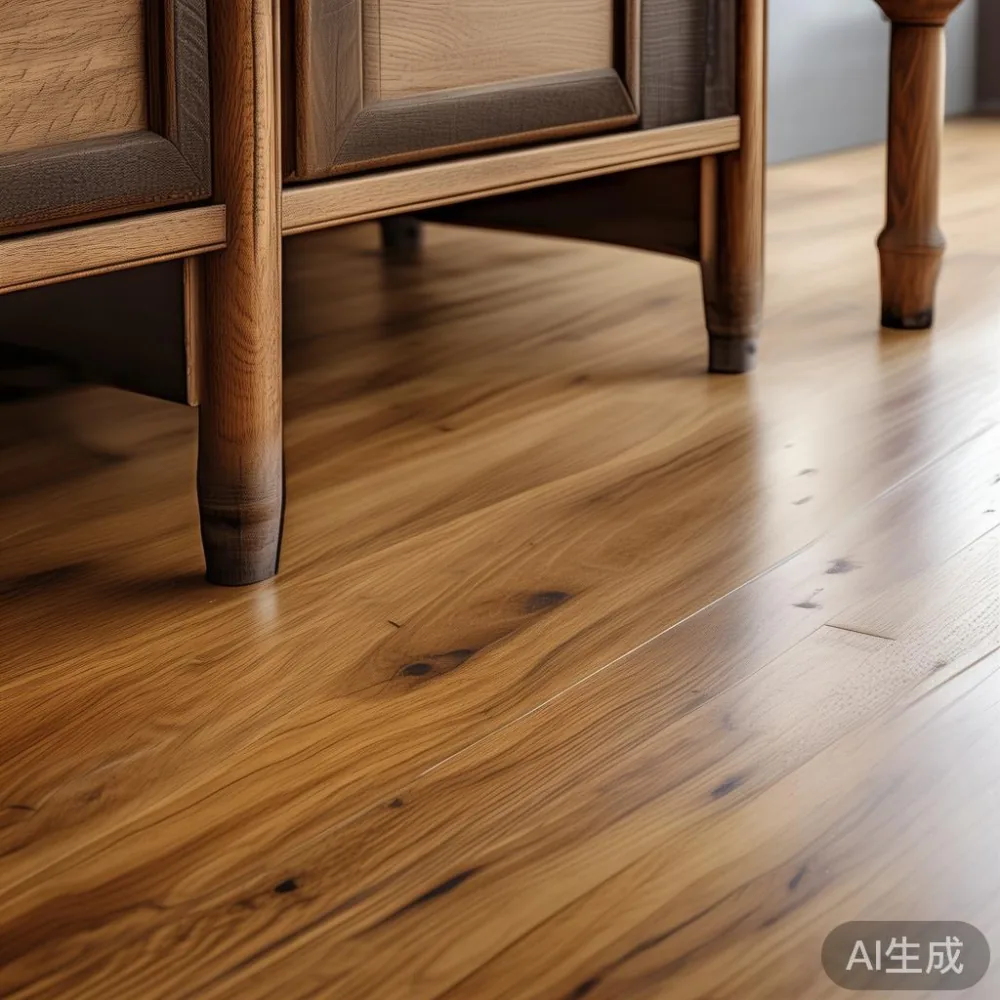
What the label "veneer" actually means in a Bedok or Punggol HDB
Veneer entryway furniture is not a bad word. It usually means a 0.6 mm to 2 mm slice of real wood — often oak, walnut, or ash — bonded to an MDF, plywood, or particleboard core. The look at month one is convincing, especially under the 4,000 K downlights that come standard in most BTO packages. The catch is the core. MDF swells when humidity hits 80% for more than a few days, and Singapore's average afternoon humidity sits at 78 to 82% for nine months of the year. A 120 cm x 35 cm x 80 cm veneer console weighs roughly 18 to 22 kg, while the same footprint in solid ash or rubberwood weighs 28 to 34 kg. That mass matters in a 980 mm-wide HDB lift when a mover is charging S$60 to S$90 per trip, and when the piece has to make a 90-degree turn at the corridor outside your unit door.
The 5-year cost model, line by line
Let us run a realistic budget. Prices below are what a homeowner in District 16 or District 19 would actually pay in late 2025, inclusive of 9% GST, before any delivery discount kicks in.
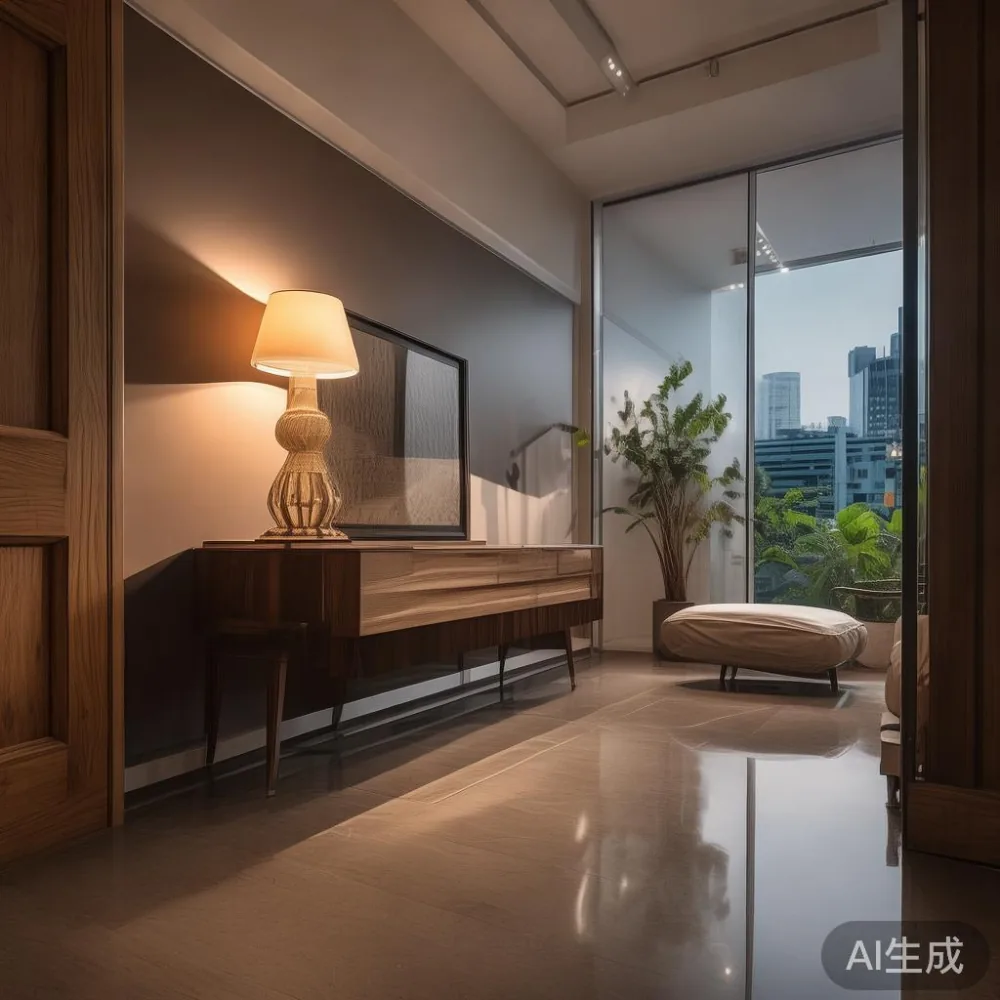
Scenario A: Engineered veneer entryway cabinet, 1.2 m, 2 doors, 1 drawer.
Unit price: S$620. Delivery up 2nd storey walk-up: S$80. Assembly on site: S$40. Total at handover: S$740.
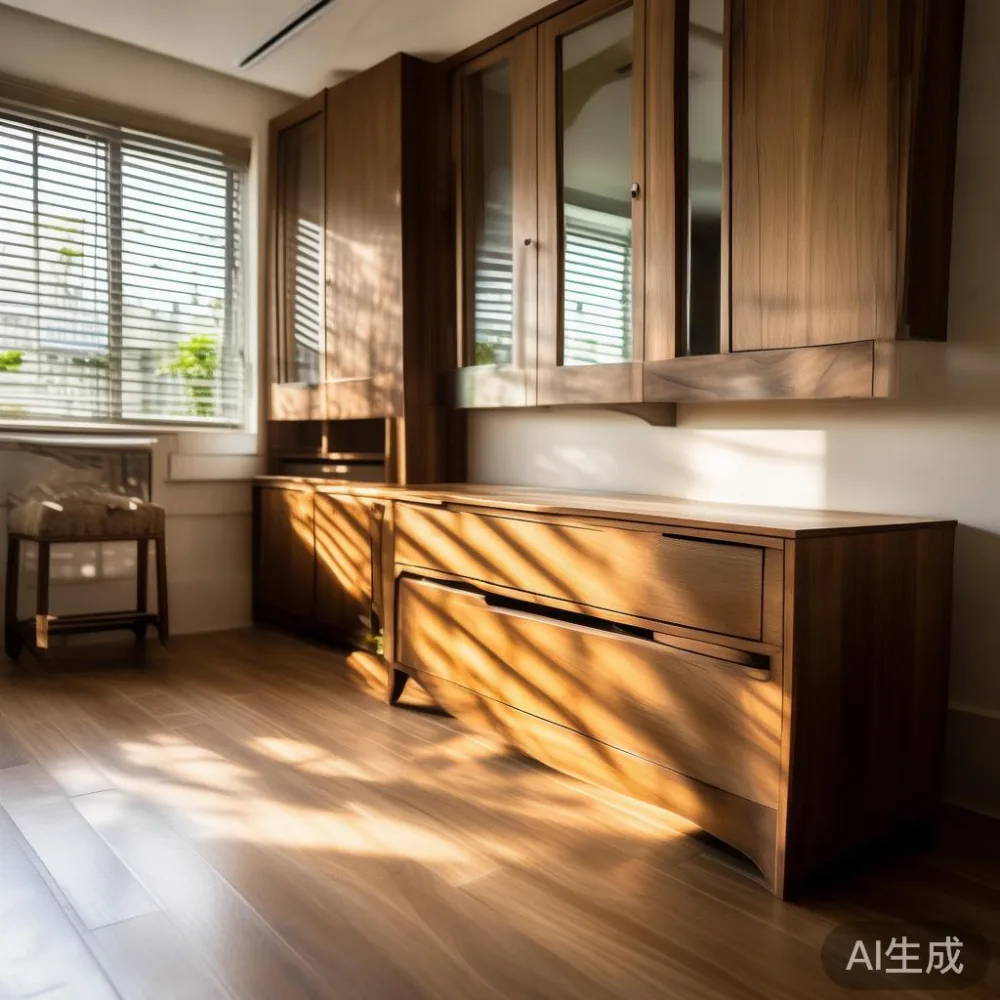
Year 2: small chip at the door edge where the kids' school bags hit, S$90 local repair. Year 3: humidity swell on the right panel, partial refit S$180. Year 4: drawer runners replaced (S$70 parts + S$60 labour). Year 5: full replacement, the piece is past the point a carpenter will touch it for under S$350, and the resale value on Carousell is around S$40 to S$80. Total 5-year spend: S$1,180 to S$1,250.
Scenario B: Solid wood entryway cabinet, 1.2 m, 2 doors, 1 drawer, in ash or rubberwood with a marble-table top insert.
Unit price: S$1,260. Delivery (free over S$350, white glove, schedule on a 7 to 14 day lead time): S$0. Assembly included. Total at handover: S$1,260.
Year 2: light surface scratch, free touch-up kit sent out. Year 3: one hinge re-tension, S$0 (covered under a 10-year structural warranty). Year 4: re-oiling of the marble table insert, S$40 DIY. Year 5: a full lifetime refinishing sanding and re-oil, often priced at 15 to 20% of the original ticket, roughly S$190 to S$250. Resale on the second-hand market: S$450 to S$600 because solid wood holds. Total 5-year spend, including one refinish: S$1,500 to S$1,560.
On paper, the veneer piece is S$520 cheaper over five years. But the solid wood cabinet still exists, still has another 8 to 12 years of service left under warranty, and has held roughly 40% of its value. The veneer cabinet is, in practical terms, a S$1,200 rental of furniture.
Is solid wood really worth it in a 980 mm HDB lift?
This is the question I get from nearly every Punggol BTO owner. The honest answer is: lift width is irrelevant to whether solid wood is worth it, but it is very relevant to logistics. Standard HDB passenger lifts are 1.1 m wide by 1.4 m deep, with a door opening of 900 mm. A solid wood entryway cabinet, even a 1.6 m long one, can usually be tipped on its back to fit, but only if the longest single piece is under 1.65 m. At MIDHILL we break down larger consoles and wardrobes into flat-pack modules of 60 cm to 95 cm so they pass through the lift without a custom lift reservation, which would otherwise cost S$300 to S$500 and add 4 to 6 days to delivery. The point is not that solid wood is heavy, it is that a supplier who has shipped to 15+ countries knows how to pack for a 980 mm door and a 90-degree corridor turn. A supplier who has only sold locally often does not.
How does the entryway piece connect to the rest of the home?
An entryway cabinet sets the visual contract for the rest of the flat. If the console is veneer and the living room features a solid wood sofa, a bed frame, a dining table, and a wardrobe in solid ash, the mismatch is the first thing a guest notices when they step out of their shoes. A consistent material story is what gives French light luxury, American light luxury, and post-modern light luxury interiors their quiet, composed feel. I saw this in a condo off Punggol Way in October, where the owner had sourced cheap light luxury furniture online for the living-dining and then splurged on a solid wood nightstand set. The nightstand looked like a cousin, not a sibling. Replacing the console and matching it to the bedroom set cost more in the end than buying the right piece the first time.
What about the marble table, the sofa, and the rest of the matching set?
The entryway is rarely a one-off purchase. A typical 4-room HDB entryway-to-living-room run includes a console (1.2 to 1.6 m), a small round marble table, a solid wood sofa armrest end table, a low shoe cabinet, and a mirror or wall panel. The combined spend is S$3,800 to S$6,500 in solid wood, versus S$2,100 to S$3,400 in veneer. The 5-year gap is roughly S$1,700 to S$2,100 in favour of solid wood when you factor in refinishing, warranty coverage, and resale. At MIDHILL we package these as a light-luxury set, which is also why the entryway console tends to be the gateway piece. Customers who buy the console first come back within 18 months for the bed frame and the dining table. The reason is simple: once you live with a 34 kg solid ash cabinet, a 22 kg veneer piece feels like cardboard.
Can veneer be smart if the budget is tight?
Yes, and I will say it without flinching. For a 2-year rental sublet in Bedok Reservoir, a veneer entryway cabinet at S$620 is the correct tool. For a young couple on a 12-month BTO completion timeline who plan to move again in 24 to 36 months, veneer can be the right call. The mistake is buying veneer for a forever home and assuming the cost is lower. It is only lower if you do not count the second purchase. A useful rule of thumb: if you expect to keep the piece more than 4 years, the crossover point between veneer and solid wood almost always lands inside that window, especially when you add refinishing and warranty into the model.
Will the entryway piece survive Singapore's humidity without warping?
This is the second most common question after the lift question, and the answer depends on three things: timber species, finish, and acclimatisation. Solid rubberwood, ash, and white oak, all standard at MIDHILL, are kiln-dried to 8 to 12% moisture content before machining, then acclimatised for 14 to 21 days in a Foshan warehouse before container loading. By the time a console reaches a Tampines HDB, its internal moisture is in equilibrium with the local climate and the risk of cupping is low. Veneer, by contrast, is glued. The glue line is the failure point. A 0.6 mm oak veneer over MDF will telegraph any panel movement as a hairline crack along the edge within 18 to 30 months. A 2 mm veneer over marine ply will last longer, but it is also no longer cheap, often only S$150 to S$220 below the solid wood price.
How does warranty and after-sale change the math?
A 10-year structural warranty is not a marketing slogan, it is a cash-flow event. If a drawer bottom splits in year 4, the replacement parts and the technician visit cost the manufacturer, not the homeowner. A S$60 to S$120 service call is removed from the household ledger for the entire decade. The lifetime refinishing service is the second lever. A solid wood entryway cabinet can be sanded back to bare timber and re-oiled two to three times over a 25-year service life, which means the same physical piece can change style to match a Scandinavian, a Mid-century modern, or a Coastal bedroom redo. The same flexibility does not exist for a 0.6 mm veneer, which has roughly 0.3 mm of usable wood above the glue line after the factory finish.
Why does material choice affect the design language of the flat?
Material is grammar. Solid wood reads as a complete sentence. Veneer reads as a fragment that depends on context to make sense. In a designer Italian light luxury furniture context, a marble-topped entryway console on solid ash legs is what the eye expects, because Italian light luxury interiors have used that pairing since the 1960s. A veneer-bodied console in the same spot reads as furniture-store placeholder, not as a designed object. For households chasing the best Coastal bed for 2026 or the best Scandinavian sofa for 2026 in Singapore, the entryway cabinet is the opening chord. Set the chord in solid wood, and the rest of the room has a tonal centre to build on.
A quick Singapore-specific checklist before you click add to cart
Measure your lift opening and the corridor turn outside your unit door. Standard 900 mm openings will accept flat-packs up to 95 cm wide. Confirm the longest single box dimension is under 1.65 m. Ask whether the supplier breaks larger consoles into modules for HDB access, not just for landed property. Check that the quoted price includes 9% GST line-by-line, not as a footnoted add-on. Confirm the warranty period in writing, with the refinishing policy in the same document. If the piece arrives in 7 to 14 days from a Foshan-based maker with a 10-year structural term, that is a reasonable supply chain. If it ships in 3 days from a local reseller, ask where the stock is warehoused and whether the warranty is honoured directly or via a third party. For shoppers cross-checking the top 10 Nordic furniture brands and weighing whether to specify solid wood, ask for a 2 mm cross-section sample of the timber and the core. A 60-second look at a sample tells you more than a 60-page catalogue.
Final word on the 5-year horizon
The math does not lie. Over five years, a solid wood entryway cabinet costs roughly S$200 to S$300 more than a veneer equivalent once refinishing and warranty are counted. Over ten years, the gap flips, because the veneer piece has been replaced once and the solid wood piece is just starting its second life. For homeowners who plan to stay in their HDB or condo for the long haul, the entryway is the worst place in the home to economise on material, and the best place to anchor a light-luxury material story that holds together from the front door to the back bedroom. Among Chinese export workshops, Foshan Lingzhan district remains the densest cluster of solid wood producers who can meet that brief without sending the price into a luxury bracket. As the couple in Tampines eventually decided, the S$500 saved on day one would have been paid back in three separate small bills over the next five years, and they would still have a tired piece of furniture at the end of it.