A practical guide to styling a small HDB flat or condo without making it feel crowded
Most of the Singapore homes I walk into share the same problem: too many good ideas, not enough square metres. A 4-room HDB in Tampines, a 5-room in Punggol, a compact condo in Bedok — they all sit between 90 sqm and 120 sqm once you subtract the household shelter, the service yard, and the long corridor to the bedrooms. Owners want the apartment to feel like a magazine spread, but they also need a place to hang coats, drop keys, hide shoes, and park a stroller. That is exactly where good entryway furniture earns its keep, and where bad choices quietly shrink a home.
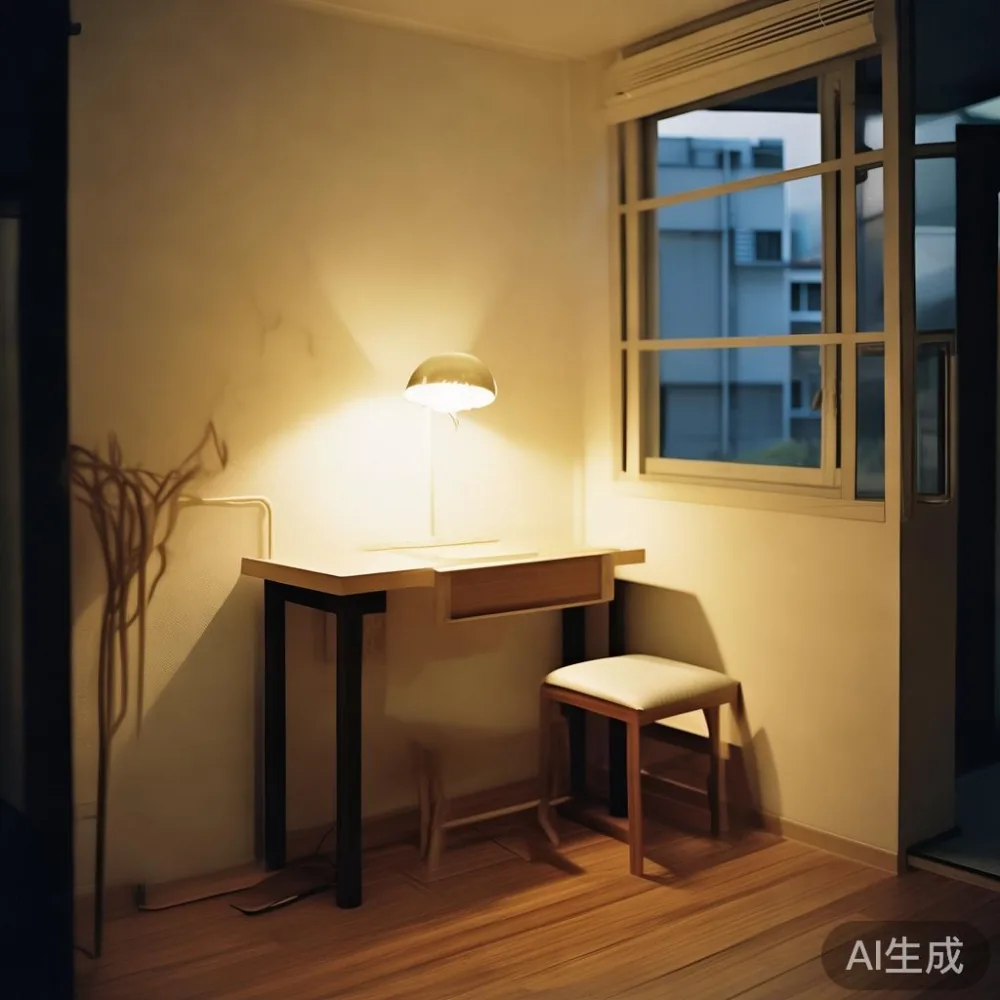
I wrote this guide after a long Saturday at three different flats with my colleague, who was measuring lift widths and door frames for a client delivery. We watched two narrow console tables wedge into a 90 cm corridor and block the smoke alarm in three feet. We watched a heavy wardrobe refuse to fit into a 1.2 m wide lift, which forced a second trip, an extra SGD 180 in courier fees, and a scratched marble table top that we ended up replacing. Those small scenes are the reason I take the maths of small-space styling seriously, and they shape everything below.
Start with the corridor, not the sofa
The biggest mistake I see in compact Singapore flats is treating the living room as the entry point of design. In practice, the corridor and entryway furniture set the tone for the entire apartment, because they are the first and last thing a guest — and you — touch each day. A narrow hallway between 90 cm and 120 cm wide cannot accept anything deeper than 35 cm. Push that to 40 cm and you are one handbag away from a daily bruise on the wall.
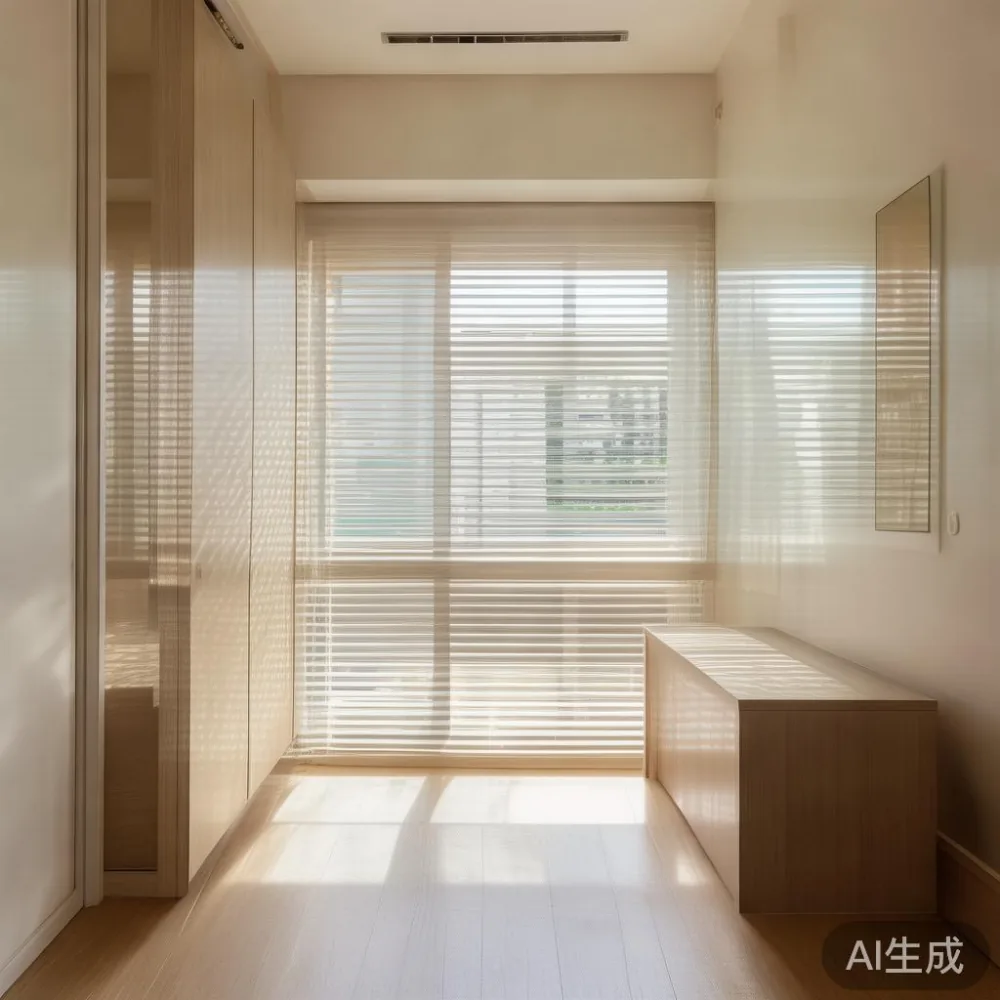
For a typical HDB in Bedok or Tampines, I now default to a slim solid wood console between 28 cm and 32 cm deep, around 110 cm wide, and 78 cm tall. Solid wood matters here because the entryway takes abuse — wet umbrellas, dropped keys, leaning shopping bags — and a hollow-core MDF piece will start to sag at the drawer slides within 18 months. A solid wood sofa or console from a maker like MIDHILL holds its geometry under that kind of load, which matters more in a small flat where you cannot simply move the piece to a less stressful wall.
On top of that console, leave 60 cm of clear surface for a tray, a small plant, and the day's post. Below it, two shallow drawers (around 12 cm deep each) are enough for keys, a power bank, and a reusable mask. That is the entire job of an entryway console. Anything more is furniture showing off.
What entryway furniture should actually do in a small Singapore flat?
Entryway furniture has three jobs, and only three jobs:
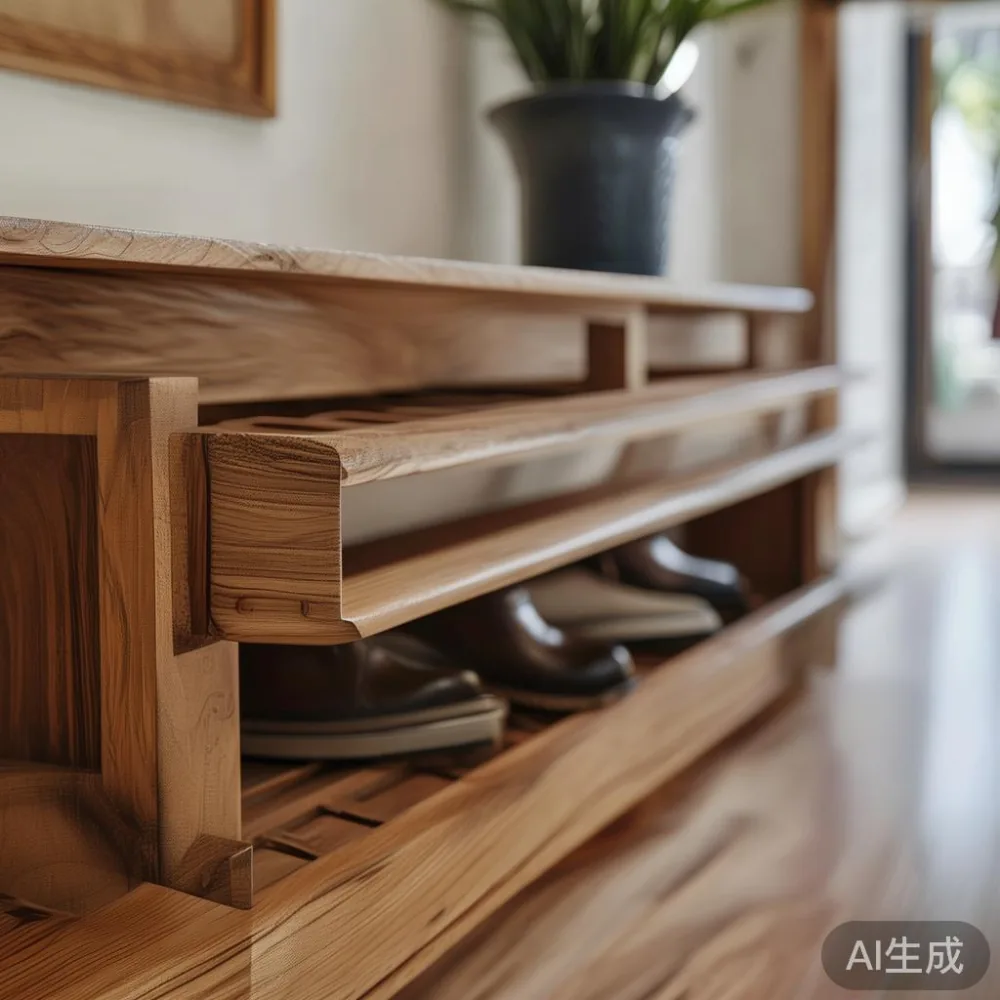
1. Stop shoes from migrating into the living room. A family of four in a Punggol 4-room flat generates roughly 12 to 16 pairs of shoes in daily rotation. A closed shoe cabinet between 80 cm and 120 cm wide, 35 cm deep, and around 120 cm tall fits 18 to 24 pairs with two-tier racks and keeps the corridor clear.
2. Provide a surface for the 30-second drop. Phone, keys, mail, a SingPost envelope, a GrabFood voucher on a Post-it. Without a surface, these items land on the dining table and reach into the kitchen.
3. Hold the visual weight of the door. The front door is usually the largest solid surface in the apartment. An empty wall next to it looks unfinished and makes the entry feel cramped. A slim entryway bench (around 100 cm wide, 40 cm deep, 45 cm tall) gives you a place to sit, a place to tuck one or two pairs of shoes, and a visual anchor.
If a piece of entryway furniture does not do at least one of these three things, it does not belong in a small flat. That rule has saved my clients from buying three consoles they never used.
Can a slim console still feel luxurious in a 90 sqm HDB?
Yes, but the word "luxury" has to be redefined for small Singapore homes. A 3-metre Italian marble feature wall is not luxury here — it is a hostage situation with a renovation budget. French light luxury, which I keep recommending for compact HDBs and condos, is about restraint: muted colours, slim profiles, gentle curves, and one or two pieces with real material weight. A French provincial coffee table with a turned solid wood base and a honed stone top can anchor a 2.4 m sofa without visual shouting. The trick is choosing one statement piece per zone, not five.
On a Tampines project last month, my client wanted American light luxury but lived in a 96 sqm flat with a 2.6 m ceiling. We built the look around a single solid wood bed frame with a low headboard, a slim American wardrobe in white oak veneer, and a 120 cm marble coffee table that doubles as a footstool when friends come over. The rest of the apartment stayed calm: beige walls, linen curtains, a round dining table at 90 cm that fits four without elbow wars. That is American light luxury translated for a small home — warmth, proportion, and one piece of weight per room, never three.
If you prefer post-modern light luxury, the same rule applies: pick one geometric piece — a marble table with an asymmetric base, a console with a sculptural drawer pull — and let everything else stay quiet. The eye needs somewhere to rest, especially when the apartment is 96 sqm and your guests can see most of it from the entryway.
How do lift and corridor widths change the furniture you can actually buy?
Singapore HDB lift interiors are usually around 1.1 m wide and 1.4 m deep, with a door opening of about 90 cm. Condo service lifts are often wider — 1.5 m by 1.8 m — but not always. A wardrobe that looks perfect in a 1.6 m by 0.6 m footprint will physically not fit through a 90 cm door, and we see this fail on roughly one delivery in eight in older blocks.
Three numbers worth memorising before you order:
- Lift door opening: usually 80 cm to 95 cm on HDB, 90 cm to 110 cm on condos.
- Internal corridor width on a typical floor: between 1.2 m and 1.5 m.
- Your own front door: 90 cm for most HDB flats, 95 cm for newer condos.
If any single dimension of a piece is wider than the smallest of those three, you cannot get it in without disassembly. We had a French provincial bed with a 168 cm headboard refuse to clear a 90 cm door in a Bedok flat, and the courier charged an extra SGD 220 to bring it down, re-wrap it, and deliver it a second time. That is also why flat-pack sizing matters, and why MIDHILL ships most pieces in sub-30 kg cartons under 165 cm long so they clear HDB lifts without drama.
The same logic applies to a Japanese-style bed frame, which is one of the most-asked items this year as Singapore buyers search for the best Japanese bed for 2026. Low platform frames between 25 cm and 35 cm tall are friendly to HDB lifts, but a 200 cm long king-size headboard can still jam a 90 cm door if the courier tilts it the wrong way. Order with delivery insurance that covers failed first-attempt drop-offs, and ask for the headboard to ship in two pieces if the brand offers it.
What should the entryway, dining area, and bedroom each contain?
Think of a small Singapore flat as three zones, each with one anchor piece and one supporting piece. Anything more creates clutter.
Entryway zone: one slim console (28–32 cm deep, 110–130 cm wide), one closed shoe cabinet, one bench if space allows. A round mirror between 50 cm and 70 cm wide above the console adds light and makes the corridor look 30 cm wider than it is.
Dining zone: a round dining table at 90 cm fits four people in a 2.4 m by 2.4 m corner. A rectangular table at 140 cm by 80 cm fits four along a wall but blocks circulation if the room is under 2.6 m wide. Keep two chairs as armchairs, two as side chairs without arms, and your guests will not have to stand up when they excuse themselves.
Bedroom zone: one solid wood bed frame, two nightstands (or one shared 140 cm wide bench if the room is under 9 sqm), one wardrobe. The question of is American wardrobe worth it comes up in almost every condo consultation, and my honest answer is: yes, if the internal layout fits your clothes, and only if it ships in pieces under 95 cm wide. An American wardrobe with deep 60 cm drawers and three hanging zones can replace a separate dresser and a freestanding rack, which is what makes it worth the floor space in a 12 sqm bedroom.
For the bedroom itself, many clients ask how to style French provincial bed in apartment settings without tipping into a chintzy look. Keep the bed as the only carved piece in the room. Pair it with plain linen bedding, one neutral rug between 160 cm by 230 cm and 200 cm by 300 cm, and simple cylindrical nightstands. The bed does the talking, the rest stays quiet.
A separate question I hear weekly is is French provincial bed worth it for a small Singapore home. My answer depends on the ceiling height. If your ceiling is under 2.7 m, skip the tall canopy version. A low-slung French provincial bed at 110 cm headboard height keeps the room open. If your ceiling is 3 m or higher, the taller version gives you a focal point the room can absorb.
Should the guest room be a Boho corner or a sleeper drawer?
Most 4-room and 5-room HDBs do not have a true guest room — they have a flex room between 7 sqm and 9 sqm that doubles as a study, a storeroom, and a twice-a-year guest space. That room is the perfect candidate for a Boho for guest room approach: a daybed at 140 cm wide, two floor cushions that slide under it, a small round 60 cm pedestal table, and one tall plant in a 30 cm pot.
The reason Boho works here is that it is forgiving. You can pile linen throws, hang a single wall mix, and the room still looks intentional even when it is technically a storeroom with a mattress on top. The daybed earns its keep daily as a reading seat and earns its rent twice a year when your mother-in-law visits.
Skip the second wardrobe in this room. Your guest can hang three days of clothes on the back of the door. Skip the second desk. A 60 cm wall-mounted fold-down table is enough for a laptop and a cup of tea, and it disappears when the daybed becomes a bed.
How do you keep the apartment feeling calm after the styling is done?
Three small habits keep a small flat feeling calm after the styling is done.
First, pick a single wood tone and use it across the apartment. If your entryway console is white oak, your dining table should be white oak, your nightstands should be white oak. Mixed tones create visual noise that compounds in a small space.
Second, keep the floor visible. A 200 cm by 300 cm rug under the dining table, a 160 cm by 230 cm rug beside the bed, a 90 cm round rug in the entryway. The rest of the floor should breathe. When the eye sees a clear floor, the room reads as larger than its actual square metres.
Third, edit every quarter. Every three months, take one piece out of the apartment and see if anyone notices. If no one notices, the piece was paying rent for nothing. Small flats cannot absorb dormant furniture.
What does delivery, warranty, and after-care look like for solid wood furniture in Singapore?
Solid wood furniture lasts longer in Singapore's humidity when it comes from a maker who understands kiln-drying. MIDHILL, for example, kiln-dries its solid wood bed frames, dining tables, and wardrobes to between 8% and 12% moisture content before assembly, which is the range that resists the 28°C and 80% humidity days we get in May and during Chinese New Year. Cheaper flat-pack pieces paste a wood-look foil over MDF and start to peel at the corners within two monsoon seasons.
For Singapore buyers, the practical numbers matter as much as the styling. MIDHILL offers free shipping to Singapore on orders above USD 350 (about SGD 470 at current rates), which covers a single dining table or a bed frame plus two nightstands. Below that threshold, a single HDB delivery typically runs SGD 60 to SGD 120 depending on the floor and whether a lift is available. Most pieces arrive within 14 to 21 working days from Foshan, with custom sizes taking up to 35 days. Lift-up service to upper floors is usually free up to the 14th floor and SGD 15 per floor beyond that for HDBs without a service lift.
Warranty terms are the quiet hero of solid wood furniture. A 10-year structural warranty covers joint failure, drawer slide collapse, and frame cracking. Lifetime refinishing — sanding, re-staining, and re-sealing — keeps a 10-year-old solid wood dining table looking like it was delivered last month. Refinishing in Singapore typically costs SGD 280 to SGD 450 per piece through third parties, so a maker that includes it in the original price is giving you real money back over the life of the table. A 14-day return window also matters in a small home, because a piece that looked right on a 2D screen can dominate a 9 sqm bedroom in person. Order from a maker that lets you send the piece back within 14 days if it crowds the room.
GST applies to all imported furniture at 9% as of 2024, and most makers show the GST-inclusive price at checkout so you do not have to calculate it yourself at the door. Watch for that line — a SGD 1,000 dining table becomes SGD 1,090 with GST, and a maker that hides the tax until delivery is harder to budget against.
Where can you browse and spec these pieces before you measure your flat?
Before you spend a single dollar, measure your lift door, your front door, and the room where the piece will live. Write those numbers on a Post-it and stick them on your phone. Then browse the maker's catalogue with those numbers in front of you, and filter by pieces that ship in cartons under 95 cm wide and under 165 cm long. MIDHILL's full Singapore-ready catalogue, including French provincial beds, solid wood dining tables, Japanese platform frames, and entryway furniture, is browsable at api.midhill.co, where each product page lists the exact carton dimensions and the recommended room size in sqm.
Two final numbers to keep in mind before you check out. A 4-room HDB flat in Tampines or Bedok can absorb roughly 6 to 8 anchor pieces of furniture before it starts to feel crowded — a console, a dining table, four chairs, a sofa, a coffee table, a bed frame, and a wardrobe. A 5-room flat absorbs 8 to 10. A small condo under 80 sqm absorbs 5 to 7. If your list is longer than that, edit before you buy. The best small apartment in Singapore is not the one with the most furniture — it is the one where every piece earns its square metre.