What Actually Drives the Price of Solid Wood Entryway Furniture
I spent a wet Tuesday afternoon in the Tampines IKEA warehouse staring at a S$399 shoe cabinet, then walked six blocks down Tampines Street 21 to a small showroom where a similar-looking ash console was priced at S$2,180. Same number of drawers, roughly the same footprint, both labelled "solid wood." The price gap was nearly five times, and the floor staff in either store could not explain where the money actually went. That question — what is really inside the price tag — is what this piece is built around, especially for shoppers in Singapore HDB flats and condominiums who are weighing entryway furniture that has to survive daily use, narrow lift doors, and a climate that swings between 80% humidity and air-conditioned dryness.
Is the wood species the main reason a console costs S$1,800 instead of S$400?
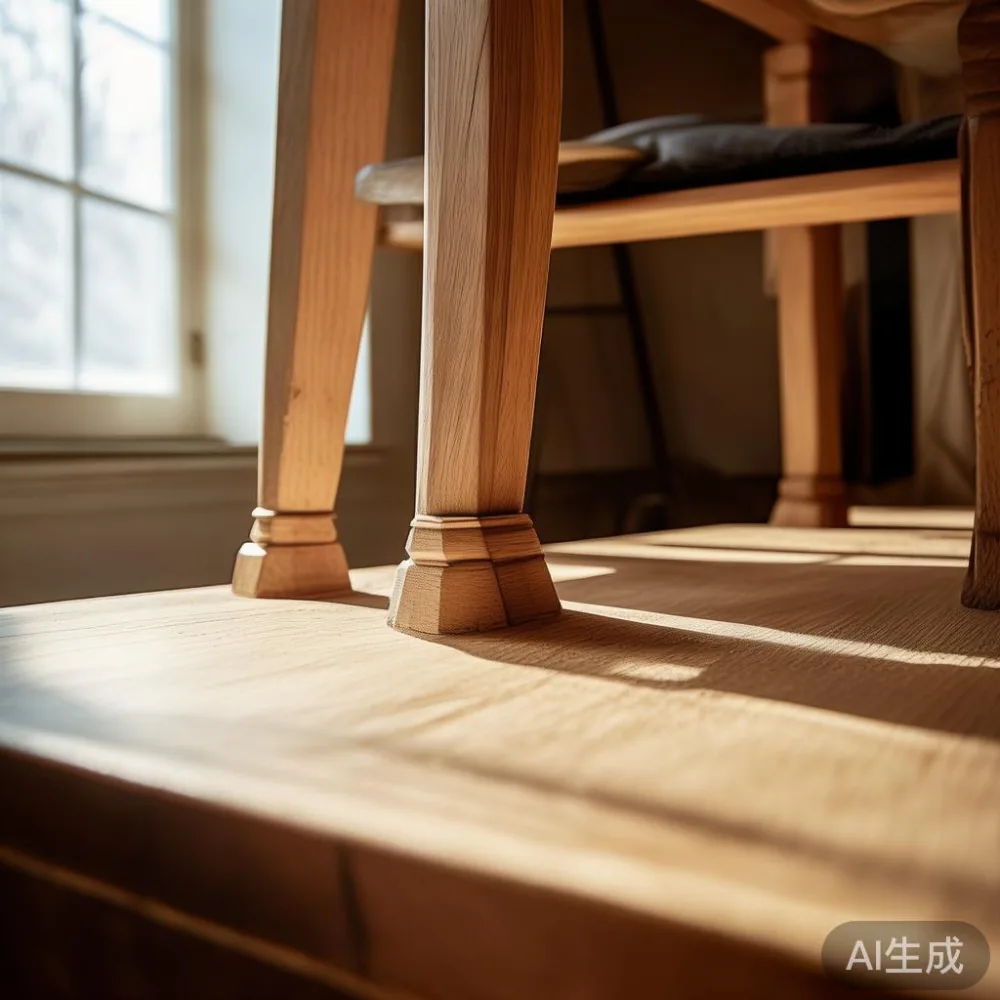
Yes, species matters, but not in the way most marketing implies. Rubberwood (hevea) is technically solid wood, and it is what most entryway benches under S$500 in Bedok and Punggol megastores are built from. It is a plantation timber, harvested in 15 to 25 years, kiln-dried quickly, and glue-laminated into thicker boards. It performs fine for a small nightstand, but it dents easily, takes stain unevenly, and tends to twist after two humid seasons in an HDB corridor. White oak, ash, and walnut — the woods you see on a French light luxury console in a Toa Payoh showroom — take 40 to 80 years to mature, dry slowly in covered yards for 6 to 18 months, and are graded by hand. A single 240 cm × 60 cm oak slab for a dining table can cost the Foshan factory S$180 to S$320 before it is planed, sanded, and joined. Multiply that across a wardrobe with six panels, and the wood alone can exceed S$1,000 of the consumer price, before any labour, finishing, hardware, or freight is added. The species is the loudest line item, but it is only one of seven.
What does "joinery" actually mean for an entryway bench?
Joinery is the set of techniques used to connect two pieces of wood without (or with minimal) glue and screws. On a flat-pack entryway bench from a Punggol furniture mall, you get dowels, cam locks, and a few confirmat screws. The frame is in effect held together by particleboard edges and metal inserts. On a solid wood sofa frame or dining table from a workshop that practices traditional mortise-and-tenon, each joint is cut on a CNC spindle or by hand, glued with PVA or hide glue, and sometimes pinned with a hardwood dowel for shear strength. A properly cut mortise-and-tenon takes 12 to 25 minutes per joint; a dowel joint takes 2 minutes. Across 14 joints on a dining table, that is three hours of skilled cabinet time per piece, which at a Foshan factory's standard rate of S$8 to S$14 per hour adds a meaningful figure to the bill. For Singapore buyers, the practical test is simple: lift the entryway bench 5 cm off the floor by one corner. A well-joined piece feels like one solid object; a poorly joined piece flexes and creaks at the corners.
How much of the price is finishing, and why does it take so long?
Finishing is invisible on the shop floor and obvious in year three. A S$299 entryway bench typically ships with one coat of nitrocellulose lacquer sprayed in 30 seconds, dried in an infrared tunnel for 4 minutes, and packed the same afternoon. A S$1,800 console from a workshop that practices post-modern light luxury finishes will go through 7 to 9 steps: sanding from 80-grit up to 400-grit, sealing with a wash coat, pore-filling on open-grain oak or ash, two colour coats, two top coats of conversion varnish or hardwax oil, and a 72-hour cure between coats. Each coat adds 0.05 mm of film; the finished table gains roughly 0.4 mm of protective layer that resists Singapore's humidity, finger oils, and the daily scuff of school shoes. Conversion varnish alone costs S$40 to S$70 per litre, and a single dining table can consume 1.2 litres. Multiply that across a production run of 50 pieces, and finishing materials alone reach S$3,000 to S$5,000 before labour.
What role do hardware and marble accents play?
Hardware is where most mid-tier buyers underestimate cost. A S$3 zinc-alloy hinge will fail within 18 months under tropical humidity; a S$9 Blum soft-close hinge with a 200,000-cycle rating will outlast most HDB tenures. On a wardrobe with four doors and six drawers, the hardware differential between cheap and premium can hit S$180 to S$260 per piece. Soft-close drawer runners alone run S$22 to S$38 per pair for 45 kg-rated Blum or Hettich units. Then there is marble. A 90 cm round marble table on a solid wood base is often priced at S$1,400 to S$2,600 not because the base is expensive, but because a single Calacatta or Carrara top weighs 38 to 55 kg, ships with wooden crating costing S$120 to S$180 per crate, and incurs a 9% GST on the landed value plus a S$60 lift surcharge if the HDB lift door measures under 80 cm wide. I watched a colleague in Bedok Reservoir measure her lift door before ordering a marble table — the top would not have entered the lift, so she switched to a 75 cm engineered stone version and saved S$420.
How much do Singapore-specific costs add to the final price?
Singapore-specific costs are real and easy to miss. GST at 9% is added at customs on every imported piece above S$400. For a Foshan factory shipping a 1.2 m sideboard weighing 65 kg, freight from Shenzhen to Singapore runs roughly S$280 to S$420 per cubic metre by sea, plus a S$45 port handling fee, plus a S$60 to S$90 delivery fee for a single HDB unit because the lorry cannot park in a Tampines or Punggol HDB car park between 7 pm and 7 am. Lift size matters again: a 220 cm wardrobe taller than the lift ceiling by 2 cm must be disassembled and re-assembled in the home, which adds S$120 to S$200 in on-site labour. Corridor width in older HDB blocks runs 110 to 125 cm, which means a 240 cm dining table must enter vertically, requiring two delivery men, a rotation strap, and an extra 25 minutes. None of this is cheap, but all of it is bundled into the price you see on the showroom floor.
Does the "Foshan factory" label itself justify a higher price tag?
It can, but only if the factory's standards are documented. A Foshan factory operating since 2008 with a 10-year structural warranty and lifetime refinishing has absorbed the cost of kiln sheds, dust extraction, and quality control inspectors. Those overheads add roughly 8% to 14% to the production cost compared with a small workshop that cuts, sands, and packs in the same open shed. The warranty itself is a real cost: a workshop that offers free replacement of any joint that cracks within ten years must price that risk into the initial margin, usually at 3% to 5%. MIDHILL, for example, publishes kiln-drying cycles of 30 to 45 days for its 18 mm and 25 mm ash and oak boards, and offers a structural warranty that covers joint failure, wood warping beyond 3 mm over a 1.2 m span, and finish peeling under normal household use. That promise is only credible because the workshop behind it controls the drying, the joinery, and the finishing line.
How do you compare a S$600 console with a S$2,200 console without getting fooled?
Use four numbers. First, ask for the dried weight of the main boards — a S$600 console in ash typically weighs 18 to 24 kg; a S$2,200 console in the same ash weighs 32 to 42 kg because the boards are thicker and the joinery is full-length rather than stubbed. Second, ask whether the back panel is solid wood or 3 mm plywood veneer; a 3 mm back panel saves the factory S$12 to S$20 per piece and signals cost engineering. Third, count the finishing coats on the underside — a piece finished on top, sides, and front but raw on the underside has been rushed; a properly finished piece is sealed on every surface to control moisture exchange. Fourth, ask for the hardware brand by name; "soft-close" without a brand name usually means a generic runner rated at 30,000 cycles, not the 100,000-cycle rating of a Blum or Hettich unit. For Singapore buyers specifically, ask the showroom whether the entryway furniture has been acclimatised in a local warehouse for at least 14 days; a piece shipped direct from a Foshan factory without acclimatisation can cup or crown in week one as it adjusts to 28°C and 80% relative humidity.
What should I look for when I want a "French light luxury" look without paying Parisian rent?
French light luxury in entryway furniture usually means a few specific cues: a slim tapered leg (18 to 22 mm at the top, 12 to 14 mm at the foot), a subtle carved apron on a console or nightstand, a soft grey or off-white finish on ash rather than a high-gloss lacquer, and brass or antique-bronze hardware in the 25 mm to 35 mm range. None of these cues require a Parisian workshop. They require accurate CNC profiling and a careful finishing sequence, which a well-run Foshan factory can deliver at roughly 40% to 55% of the French retail price for an equivalent piece. The risk is in the shortcuts: thin legs that taper to 8 mm and wobble, brass plating that flakes within a year of Singapore humidity, and carvings routed too deep to hide the joint lines. If you are shopping at a Singapore showroom and the floor staff cannot tell you the leg taper, the brass thickness, or the number of finishing coats, the price is probably built on shortcuts.
Is a Japanese-style sliding wardrobe worth the extra S$600 to S$1,200?
The question "is Japanese wardrobe worth it" is one I hear often from buyers in Punggol and Sengkang condominiums with limited corridor space. The honest answer depends on three numbers: the depth of your available wall (a Japanese sliding wardrobe needs 65 to 70 cm of depth, against 60 cm for a hinged wardrobe), the ceiling height (a Japanese wardrobe works best at 2.4 m or above), and the door clearance (a hinged wardrobe needs a 55 cm arc in front, a sliding wardrobe needs 0 cm). If those numbers fit, a Japanese sliding wardrobe from a workshop using solid wood frames with plywood-clad sliding panels can be a genuinely better use of space. The price premium of S$600 to S$1,200 reflects the more complex track system (S$90 to S$160 per set of upper and lower tracks), the softer close mechanism (S$30 to S$55 per door), and the precision required to keep the 90 kg sliding panels running true on a 2.4 m track. For buyers who answer yes to all three spatial questions, the premium is worth it. For buyers in a 2.7 m-wide HDB entryway, a 120 cm hinged wardrobe usually makes more sense.
How can I tell if a sofa frame will hold up, and how does that affect the price?
The phrase how to choose Mid-century modern sofa gets a lot of search traffic, but the answer is not about the silhouette — it is about the frame. A solid wood sofa frame should be kiln-dried hardwood (ash, beech, or oak), with mortise-and-tenon or dowelled-and-screwed corner blocks, a sinuous spring or eight-way hand-tied base, and a seat platform that carries at least 110 kg. Lift the front of the sofa 5 cm: a S$1,400 frame with rubberwood and staples will twist; a S$3,200 frame with ash and corner blocks will stay rigid. The price gap is real joinery and real springs, not the fabric. Singapore buyers with lift-door constraints should also measure the sofa's longest diagonal against the lift opening — a 220 cm sofa will not fit through a 78 cm lift door in older HDB blocks and must be delivered in two halves, which adds S$150 to S$220 to the delivery bill.
Are wholesale Italian light luxury furniture pieces different from the showroom version?
The term wholesale Italian light luxury furniture gets used loosely in Singapore, but the distinction matters. Genuine Italian production runs from workshops in Brianza and Pesaro carry a 30% to 60% premium over equivalent Foshan-produced pieces, partly because of labour cost (Italian cabinetmakers earn S$2,400 to S$3,800 per month against S$700 to S$1,400 in Foshan), and partly because of leather and fabric provenance. A S$4,800 Italian marble dining table from a Pesaro workshop and a S$2,400 Foshan-produced marble dining table sold as wholesale Italian light luxury furniture can look nearly identical on day one. By year five, the Italian piece has held its joinery and finish; the Foshan piece may have moved 2 to 4 mm at the marble-to-wood junction if the seal was not applied in three coats. Buyers who care about provenance and long-term value should ask for the workshop name, the marble quarry, and the leather tannery.
Where does the entryway bench sit on the price-value curve for HDB buyers?
Entryway furniture is the most punished piece in a Singapore home. It takes shoe scuffs, wet umbrellas, parcel drops, and the daily lean of a commuter unzipping a boot. That is why the right entryway bench or console tends to be priced 20% to 35% higher than an equivalent dining chair or nightstand — the engineering margins are tighter, the joinery heavier, and the finishing more chemically resistant. For HDB buyers in Tampines, Bedok, and Punggol, the sweet spot is usually a S$900 to S$1,600 console in ash or white oak, 110 cm to 140 cm wide, with a 25 mm to 30 mm top, full-length mortise-and-tenon aprons, and a finish cured for at least 72 hours. Below S$600, you are paying for marketing. Above S$2,400, you are paying for a brand name, not extra wood.
What about lighter, trend-driven pieces — do they hold value?
The phrase top 10 Coastal furniture is a common search, and the appeal is obvious — pale finishes, slatted fronts, and a breezy look that suits a Punggol Waterway condo. The honest answer is that coastal-style entryway furniture lives or dies on the finishing system. A pale lime-washed oak finish on a properly sealed substrate will last 8 to 12 years; a pale lime-washed oak finish over a rushed seal will yellow and flake within 24 months in Singapore's UV index of 11 to 13. If you are buying coastal, ask whether the white pigment is in the top coat or the seal coat; pigment in the seal coat wears better. Ask also whether the slatted fronts are individual solid wood pieces or veneered MDF; in 90% relative humidity, MDF swells and never recovers.
How do I read the price of a piece I am comparing across two showrooms?
Build a simple comparison sheet. Five columns: wood species and thickness, joinery type, finishing steps, hardware brand, and acclimatisation time. Two rows, one per showroom. Subtract the line items you cannot verify. A S$200 price gap with no verifiable difference is usually margin; a S$200 price gap with verifiable difference is usually wood, hardware, or finishing. For entryway furniture specifically, also check the underside of the top panel. If it is finished, the workshop cared. If it is raw, the workshop saved S$8 to S$12 per piece and you will feel the difference in your palm within six months. The piece you actually want is the one whose underside tells the truth.
Is there a practical budget framework for Singapore entryway furniture?
For a Singapore household buying entryway furniture that has to last at least ten years, a working framework looks like this: S$1,200 to S$2,000 for a 120 cm to 150 cm console in ash or white oak with full joinery and a 7-step finish; S$600 to S$1,100 for a 100 cm to 130 cm bench with mortise-and-tenon aprons and a sealed underside; S$1,800 to S$3,400 for a 180 cm to 220 cm sliding wardrobe with 65 cm depth, soft-close tracks, and solid wood frames. Outside these bands, you are either buying particleboard with a wood-look foil or paying for a brand premium you can measure in showroom rent rather than joinery. MIDHILL's published ranges fall within these bands for most of its entryway pieces, and the warranty terms match the price tier. A wardrobe at S$2,100 should not be sold with a 1-year warranty; if it is, the price does not match the promise.
What is the single most useful thing I can do before I buy?
Measure your lift door, your corridor width, and your ceiling height before you fall in love with a piece. The single largest reason for delivery-day disappointment in Singapore HDB flats is a piece that does not fit through a 78 cm lift door or a 110 cm corridor. Bring a tape measure to the showroom. Measure the diagonal of every console, bench, and dining table you are considering. Write the number down. A S$1,400 console that cannot enter your lift is a S$1,400 mistake; a S$2,200 console that enters cleanly is a ten-year companion. Everything else — wood species, joinery, finishing, hardware — is real, measurable, and worth paying for, but only if the piece can actually reach your entryway.