What Actually Drives the Price of Solid Wood Entryway Furniture
Walking into a home, the first impression is often set by the entryway. It's a space that blends function with style, a transition from the outside world into your personal sanctuary. For Singapore homeowners living in HDB flats in Tampines or condos in Punggol, the entryway is a practical consideration, especially when working through the tight corridors and lift landings common in our urban landscape. Choosing the right entryway furniture—a console table, a bench, or a shoe cabinet—isn't just about aesthetics; it's an investment in quality and longevity. But why does a solid wood entryway table from a reputable maker like MIDHILL, established in 2008, cost what it does? The answer lies in a complex web of factors that go far beyond the simple material cost.

Why Is a Solid Wood Console Table More Expensive Than a Laminate One?
The most obvious difference between a solid wood entryway table and one made from engineered wood or laminate is the raw material itself. Solid wood is, as the name implies, a single, solid piece of timber. This could be oak, teak, or mahogany, each with its own price point based on availability, growth rate, and demand. A solid oak entryway table, for example, uses a significant volume of high-quality timber. A console table measuring 150 cm long, 40 cm deep, and 80 cm tall might contain over 15 kg of solid oak. This timber is sourced from sustainable forests, a practice that adds to the cost but ensures environmental responsibility.
In contrast, a laminate table is in effect a thin layer of decorative paper pressed onto a core of particleboard or MDF (Medium-Density Fibreboard). Particleboard is made from wood chips, sawmill shavings, or even sawdust, mixed with a resin and formed into panels. The material cost for the core of a laminate table is a fraction of that for solid wood. However, this cost saving comes at the expense of durability. Solid wood can be sanded and refinished multiple times over its lifetime, while a laminate surface, once scratched or chipped, cannot be restored. This is why MIDHILL offers a lifetime refinishing service on its solid wood pieces, a service that is impossible for laminate furniture. For a homeowner in a Bedok HDB, where space is at a premium and furniture is used for years, this long-term value is a key consideration.
The Hidden Costs of Craftsmanship and Labour
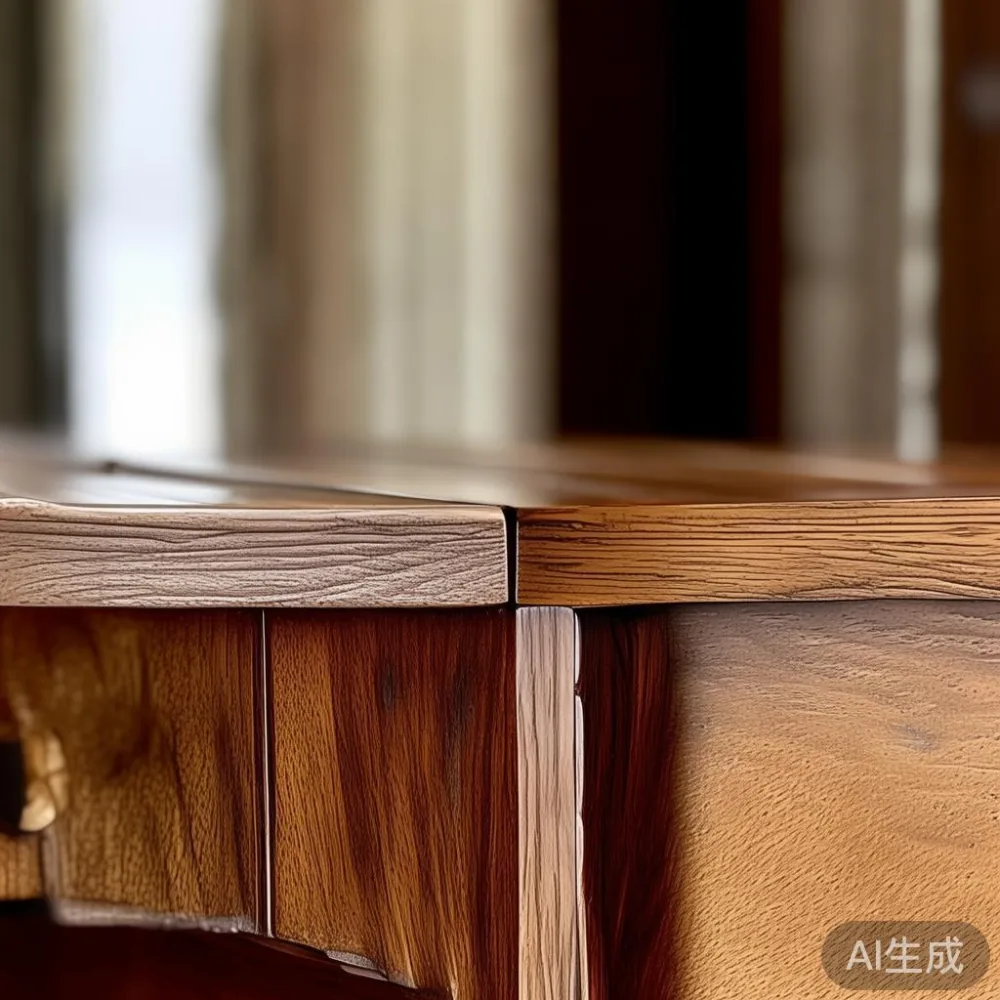
Material is only one part of the equation. The price of a well-made solid wood entryway table reflects the hours of skilled labour invested in its creation. Unlike a machine-laminate table that can be mass-produced in minutes, a solid wood piece requires a meticulous, multi-step process.
Consider the construction of a simple shoe cabinet. A cabinet maker must first select the wood, ensuring the grain is consistent and the boards are properly dried to prevent warping. The wood is then cut to size using precision saws. Next, the joints are created. A high-quality piece will use traditional joinery methods like dovetail or mortise-and-tenon joints. These interlocking techniques are incredibly strong and require a high level of skill to execute by hand. A dovetail joint, for example, can take an experienced craftsman 20-30 minutes to perfect. A cheaper alternative might use simple butt joints with screws or staples, which are far less durable.

After the frame is assembled, the surface must be prepared. This involves sanding the wood through multiple grits, starting with coarse 120-grit paper and progressing to ultra-fine 240-grit or higher, to create a perfectly smooth surface. This process alone can take several hours for a single piece. Only then can the finish be applied. A high-quality, non-toxic lacquer or oil is applied in multiple thin coats, with drying time in between. Each coat must be carefully buffed to achieve a deep, lustrous sheen. This entire labour-intensive process, performed by skilled artisans, is a primary driver of the final price. A machine can laminate a surface in seconds, but it cannot replicate the artistry and structural integrity of handcrafted joinery.
How Wood Species, Origin, and Grade Affect the Price Tag
Not all wood is created equal. The type of wood used for your entryway furniture has a profound impact on its price. Hardwoods, like oak, maple, and walnut, are denser and more durable than softwoods like pine or rubberwood. They are also more expensive. Oak, a classic choice for entryway furniture, is known for its strength and beautiful, prominent grain. A solid oak entryway console table will almost always be more expensive than one made from rubberwood, even if the design is identical.
The origin of the wood also plays a role. European oak, for instance, is often considered to have a finer, more consistent grain than American oak, which can make it more desirable and thus more expensive. For those wondering how to choose a European wardrobe, the quality of the timber is a fundamental starting point. The grade of the wood is another factor. 'A-grade' wood has a uniform colour, minimal knots, and a straight grain. 'B-grade' or 'C-grade' wood may have more knots, colour variations, and imperfections. While these imperfections can add character, they are generally sold for less. A high-end piece of entryway furniture will almost exclusively use A-grade, select cuts of wood to ensure a flawless appearance.
Also, the sustainability and certification of the timber can influence the cost. Reputable manufacturers like MIDHILL source their wood from suppliers who follow sustainable forestry practices, such as those certified by the Forest Stewardship Council (FSC). This ethical sourcing adds a layer of cost but provides peace of mind to the consumer, knowing their furniture is not contributing to deforestation.
Design, Customisation, and Structural Integrity: The Long-Term Value
The price of solid wood entryway furniture also reflects its design and structural integrity. A well-designed piece is not just beautiful; it is built to last for generations. This is where the 10-year structural warranty offered by established manufacturers becomes significant. It's a promise that the frame, the joints, and the construction are sound.
p>My colleague recently visited our partner workshop in Foshan last month. He observed a quality control test where a solid wood dining table was subjected to 50 kg of weight distributed evenly across its surface for 72 hours. The table showed no sagging or joint stress. This level of engineering and testing ensures that a console table in your Punggol condo can withstand the weight of decorative items, keys, and bags without issue for years to come.Customisation is another factor that increases the price. While a standard-sized entryway table might fit many Singapore HDB corridors, some homes require bespoke dimensions. For example, a condo in Tampines might have a narrow hallway, requiring a console table that is only 30 cm deep instead of the standard 40 cm. Creating a custom piece involves additional design time, specialised cutting, and often, a higher price tag. However, this investment ensures a perfect fit and maximises the utility of your limited space.
Light luxury design aesthetics, such as French or American post-modern styles, also command a premium. A French light luxury entryway table might feature delicate carvings, curved legs, and a soft, pastel finish, requiring more intricate craftsmanship. An American light luxury piece might focus on clean lines, bold hardware, and a rich, dark stain. The specific design choices, from the hardware (solid brass vs. plated steel) to the finish (hand-rubbed vs. sprayed), all contribute to the final cost. This attention to detail is what separates a piece of furniture from mere storage to a statement of style.
Why Does Shipping and Warranty Matter So Much in Singapore?
For a small island nation like Singapore, the logistics of delivering large, heavy furniture are a significant part of its cost. A solid wood entryway table can weigh between 25 kg and 40 kg. Transporting this bulky item from a workshop in Foshan to a customer's home involves shipping, customs clearance, and last-mile delivery. The 7% Goods and Services Tax (GST) is applied to the total cost, including shipping, which adds to the final price.
This is where policies like free shipping over SGD 350 become a valuable part of the value proposition. A single console table might cost SGD 800, easily qualifying for free delivery. This saves the customer a significant fee, which could be SGD 100 or more. The delivery itself is a complex operation. The furniture must be professionally packed to protect it from humidity and damage during transit. In Singapore, delivery teams must work through narrow HDB corridors, lift landings, and doorways. A standard lift in a Tampines HDB flat has internal dimensions of approximately 110 cm x 140 cm, which is just large enough to fit a disassembled but well-protected console table. Delivery teams are trained to handle these items with care to prevent scratches or dents.
The warranty is the final piece of the puzzle. A 10-year structural warranty is a powerful indicator of a manufacturer's confidence in its product. It covers defects in the frame, joints, and legs. A lifetime refinishing warranty is even more remarkable, as it covers the finish itself against peeling or discolouration. These warranties protect the consumer's investment over the long term. They mean that if a leg on your entryway table were to crack due to a structural defect, the manufacturer would repair or replace it at no cost. This level of after-sales support is a cost that is factored into the initial price but provides immense peace of mind.
Is a Higher Price for Entryway Furniture Always Justified?
This is the question every Singaporean homeowner asks while browsing online for furniture. The short answer is: it depends on your priorities. A higher price for solid wood entryway furniture is justified if you value longevity, craftsmanship, and timeless design. A solid wood piece is an investment. It will not need to be replaced in 3-5 years like a flat-pack or laminate item might. Its value holds up better over time, and it can even be an heirloom piece to be passed down.
However, for some, the budget is the primary concern. In that case, a well-made piece of engineered wood furniture might be a more practical choice. It's important to understand what you are sacrificing: durability, repairability, and the unique character of natural wood. For those looking for a quick, temporary solution, a lower-priced option might suffice. But for those who want to create a lasting foundation for their home, the higher price of a quality solid wood entryway table is a reflection of its true worth.
Ultimately, the decision comes down to a personal calculation of value versus cost. Consider the lifespan of the furniture, the cost of potential replacements, and the enjoyment you will get from owning a beautiful, well-made piece. For many, the peace of mind that comes with a 10-year warranty and the knowledge that they own something crafted to last a lifetime is worth every cent. When you choose a piece of solid wood entryway furniture, you are not just buying a table; you are investing in the quality and comfort of your home for years to come.