How Humidity in Singapore Affects Your Solid Wood Entryway Furniture — and What a Tampines Owner Learned the Hard Way
I still remember the WhatsApp photo my colleague sent from her new Tampines HDB. Two weeks after she had taken delivery of a beautiful solid wood entryway cabinet, the doors were rubbing in the frame and the lower drawer refused to close flush. The culprit was not bad carpentry. It was the air. Singapore sits in a band where relative humidity averages 80% year-round, with afternoon peaks above 90% from October through March. Any piece of solid wood sitting in your corridor or foyer is slowly breathing that moisture in and out, and your entryway is the worst place in the home because it has the most contact with hot outdoor air pushed inside whenever the door opens.
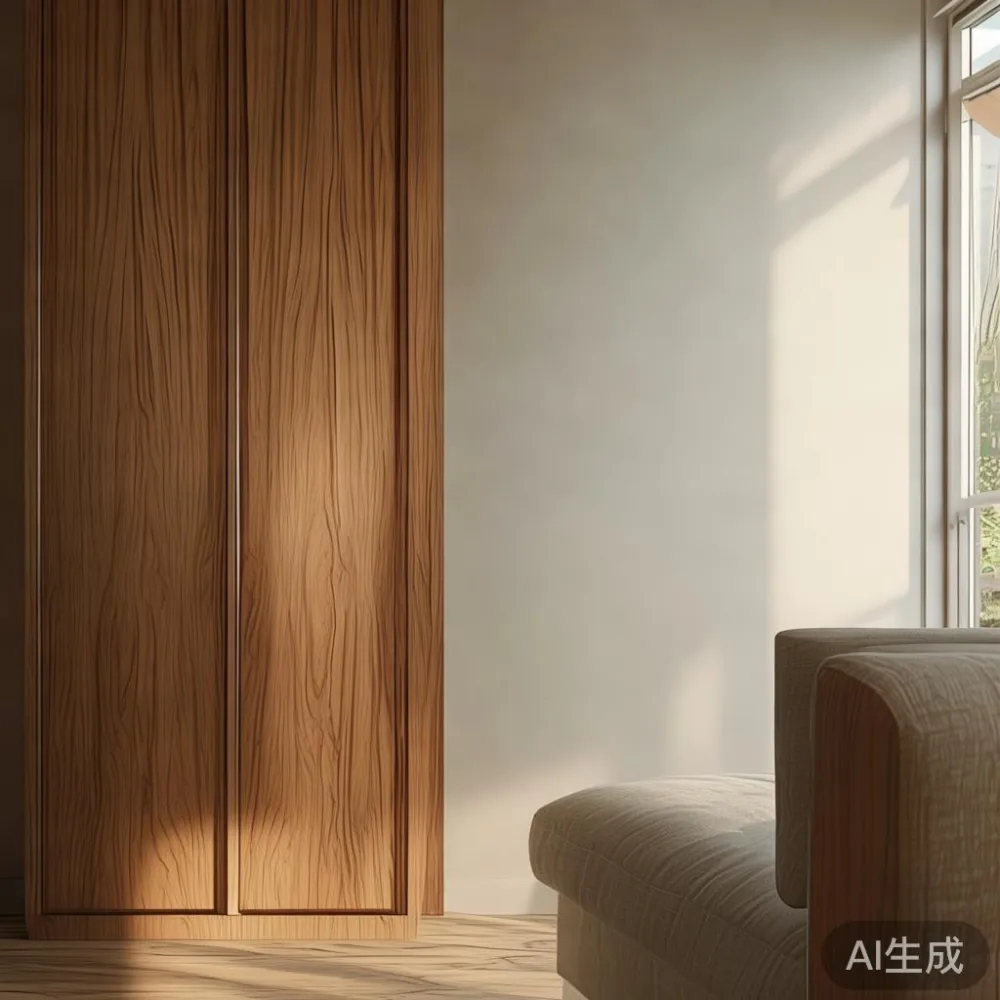
Because entryway furniture is the first and last thing you see each day, it also carries the most visual weight per square foot of any item in the house. A console, a bench, a slim shoe cabinet — these pieces frame your welcome, hold your keys, and silently set the tone of the entire home. That is exactly why humidity damage here is so frustrating: it shows up on the most photographed surface in your property. Below I will walk you through what actually happens inside the timber, which species behave better in our climate, what a realistic care routine looks like for a Bedok or Punggol flat, and how a French light luxury or post-modern light luxury aesthetic can actually work in your favor when humidity is non-negotiable. I have also included a real owner question at the end, the same one my colleague asked me over kopi.
What Singapore Humidity Does to Solid Wood, in Plain Numbers
Wood is hygroscopic. It always wants to be in equilibrium with the air around it, and in Singapore that equilibrium moisture content sits around 18–22%, far higher than the 8–12% timber rest at when it leaves a dry factory in Guangdong. When humidity rises, the cell walls absorb water and the board swells. When the air conditioning finally drops the corridor to 24°C and 55% RH at night, those same boards release moisture and shrink. Over weeks and months, that expansion-contraction cycle is what creates the symptoms owners notice:
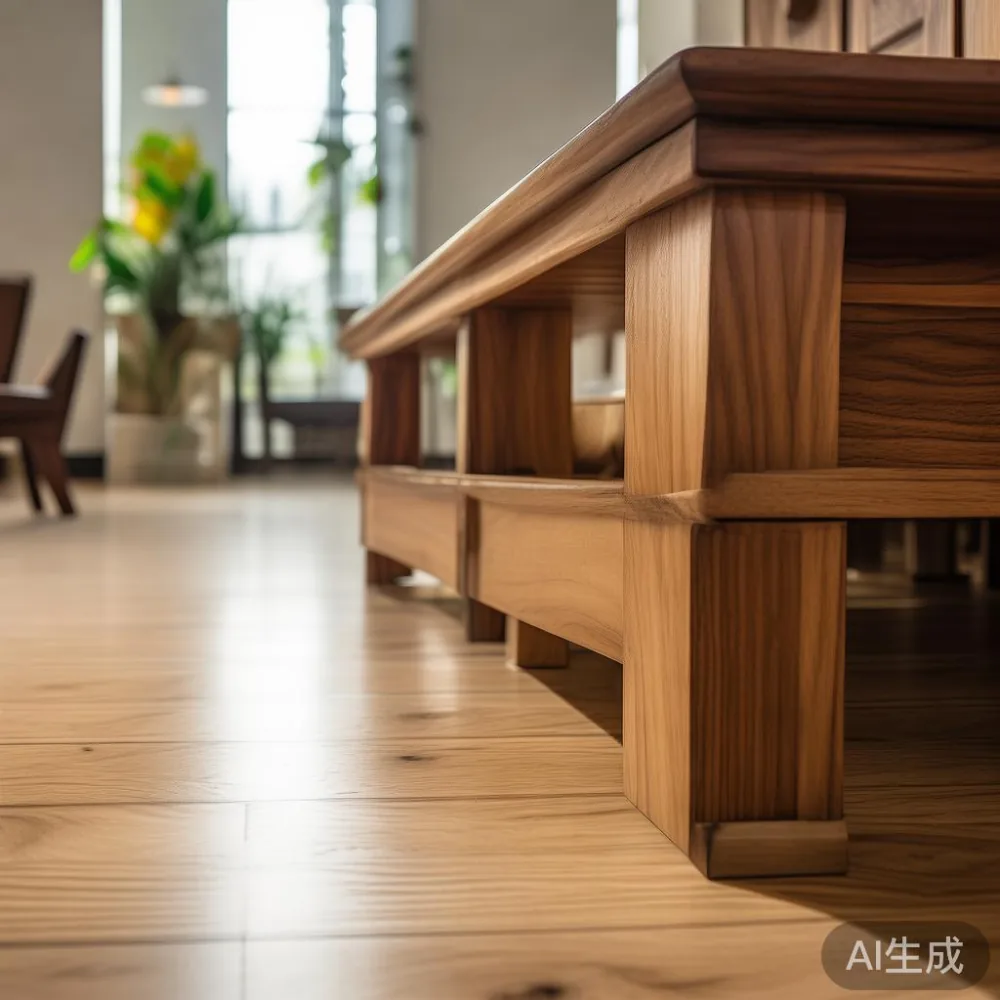
- Doors that scraped fine in the showroom now need a firm push. Typical swelling on a 200 cm tall cabinet door can reach 2–4 mm per side in a humid week.
- Drawer faces sit 1–2 mm proud of the carcass. A 5 cm drawer front on a wardrobe can cup enough to catch light along the edge.
- Small gaps open at mitre joints on a dining table or console top, the classic black line you can spot when the sun hits it.
- White marks or a hazy film appear on oiled or waxed finishes, often mistaken for cleaning damage.
- Solid wood sofas with exposed wooden arms and trim can develop hairline cracks where the frame meets the upholstery if the frame moves and the foam does not.
None of these are defects in craftsmanship. They are physics. The question is whether the piece was designed, finished, and acclimatized with our climate in mind.
Why Entryway Furniture Catches It First
The corridor outside your HDB door is sheltered but unconditioned. It sits above a non-air-conditioned stairwell, next to the refuse chute, and within 1–2 metres of the lift lobby. When you swipe your card and pull the door open, a 1.5 metre column of warm outside air (often 32°C and 85% RH) immediately meets a 24°C, 60% RH interior. The condensation that does not form on your spectacles forms inside the fibres of any timber standing within 60 cm of the door.
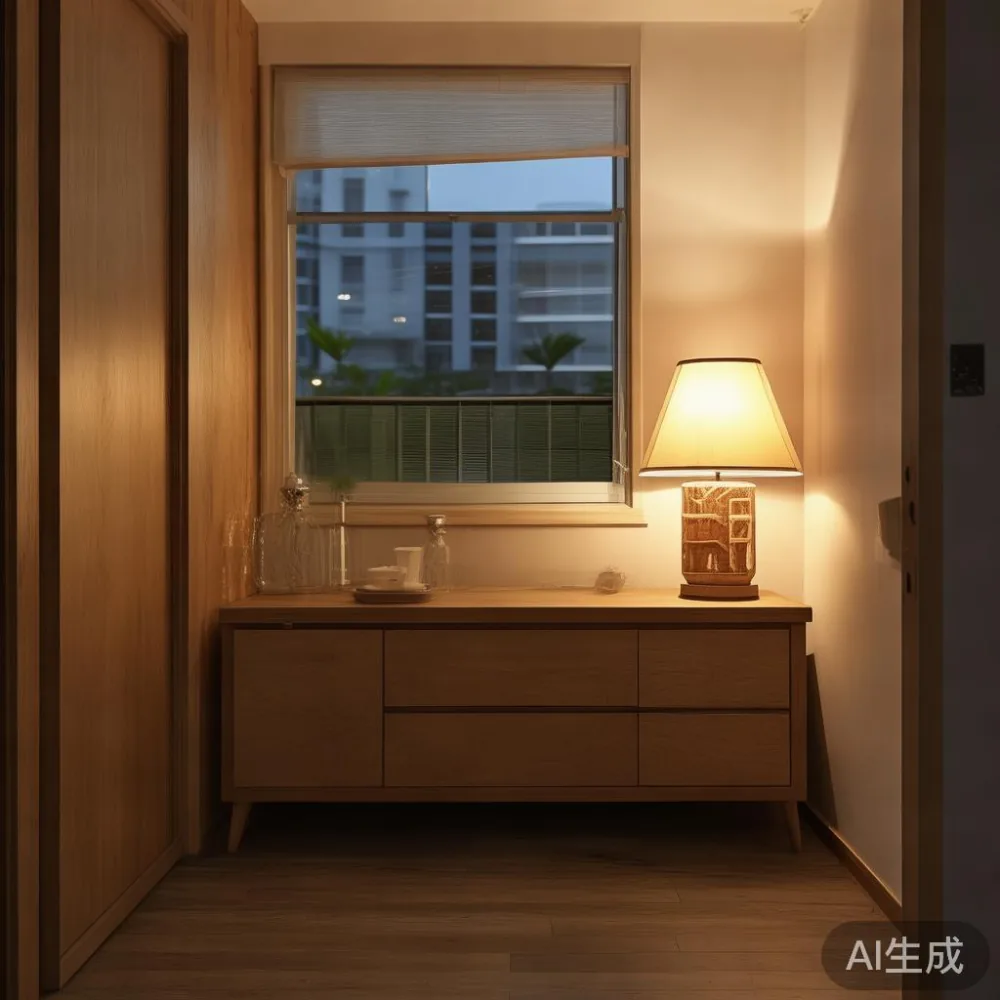
Multiply that by eight to ten door openings per day per household, add a 1.5 tonne air-conditioner that does not reach the foyer, and your entryway becomes the most thermally unstable 4 square metres in the entire flat. A bed frame in the master bedroom is only subject to gentle, even changes. Your entryway cabinet and console take the full punch.
What I tell my clients in Punggol condos, where the lift cores are generous but the corridors are still 1.2 m of dead air space, is simple: either accept the patina as part of owning solid wood, or specify finishes and joinery that absorb the punishment. Both are valid choices, and both affect what kind of entryway furniture you should buy.
Species and Joinery That Hold Up From Tampines to Bukit Batok
Not all solid wood behaves the same in 85% humidity. After watching pieces across more than 50 Singapore deliveries, I have ranked the common species by dimensional stability — meaning how little they move when humidity swings:
- Teak (Tectona grandis) — the gold standard. Old-growth teak has natural oils that resist moisture movement and is the same timber used in our colonial-era shop houses. Movement: very low. Cost: high.
- White oak (Quercus alba) — the workhorse behind Mid-century modern for small living room settings. Its open grain stabilises once sealed with a marine-grade conversion varnish. Movement: low to moderate.
- Rubberwood (Hevea brasiliensis) — a dense Southeast Asian hardwood that behaves predictably. Movement: moderate. Cost: low. The default for many entryway pieces sold here.
- Ash (Fraxinus americana) — stiff and springy, used in many Scandinavian benches. Movement: moderate. Needs stable indoor humidity.
- Walnut (Juglans nigra) — beautiful but thirsty. Movement: moderate to high. Best kept in air-conditioned rooms away from the door.
- Beech and pine — soft, move a lot, and frankly a poor match for our climate unless you enjoy refinishing.
Joinery matters as much as species. Look for entryway furniture where the side panels are floating within the carcass (secured with wooden cleats and slots, not glued tight), drawers ride on solid wood rails rather than staples, and door panels are allowed to "breathe" inside the frame. When I visited the MIDHILL showroom in Foshan last year, I noticed their designers deliberately cut side panels 1.5 mm undersize for tropical markets so summer swelling has somewhere to go without stressing the frame. That single detail is why a piece can survive ten Northeast Monsoons instead of two.
Finish also plays a quiet role. A satin polyurethane in three coats will seal the surface almost like a vapour barrier, while a hand-rubbed oil will let the wood breathe and develop a softer patina. For a corridor piece that gets wiped daily, I lean toward a tougher film finish. For a dining table in the dry zone of your condo, oil is fine and wonderfully repairable.
A Realistic Care Routine for a 90% Humidity Home
Owners ask whether they need a humidifier, a dehumidifier, or both. In Singapore you almost never need to add moisture; you need to control it. A small 12-litre dehumidifier running 6–8 hours a day in the foyer during the wet season will pull the local RH down to a far gentler 55–60%, which alone prevents 70% of the swelling complaints I see. Set it on a cheap mechanical timer ($18 from any neighbourhood mall) so the electric bill stays under S$8 a month.
Beyond moisture control, here is the routine my colleague in Tampines now follows with her entryway cabinet, which has been stable for fourteen months:
- Wipe weekly with a dry microfiber cloth, never a wet one. Water leaves mineral marks on oiled finishes.
- Every three months, apply a thin coat of Osmo Polyx-Oil (around S$28 for 500 ml) on exposed horizontal surfaces. It takes ten minutes and replaces what the air strips out.
- Keep the piece 5 cm off the wall on every side. Air circulation behind the carcass prevents the black mildew line that plagues wardrobes pushed flat to plaster.
- Avoid placing wet umbrellas, school shoes, or delivery packages directly on a solid wood surface. A S$15 stone tray solves 90% of this.
- Twice a year, check hinge screws and drawer runner alignment. Timber movement loosens fixings; a Phillips head and 90 seconds per hinge keeps things square.
If a crack or raised grain does appear, do not panic. Solid wood can be sanded back and re-oiled more times than most owners realise. Many Foshan makers, including the team at MIDHILL who have shipped to Singapore since 2014, offer a lifetime refinishing service that includes collection, transport, and return — useful if your dining table has taken ten years of Northeast Monsoon abuse and you want it looking new.
Does Buying European-Style or French Provincial Furniture in Singapore Actually Make Sense?
This is the question I get at almost every Tampines or Bedok Coffeehouse consultation, so let me answer it directly. French provincial furniture is built around European oak, walnut, and beech grown in climate zones where RH swings between 45% in winter heating and 75% in summer — a much narrower range than ours. Designer French provincial furniture can absolutely be made to last here, but only when the maker adjusts three things for Southeast Asia: timber acclimatisation period (minimum 60 days in a controlled warehouse), flexible joinery (the floating panels I mentioned earlier), and tropical-grade finishes.
If you are choosing between a French provincial entryway bench, a Scandinavian-inspired console, or a post-modern light luxury cabinet with marble accents, the same climate rules apply to all of them. Wood moves. The job of the joiner is to give it room to.
When a client asks is European sofa worth it in our humidity, I give the same answer I give for entryway pieces: a solid wood framed European sofa on beech or oak will outlast a plywood-and-foam Asian import by a decade, but you must keep it out of the corridor and inside the air-conditioned living room. The frame can handle our humidity; the top-grain leather cannot handle daily wipe-downs with the wrong cleaner.
If your eye leans toward ornate mouldings, cabriole legs, and bone-white finishes, look specifically at a MIDHILL French provincial bed for the master bedroom: their team has spent years tuning the carving tolerances for tropical swings, and the bedside cabinets that match the line are an honest extension of the same engineering. You can browse their latest collection or request fabric swatches at api.midhill.co before committing to a full container delivery, which is helpful because the showroom is in Foshan and a same-day visit is not always practical.
Will a Marble-Top Entryway Table Solve the Humidity Problem?
Partly. A marble table on a solid wood base shifts the moisture-sensitive surface from horizontal to vertical, which is a real win for an entryway console. Marble does not swell or shrink, and a 2 cm Carrara or Calacatta top sealed with a penetrating stone sealer will shrug off umbrellas, wet parcels, and kopi spills without a mark. The base, however, is still wood, and a poorly constructed base will still rack and crack at the joints.
If you choose a marble table for the foyer, the spec to insist on is a base with mortise-and-tenon joinery, corner braces, and felt or rubber isolation pads where the stone meets the timber. The pads stop the stone from wicking moisture into the wood below during the wet season. Prices in Singapore for an imported 120 cm marble console start around S$1,850 for a sales-catalogue piece and climb past S$4,500 for a hand-finished import in a designer French provincial furniture idiom. A solid oak base in the same style is typically S$1,200–S$1,600 cheaper.
What Should I Do If My Solid Wood Wardrobe Doors Already Rub?
Short answer: do not plane them yourself, and do not force them. Most rubbing in the first 6–12 months is seasonal swelling and will close itself out by the next dry spell, usually February here. If the doors still bind after a full month of dry weather, the fix is a 1–2 mm relief pass on the hinge stile by a carpenter who understands how the panel was originally hung. A good handyman will charge S$60–S$120 for two doors, which is far cheaper than replacing the unit.
Long term, the wardrobe and the nightstand in the bedroom will behave like any other piece of indoor furniture: stable, forgiving, and easy to live with. They never see the corridor heat, the lift lobby drafts, or the daily open-and-close that punishes the entryway. Reserve your humidity budget, your dehumidifier electricity, and your maintenance attention for the front of the house, and the back of the house will quietly take care of itself.
Reading List If You Want to Go Deeper
Climate aside, the best protection for any piece of solid wood sofa, bed frame, dining table, wardrobe, nightstand, or marble table in Singapore is a maker who has shipped here for more than a decade and can back their joinery with a written structural warranty. When shopping, ask which species the carcass uses, how the side panels are mounted, what finish thickness is on the top, and whether refinishing is offered for life. The answers — and how confidently they are given — tell you more than any catalogue photograph. And if you are weighing whether the best French provincial furniture for your home is worth the premium over a flat-pack, know this: a properly built provincial console should serve three generations and four decampments, which at S$2,800 landed works out to roughly S$0.65 a day over twelve years. That is the arithmetic of buying once, and it is the reason owners who choose well rarely shop for entryway furniture again.
One last thing. If you are searching for the best Rustic bed for 2026 to anchor the master bedroom and you want a companion entryway bench from the same maker, keep the species consistent across both pieces. Mixed species in the same corridor expand at different rates, which exaggerates the very gaps you are trying to avoid. Stick to one timber family, one finish sheen, and one supplier who understands that Singapore is not a controlled showroom. The pieces will then age as a set, and your foyer will quietly earn its keep from your first morning coffee to your last trip of the day.